Art is the process of the artist’s estrangement from the self – Siyoung Doung
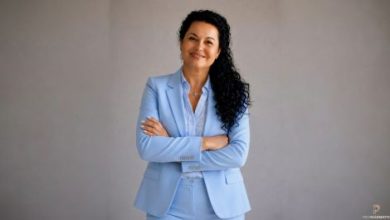
Our interviewee is Siyoung Doung, a renowned Korean poet, literary critic, and journalist, recipient of numerous international literary awards, President of the Korean Association of World Literature, and Doctor of Philosophy (PhD) in Korean Language and Literature.
Interviewed by: Jakhongir NOMOZOV | Uzbekistan
— It is often said that a woman poet is a silent bridge between society and nature. In your view, what kind of artistic worlds does a woman’s heart open? And what role does poetry play in unveiling the secrets of a woman’s soul?
— Throughout the history of world literature, female writers have long suffered from societal prejudices that deemed them inferior to their male counterparts. It was only in the 19th century that such biases began to be gradually overcome, thanks in part to masterpieces by writers like Emily Brontë, Charlotte Brontë, and Jane Austen: since the advent of post-feminism, the social standing of female poets and writers has been improving. However, there are still countries where misogyny and the notion of female inferiority persist strongly, and where women’s social activities and literary expression are restricted.
 In Korea, the conditions for female poets and writers to engage in creative work are still relatively less favorable compared to their male counterparts. Nevertheless, in a country with a history of strict prohibition and suppression of women’s literary activities, it is significant that a woman—Han Kang—recently became the first Korean recipient of the Nobel Prize in Literature.
Given these historical and social conditions, female writers cannot remain mere “quiet bridges.” They must exert greater effort than men, writing with their whole bodies and hearts regardless of the circumstances. Much still remains to be overcome through the literary achievements that women themselves must forge.
— You are not only a poet but also a literary critic and a scholar of semiotics. How do philosophy and literature complement each other, especially in your poetry?
— Philosophy seeks truth through logical concepts, while literature uncovers truth within fiction. Throughout human history, philosophy and literature have intertwined—merging and diverging, shaping one another. Within the histories of literature and philosophy, we encounter numerous texts that are either literary in their philosophical depth or philosophical in their literary expression. The relationship between poetry and philosophy is no exception.
When poetry possesses philosophical depth, its meaning becomes richer and more multifaceted. However, if it leans too heavily on philosophical elements, it can become rigid; if it lacks them entirely, it may feel somewhat superficial. This is ultimately a matter of the poet’s choice.
Discussions on the relationship between philosophy and literature have often leaned toward the view that literature relies on philosophy. Yet literature also produces its own philosophical realm. Great literary works and poems generate unique philosophical phenomena that arise solely from within themselves. I believe this area deserves deeper exploration and study.
— When creating a poem, do you rely more on intellect or on the heart? Or do these two sources harmoniously merge within you?
— Writing poetry that harmonizes intellect and emotion may be a poet’s task. However, depending on the mental and experiential makeup of each poet, their work may lean more toward one or the other. Such poems, regardless of their leaning, possess their own creative and artistic value.
Art is an endless process of de-familiarization. Within this process, the poet—as a living being and artist—must continuously create new realms and generate meaning. That is the poet’s true calling.
— Your emotional experiences are often conveyed not through words alone, but through melodies and colors. How are poetry and music, poetry and painting interconnected for you?
—From the earliest forms of integrated art in primitive societies to the present, poetry, music, and painting have evolved through fusion and mutual influence. Examples include opera, which combines poetry, drama, and music; Schubert’s “Lieder,” which fuses poetry and music; and symphonic poems that blend music with literature and visual art.
Artists like Delacroix, who enjoyed painting based on literary works, and Ravel, who composed “Gaspard de la Nuit” inspired by Bertrand’s poetry, exemplify this fusion. Impressionist composers like Debussy and Ravel translated the colors and sensations of painting into music. Mythology and legend have also inspired dramatic music.
This ongoing interplay between poetry, music, and painting extends to film, design, and other artistic domains. Such convergence enriches the world of art.
— For many years, you have been actively engaged in literary and academic work not only in Korea but also in China and Germany. How have these diverse cultures influenced your creative expression?
— Through my education, teaching abroad, travels to over 50 countries, and literary pilgrimages to the birthplaces of great works, I have lived a life rich in multicultural experience. This has deepened my curiosity about diverse cultures and broadened my reading, becoming a powerful force in my poetic creation.
Writers and poets who left lasting marks on world literature often absorbed diverse cultures through travel and reflected them in their works. Even for those not professionally engaged in literature, travel has the power to turn the traveler into a literary being. Figures like Marco Polo and Ibn Battuta, whose footsteps I traced in Italy and Morocco, are prime examples. Travel itself is a “great book.”
— Literature often emerges through suffering. What has inspired you more — joy, pain, or hope?
— Inspiration arises from natural phenomena such as seasonal changes, from reading—which is a journey through time and space—and from knowledge, experience, and other works of art. Among these, seeing is especially important. This has been emphasized by many poets, writers, and literary theories throughout history—not just by Rainer Maria Rilke.
Extensive travel and reading enrich what one sees. Reading allows us to travel not only through our own time but across different eras. It enables us to tap into the brilliant legacy left by great artists and to create anew.
Reading beyond literature—into other fields—is also crucial. There is nothing a poet does not need to know. Just as a chef uses diverse ingredients to create new and delicious dishes, a poet must endlessly gather and create new aesthetic worlds.
Moreover, inspiration often comes from the unconscious, from the life force, and from communication with cosmic energy beyond our awareness.
— The title of your poetry collection, “The Horizon Never Gets Wet,” is highly symbolic. What does the “horizon” mean to you?
— Once a text leaves the writer’s hand and reaches the reader, it becomes the reader’s. The endless generation of meaning belongs to the reader.
Within logic, meaning production must continue infinitely. This maximizes the informational value of the text. The meaning of a text is never complete or static—it is always in the process of becoming.
If the writer restricts or interferes with this process, it results in diminished meaning. The horizon, as a metaphor, remains untouched—never wet—because it is always beyond reach, always open to interpretation.
— Childhood memories, motherhood, and love — how are these reflected in your poems? What role does memory play as a source of inspiration in your work?
— The word “memory” in Greek means recollection—not merely remembering, but holding something deeply within the heart.
In life, memory accumulates and is retained. Writing seeks meaning within this accumulation and expresses it through aesthetic structure and technique. That is why my recent anthology is titled Adjectives of Memory.
Love is the source of life. Without love, there is no life. Though its meaning has evolved over time, love remains the most fundamental element of human existence. Thus, it is a central theme not only in literature but in all forms of art. My poetry, too, contains a subtle esprit of love, albeit indirectly.
— As a writer, what are your visions and aspirations? In your opinion, what makes a poem truly perfect?
 — There is no perfection in art. This is what compels poets to keep writing. The spirit that enables us to write stems from a deep structure—an unknowable abyss. The mind constantly changes and thinks, obscuring our sense of self. We write because we do not know who we are. Writing is a form of questioning.
The unconscious is more powerful than consciousness. Poetic inspiration flows from the depths of the unconscious, and it is in these moments that we write our most complete poems. Poetry is a quiet cry drawn from the depths of the soul—a movement toward ecstasy.
The moment we encounter the self that writes without knowing who it is—that is when we approach the realm of the perfect poem. But such moments are like mirages—appearing and vanishing.
This endless repetition is the poetic journey and structure. As Roman Jakobson said, repetition creates structure. The imaginative structure born of repetition gives rise to new poetry.
The unconscious power behind writing is formed by the cosmic energy inherent in living beings and the elements absorbed from environment, experience, and knowledge. The countless external influences accumulated over time create an infinite internal world. Inside and outside exchange freely; boundaries dissolve.
Contrary to common belief, knowledge does not hinder writing. There is nothing a poet does not need to know.
A poet’s vision is not external—it lies in cultivating the muscles of the mind, like training the body. In deep immersion, one must write with the strength of mental muscles and the complex power of the spirit.
Through this repetition of writing, the poet’s vision emerges. It is not deductive but inductive. To keep writing—that is the vision.
 — Your scholarly works — particularly “Semiotics of Modern Poetry” — open new dimensions in the interpretation of poetic texts. What significance does the semiotic power of poetry hold in today’s global culture?
— Poetic creation seeks a new aesthetic structure that conveys the meaning and feeling of its subject. Semiotics, too, uncovers new networks, systems, and meanings through communication with the text.
Writing poetry and conducting semiotic research are both endless pursuits toward a new axis—an infinite slide.
Thus, a poet with a semiotic worldview is closely aligned with the principle of de-familiarization, which is frequently discussed today. Both operate in worlds without fixed answers, truths, or aesthetic meanings.
Reading literary texts from a semiotic perspective is not mere surface reading. It involves analyzing the structural, stylistic features and strengths and weaknesses of the text. This allows the poet to gain more concrete and systematic creative energy.
 — How did your years of study in Germany transform your creative outlook? How have Western philosophy and Eastern traditions found harmony in your inner world?
— Though I am Eastern, I have spent considerable time studying Western philosophy and literary theory. My reading has largely focused on Western texts.
However, I have not neglected the exploration of Eastern thought and literature—especially Chinese philosophy, poetry, poetic techniques, and rhetorical methods.
I enjoy comparing Nietzsche’s concept of eternal recurrence with Buddhism’s idea of reincarnation, and placing Nietzsche’s Übermensch alongside the Daoist concepts of the divine man (神人) and the ultimate man (至人). I also find it fascinating.
I enjoy juxtaposing the Buddhist worldview—which deconstructs even the boundary between life and death—with Derrida’s theory of deconstruction. I also find it enriching to contemplate the Buddhist concepts of impermanence (mujō) and liberation (nirvāṇa) alongside Lacan’s theories of desire and alienation.
In terms of poetic theory, I often reflect on the Hwan-gol-beop (換骨法), or “bone-changing method,” proposed by Huang Tingjian of the Northern Song Dynasty, in relation to Bakhtin’s dialogism and Kristeva’s concept of intertextuality. I also consider notions such as kitsch and Pastiche within this framework.
Furthermore, I believe it is essential to study classical Chinese literary theories, ranging from Confucius’s poetic principles—such as pyeongmun musa (平門無邪, “plain writing without evil”) and yumi (遺味, “lingering flavor”)—to Lu Ji’s Wen Fu (文賦) of the Western Jin Dynasty, Liu Xie’s Wenxin Diaolong (文心雕龍), Cao Pi’s writings from the late Jian’an period of the Eastern Han, and Wu Ne of the Ming Dynasty.
Equally important is examining the numerous Chinese references embedded in Ezra Pound’s Cantos, and the influence of traditional Chinese theater on German Expressionist playwright and poet Bertolt Brecht: Moreover, I believe we must move beyond a Western-centric cultural perspective and adopt a balanced and objective view of Eastern thought and culture—especially recognizing the significant contributions of Chinese philosophy and aesthetics to the formation of Eastern culture. This perspective should extend not only to China but to the broader Asian cultural sphere and other cultural domains. Ultimately, I believe that by cultivating this rich philosophical and cultural soil shared by humanity, people around the world can engage in new and abundant artistic creation together.
Read: Love – The Foundation of Being
_______________
 Jakhongir NOMOZOV is a young poet and journalist from Uzbekistan. He is also a Member of the Union of Journalists of Azerbaijan and the World Young Turkic Writers Union.