Guiding Green Building Practices
Pakistan’s Green Building Code 2023 - A Review and Way Forward


Green Building Code aims not just to prevent the recurrence of disasters, but to reframe how Pakistan builds, houses its people, and shapes its cities.
Mohammad Ehsan Leghari
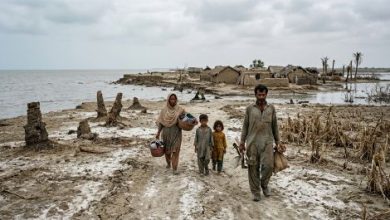
In July 2025, the Federal Cabinet of Pakistan, acting through the Cabinet Committee on Legislative Cases (CCLC), approved the Green Building Code of Pakistan (GBCP-2023)—a significant milestone in Pakistan’s ongoing struggle to build climate-resilient, sustainable, and equitable urban spaces. Developed after the catastrophic 2022 floods and adopted in the immediate aftermath of the 2025 monsoon floods, the Code stands as a testament to both memory and foresight. It is dedicated to the victims of 2022, but today, it also reflects the warnings delivered again in 2025, when widespread flooding once more overwhelmed major cities and peri-urban settlements, damaged public housing, disrupted transport corridors, and further exposed the structural weaknesses of unregulated construction and absence of flood-conscious planning.
The scale of these converging crises is stark. Pakistan’s population has surpassed 240 million, growing at 2.55% annually, and more than 38% of this population now resides in urban areas. The country carries an estimated housing deficit of 12 million units, a gap that fuels informal expansion into unsafe terrain: floodplains, nallahs, riverbanks, and low-lying settlements. Meanwhile, the building and construction sector consumes 40% of total energy and contributes nearly 30% of national greenhouse gas emissions. As repeated disasters show, urban growth without regulation is not merely unsustainable, it is life-threatening.
A Shift in Direction
The GBCP-2023 represents a conscious shift toward a construction paradigm that prioritizes risk-aware planning, environmental performance, water and energy conservation, and human well-being. Adapted from the 2021 International Green Construction Code (IgCC) under a license agreement with the International Code Council (ICC), the Code was prepared by a multidisciplinary 29-member committee led by Prof. Dr. Engr. Sarosh H. Lodi of NED University, in close coordination with ministries, UN agencies, professional councils, and development partners. It integrates global standards with Pakistan’s geological, hydrological, and socio-economic realities, ensuring relevance and feasibility.
The Code adopts a lifecycle approach, guiding how buildings are located, designed, constructed, operated, and eventually retired. It embeds water conservation, energy efficiency, eco-friendly materials, waste reduction, and healthy indoor environments, recognizing buildings as interconnected ecosystems rather than isolated structures.
Flood-Resilient Urban Futures: Lessons from 2022 and 2025
The 2022 floods exposed the deep structural vulnerabilities of Pakistan’s settlement patterns and planning systems. The 2025 floods reaffirmed these lessons—particularly in Punjab’s peri-urban housing schemes, Karachi’s low-lying industrial clusters, and the expanding katchi abadis in many cities. In each case, settlement in flood-prone areas and the obstruction of natural drainage paths intensified losses.
GBCP-2023 directly responds to these systemic failures. It’s most transformative provision prohibits all building construction within the flood limits of rivers, natural streams, and drainage channels, requiring the use of Federal Flood Commission (FFC) flood inundation maps for site approval. Coupled with mandatory permeable surfaces, stormwater retention measures, bioswales, rain gardens, and elevation requirements in high-risk areas, the Code shifts Pakistan from reactive relief to proactive prevention.
Had these provisions been fully implemented before 2025, a significant portion of the losses; particularly to low-income housing clusters and peri-urban settlements could have been prevented or minimized. The repetition of avoidable tragedy underscores the urgency of implementation, not just policy drafting.
Beyond Environmental Goals: Towards Inclusive Development
The Code is not only environmental—it is also a step toward inclusive development, a principle that ensures equitable access to safe, resilient, and healthy living spaces for all, including low-income and marginalized communities, rather than restricting green, safe housing to elites or gated neighborhoods. Inclusive development recognizes that the right to safe shelter is not a privilege, but a social and developmental claim.
If GBCP-2023 is to achieve this vision, it must be mainstreamed into the very fabric of public development planning, especially because the majority of physical development in Pakistan—urban services, roads, housing schemes, municipal buildings, schools, hospitals, water supply infrastructure; fall under the constitutional and administrative authority of provincial governments.
The Provincial Imperative
For GBCP-2023 to succeed, its enforcement cannot remain a federal directive alone. Provincial governments, Local Government Departments, Development Authorities, and Public Works Departments must:
- integrate the Code into all PC-I, PC-II, and other processes involved in both public and private sectors,
- revise building bylaws and zoning regulations to reflect flood hazard restrictions,
- require compliance in public housing and infrastructure projects, and
- link municipal approvals to verified implementation of code provisions.
Without provincial mainstreaming, the Code risks becoming a document of good intentions, rather than an instrument of transformation.
Implementation Challenges and Opportunities
The challenges are real: varying enforcement capacity across districts; cost barriers for low-income builders; uneven awareness among contractors; and entrenched informal construction networks. Yet, the opportunities are equally real: the Code provides a pathway to reduce energy bills, lower urban flood vulnerability, strengthen public safety, create green jobs, and shift construction markets toward sustainable materials and practices.
Pilot demonstration neighborhoods—especially in flood-affected areas of Pakistan including provinces, Azad Kashmir and Gilgit Baltistan—could visibly show communities the practical benefits of resilient, passive, and water-conscious building design.
Conclusion
The Green Building Code of Pakistan 2023 is both a response to tragedy and a blueprint for a different future. It aims not just to prevent the recurrence of disasters like 2022 and 2025, but to reframe how Pakistan builds, houses its people, and shapes its cities.
If implemented seriously, especially through provincial mainstreaming and a commitment to inclusive development, the Code can transform Pakistan’s urban expansion from a pattern of vulnerability into one of resilience, dignity, and environmental stewardship.
The question before us now is not whether we can afford to implement the Code.
After 2022 and 2025, the truth is clear: we can no longer afford not to.
References
Federal Flood Commission (2022) National Flood Inundation Mapping Project – Phase II. Ministry of Water Resources, Islamabad.
International Code Council (2021) International Green Construction Code (IgCC) 2021. Washington, DC: ICC.
Pakistan Engineering Council (2023) Green Building Code of Pakistan 2023. Islamabad: Pakistan Engineering Council.
Read: Thirsty For The Justice
___________________
 Mohammad Ehsan Leghari is Member (Sindh), Indus River System Authority, and former Managing Director, SIDA.