Southeast Asia Deluge 2025: Spatial Gaps
A Climate Shock Amplified by Spatial Mismanagement


The question facing Southeast Asia now is stark and urgent: will the next monsoon meet a landscape designed for resilience; or a landscape waiting once again to fail?
- And what Pakistan need to learn from our own 2025 floods and what is being experienced by South East Asia?
Mohammad Ehsan Leghari
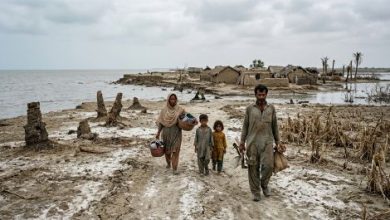
The final week of November 2025 has brought Southeast Asia to its knees. From southern Thailand to northern Malaysia and across parts of Indonesia, relentless monsoon rains have swallowed cities, swept away homes, and exposed the deep vulnerabilities of landscapes long reshaped without regard for the rhythms of water. Roads have vanished beneath churning brown torrents, hospitals have flooded, and families have climbed to rooftops in desperate attempts to escape the rising waters. Yet beneath the chaos lies a quieter, more structural story: the land itself has been prepared for disaster.

In southern Thailand, where the death toll has risen past 87 and more than 3.5 million people have been affected, the water did not simply invade; it returned to places it once naturally flowed (Reuters 2025a). Hat Yai, Songkhla, Nakhon Si Thammarat, and other low-lying provinces have grown aggressively in recent decades, spreading into wetlands, filling natural drainage depressions, and carving roads and residential blocks deep into the historical floodplain. When this monsoon arrived, rivers and stormwater behaved exactly as hydrology predicts: they reclaimed their original corridors. Rescue teams could reach some areas only by helicopter as waters rose above vehicles, bridges, and even hospital floors (Reuters 2025b; Reuters 2025c).
Read: Unusual alignment of two climate forces behind record-breaking rain, floods in Southeast Asia
Malaysia’s northern states faced the same fate. More than 34,000 people were evacuated as towns in Perlis and Kedah were submerged, with distressing images of hospital patients being pushed through floodwater becoming emblematic of how deeply vulnerable critical infrastructure remains (Reuters Connect 2025). Stagnant water and lingering dampness soon triggered indoor air-quality warnings, reminding the region that floods do not end when the waters stop rising; they linger in the walls, lungs, and lives of those left behind (IQAir 2025).

The pattern is unmistakable across the region: rapid expansion into flood-prone terrain, the sealing of wetlands, the narrowing of canals, and infrastructure built against, rather than with, the grain of the land. In Indonesia too, where landslides have killed dozens, the worst impacts have occurred in places stripped of forests or carved into unstable slopes (Reuters 2025e). The climate shock may have been severe, but the devastation was shaped by the choices made on the ground.

It is in this wider context that insights from Pakistan’s Flood Resilience White Paper (post 2022 floods technical support from Dutch government) take on international resonance. Though written for the Indus Basin, the report’s message is universal: flood disasters worsen when natural drainage is blocked, floodplains are encroached upon, and governance is fragmented. This is precisely what Southeast Asia is now living through. The White Paper’s warning that distorted land-use decisions “trap, divert, or accelerate floodwaters in unnatural ways” reads less like a Pakistani diagnosis and more like a description of Hat Yai, Kangar, and dozens of submerged Southeast Asian towns today.

Nothing illustrates this more clearly than the Golok River, where Thailand and Malaysia flooded simultaneously as waters surged across both sides of the border. Hydrologically, the river is one system; politically, it is divided. Planning has followed the politics, not the ecology. The result is visible in the shared suffering of border communities, where flood responses were separated by jurisdiction but unified by force of water (The Diplomat 2025).
The region-wide picture reinforces that this disaster is not an isolated failure but part of a growing climatic pattern. Reuters and regional media have documented how the same monsoon surge caused deadly floods and landslides in Indonesia, Sri Lanka, and Vietnam, a sign of intensifying rainfall patterns across the tropics (Reuters 2025a; Mizzima 2025). Yet even as storms become more severe, the unequal damage from place to place reveals the decisive role of land-use planning. Areas that preserved wetlands or left river corridors intact fared better. Zones that built over their floodplains drowned quickly.
Thailand’s agricultural losses alone underscore this misalignment; with rubber plantations suffering damage estimated at USD 140 million, it is clear that placing high-value crops directly in flood retention areas was never sustainable (Reuters 2025f). And while Thailand’s deployment of its aircraft carrier to assist in relief efforts captured global attention, it also underscored how conventional emergency tools struggle when the underlying geography has been compromised (Reuters 2025g).

As Southeast Asia moves from rescue to recovery, it confronts a choice more consequential than any infrastructure repair: whether to rebuild as before or to rebuild with memory. The land has shown its memory: water has moved exactly where nature trained it to move. Now planning systems must show memory too. The solutions that Pakistan’s White Paper advocates watershed-based planning, restoration of natural buffers, strict zoning enforcement, and infrastructure aligned with hydrological reality. These are not for Pakistan alone. They are lessons for an entire region living at the confluence of climate acceleration and spatial neglect.
Ultimately, the November 2025 floods will be remembered not simply as a climatic event but as a spatial reckoning. Climate change brought the rain; land-use choices determined its ruin. The question facing Southeast Asia now is stark and urgent: will the next monsoon meet a landscape designed for resilience; or a landscape waiting once again to fail? And what Pakistan need to learn from our own 2025 floods and what is being experienced by South East Asia?
References
AP News (2025) Floodwaters are subsiding in southern Thailand as deaths exceed 80, 27 Nov.
Dutch Risk Reduction Team (2023), Improving Flood Resilience in Pakistan: A White Paper.
IQAir (2025) Indoor Air Quality Alert: Malaysia and Southern Thailand Flooding, Nov.
Mizzima (2025) ‘Truly severe’ floods overwhelm Southeast Asia, 28 Nov.
Reuters (2025a) Rescuers step up recovery operations as Southeast Asia flood deaths cross 180, 28 Nov.
Reuters (2025b) Thailand to airlift critical patients as southern floods kill dozens, 26 Nov.
Reuters (2025c) Severe flooding in Thailand and Malaysia – photo series, 26 Nov.
Reuters (2025d) ‘Like an ocean’: Malaysians recall race against rising waters, 27 Nov.
Reuters Connect (2025) Flooding in northern Malaysia – medical evacuations, Nov.
Reuters (2025e) Indonesia death toll climbs as floods intensify across region, 27 Nov.
Reuters (2025f) Thailand floods could cut rubber output by $140 million, 27 Nov.
Reuters (2025g) Thailand to send aircraft carrier for flood relief as rains intensify, 25 Nov.
The Diplomat (2025) Authorities Struggle to Respond to Devastating Floods in Thailand, Malaysia, Indonesia, 28 Nov.
__________________
 Mohammad Ehsan Leghari is a water expert, former Member (Sindh), Indus River System Authority, and former Managing Director, SIDA.