Karachi’s Building Collapse Tragedies reveal Structural Failures, Regulatory Negligence and the Urgent Need for Reform
Ramesh Raja
Karachi, Pakistan’s largest metropolitan city and its principal commercial center, is increasingly facing a serious crisis of building safety. A series of building collapses during 2025 and 2026 has exposed alarming weaknesses in construction practices, structural maintenance, regulatory supervision and enforcement of building laws. The loss of precious human lives in these incidents raises fundamental questions about the safety of residential and commercial buildings and the responsibility of the authorities entrusted with regulating the construction industry.
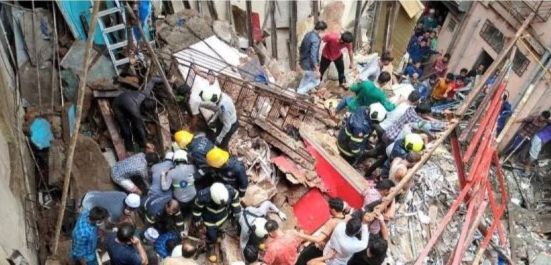
The latest tragedy occurred on 25 November 2026 at Plot C-163, Block 4, Karachi Administration Employees Cooperative Housing Society, commonly known as Admin Society, near Baloch Colony and Shahrah-e-Faisal. The six-story under-construction building, reportedly comprising a ground floor, five additional floors and a penthouse, suddenly collapsed at approximately 1:30 pm, burying construction workers beneath tons of concrete and steel. According to Rescue 1122 and police officials, three people lost their lives and 14 sustained injuries. More than 20 laborers were reportedly working inside the building when the incident occurred. The structure stood on a 600-square-yard residential plot and, according to the East Deputy Commissioner, the Sindh Building Control Authority (SBCA) had approved a ground-plus-one-story building. The actual construction, however, had reportedly reached six floors, with a penthouse also being developed. Media reports identified Abdullah Shakeel and Bilal Shakeel in connection with the approved building plan. Another report identified Zeeshan Aslam as the owner and Badshah Khan as the contractor. These identities and their respective legal roles require confirmation through original property records, approved drawings and the ongoing investigation.
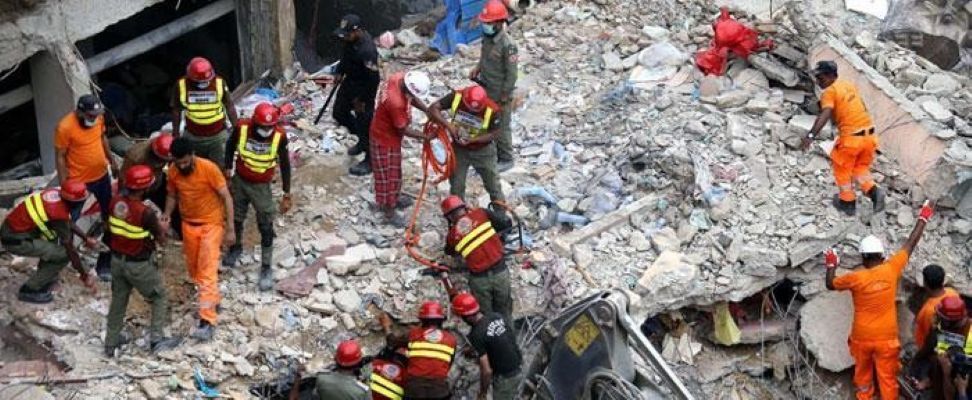 The regulatory history of the building is equally disturbing. Reports indicate that notices concerning unauthorized construction were issued on 24 April, 27 April and 6 May 2026. The matter subsequently involved a court injunction, reportedly issued on 4 August 2026, which restricted certain enforcement actions by SBCA. The precise wording and legal scope of that order must be established through certified court records. Nevertheless, an important question remains: how could a building reportedly approved for only one additional floor progress to six floors and a penthouse despite regulatory notices? The collapse prompted authorities to seal 12 other under-construction buildings in Karachi Administration Society, while SBCA officials were suspended and suspects, including a contractor, were detained. These developments make it essential to investigate not only the builder and construction team but also the entire chain of regulatory approvals, inspections and enforcement.
This tragedy was not an isolated incident. On 30 April 2025, a three-story building constructed on an 80-square-yard plot collapsed in Bhains Colony, killing a ten-year-old girl named Dua. The building was described by rescue officials as old and structurally weak. On 4 July 2025, one of Karachi’s deadliest recent building disasters occurred at Fotan Mansion, a five-story residential building in the Lea Market area of Baghdadi, Lyari. The collapse claimed 27 lives and injured approximately 10 people. The building had reportedly been declared dangerous and unfit for occupation. Its owner, identified in police reporting as Raheem Bux Khaskheli, was arrested, while eight SBCA officials were also arrested in connection with the case on allegations of negligence and failure to perform their official duties. The tragedy exposed a grave failure to protect residents despite prior knowledge of the building’s deteriorated condition.
Barely two weeks later, on 17 July 2025, another incident occurred at Ghani Mansion in Khadda Market, Lyari, where the roof of an upper floor of a six-story dilapidated building collapsed while laborers were working there. Two women died and three people were injured. Subsequently, on 20 August 2025, heavy and persistent rainfall caused another residential building to collapse in a low-lying area of Karachi. The National Disaster Management Authority, in its February 2026 report, attributed the failure to waterlogging around the foundation, soil saturation, reduced bearing capacity and progressive settlement. The building’s load-bearing masonry walls and roof system, already weakened by poor construction practices and inadequate maintenance, ultimately failed.
The year 2026 brought further tragedies. On 19 February, a gas leakage explosion destroyed part of a ground-plus-three-story residential building on a plot of approximately 40 square yards in Gul Rana Colony, Soldier Bazaar. Fifteen people, including women and children, were killed and 18 injured. The Bomb Disposal Squad reportedly ruled out sabotage and attributed the explosion to gas leakage. On 12 September 2026, a wall of a dilapidated government school building in Sector 11, Orangi Town, collapsed, killing five people and injuring two others. On 5 November, the roof of a corner shop near New Nazimabad Flyover on Manghopir Road collapsed during construction activity, killing 42-year-old shopkeeper Abdul Bari and injuring two children. Taken together, these incidents demonstrate that Karachi’s building-safety crisis extends beyond unauthorized multi-story construction to ageing residential structures, public buildings, commercial premises and unsafe construction activities.
The reasons behind these collapses differ, but several common engineering and administrative weaknesses are evident. Structural deterioration, corrosion of reinforcement, water seepage, inadequate maintenance and weakened load-bearing walls are major concerns in older buildings. In newer structures, unauthorised additional floors can impose loads beyond the capacity of columns, beams and foundations originally designed for fewer storys. Poor-quality concrete, insufficient reinforcement, inadequate beam-column connections, defective workmanship and the absence of proper site supervision can further compromise structural integrity. Karachi’s varied soil conditions, groundwater extraction, and waterlogging, inadequate drainage and nearby excavation or boring activities can also affect foundation stability. The latest Admin Society collapse reportedly occurred while borehole excavation was underway, and residents described vibrations and possible water leakage. These accounts warrant technical investigation but cannot, by themselves, establish the cause. Only a scientific forensic examination can identify the initiating failure and the sequence of collapse.
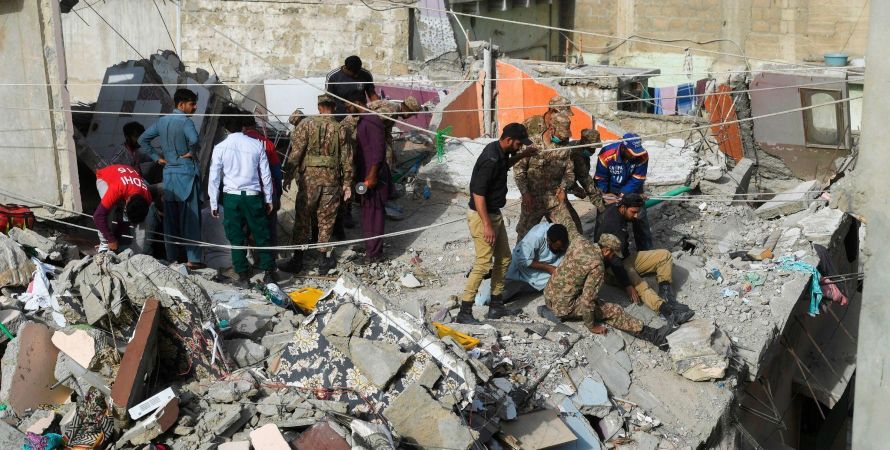 Perhaps the most serious underlying issue is the failure of effective regulatory enforcement. The Auditor-General of Pakistan’s audit report on SBCA for 2025–26 recorded 588 dangerous buildings in Karachi for 2024–25, compared with 533 in 2021–22. The report highlighted the increasing number of dangerous buildings and shortcomings in enforcement, including failure to demolish structures identified as hazardous. The Public Accounts Committee was also informed in July 2026 that Karachi had 588 dangerous and dilapidated buildings, including 444 heritage structures. These figures underline the scale of the challenge and the urgency of a systematic response.
The Government of Sindh must now move beyond temporary inquiries and post-incident suspensions towards a comprehensive engineering-based building-safety program. First, an independent forensic engineering commission should investigate the C-163 collapse through three-dimensional debris reconstruction, concrete core testing, reinforcement and metallurgical examination, geotechnical investigation, foundation assessment and nonlinear structural simulation. The commission should examine the sanctioned drawings, structural calculations, soil investigation, construction records, contractor arrangements, inspection reports, notices and the certified court order. It must establish the technical cause and determine professional, legal and administrative responsibility on the basis of evidence.
Second, an immediate structural safety audit should cover all dangerous, occupied, completed and under-construction buildings across Karachi. Priority should be given to Lyari, Baghdadi, Khadda Market, Saddar, Soldier Bazaar, Liaquatabad, Orangi Town, low-lying localities and areas with unauthorised vertical construction. Buildings should be classified according to structural condition, with appropriate measures ranging from repairs and strengthening to restricted occupation or immediate evacuation where necessary. Third, independent structural certification, mandatory soil investigations, geo-tagged construction inspections and digital records of sanctioned and actual building configurations should become compulsory for relevant categories of buildings. Any additional floor or major structural alteration must require a fresh engineering assessment and approval.
Finally, a permanent Karachi Building Safety Commission should be established with representation from NED University, Mehran University, Pakistan Engineering Council, SBCA, local government and independent structural and geotechnical experts. It should maintain a public digital inventory of buildings, conduct periodic inspections, monitor rehabilitation and publish annual safety reports. The responsibility of owners, developers, architects, structural engineers, contractors and regulatory officials must be clearly defined and enforced.
Karachi cannot afford another tragedy of this magnitude. A building should not be considered safe merely because it possesses an approved plan; its structural integrity must be demonstrated through proper design, quality construction, independent inspection and continuous maintenance. The real test of governance is not how quickly authorities respond after a building collapses, but whether they can identify and eliminate the risks before innocent people lose their lives. Human life must remain more valuable than commercial interests, illegal construction and administrative convenience.
Read: Stop Sindh’s Farmland Becoming Concrete Jungles
___________
 Hailing from Gambat town of Sindh, Engr. Ramesh Raja, is a Civil Engineer, visionary planner, PMP certified and literary enthusiast with a passion for art and recreation. He can be reached at engineer.raja@gmail.com