Remembering Sindh, Reconstructing Sindh – Part-II
Sindhi Hindus have had little or no contact with their original homeland for the last seven decades.

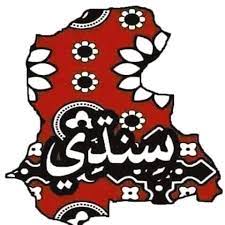
As is the case with many communities, Sindhi Hindus too feel the need for a community history.
By Nandita Bhavnani
[When India was partitioned in 1947, the province of Sindh went in its entirety to the newly-formed state of Pakistan. The bulk of the Hindus (and Sikhs) of Sindh migrated to India in the months that followed. Given that there was no part of Sindh in India, and given the harsh visa regime shared by the two countries, Sindhi Hindus have had little or no contact with their original homeland for the last seven decades. Some among the generations of Sindhi Hindus that migrated to India (and subsequently formed the diaspora) have shared their recollections with their children and grandchildren. There has been a corresponding move among a section of Sindhi Hindus to distance themselves from memories of a culture shared with Muslims, and a history that was largely dominated by Muslims. Yet, as is the case with many communities, Sindhi Hindus too feel the need for a community history. Consequently, when Sindhis recall Sindh, they often refer to a ‘sanitized’ Sindh, which they have supposedly ‘inherited’]
A Selective ‘Remembering’ of Sindh
The selective ‘remembering’ of the Sindh portrayed in this particular song is a symptom of the Sindhi Hindu community’s ‘remembering’ of Sindh in general, which has been borne out in the community’s popular writings on Sindh and its history. A few salient tropes stand out.
a. An ‘Aryan’ Moenjodaro
Firstly, a salient feature of this Sindh ‘remembered’ by Sindhi Hindus is that of Moenjodaro and the Harappa, or the Indus Valley, civilization. Notwithstanding archaeological research and academic findings that state that it is not yet possible to conclusively prove the identity of the inhabitants of this civilization, numerous Sindhi Hindus choose to believe that the denizens of this ancient culture were Aryans, who were also the authors of the Vedas, and therefore the founders of Hinduism (and also the ultimate ancestors of the Sindhis of today).
A prominent example of this ‘belief’ is the popular work of fiction ‘The Return of the Aryans’, by *Bhagwan S. Gidwani and its subsequent adaptation, The March of the Aryans.
Forgoing any archaeological evidence or other historical proofs, Gidwani holds up Sindh as the birthplace and cradle of Hinduism. In his own words, “This novel tells the story of the Aryans […] I must present this as a work of fiction. But fiction is not falsehood. Nor a dream – Nor guesswork – Ideally it should be seen as a fictionalized alternative history that our mainstream historians have not attempted to write” (Gidwani 1994: xi). In the same vein, he holds that “… the imperishable remembrance of the Aryan movement and migration from India; and the message in these songs is clear —that the Aryans originated from India and nowhere else”. He also maintains, “The Aryans of 5000 BC were born, grew up and died as Hindus. They were anchored in the timeless foundation of the Hindu tradition”.
While Gidwani’s writings are clearly fiction, and as yet are unsupported by any hard proof, they are often assumed as facts by some Sindhis. For example, Gidwani posits that the Aryans originated in “the land of the Sindhu,” but dispersed in different directions in 5000 BCE and returned to India centuries later. This has been stated as fact (citing Gidwani’s work) by Prem Matlani in The Indus Empire: History of Sindh. Again, during a Sindhi seminar-cum-cultural festival titled ‘Hojamalo’ hosted by Jai Hind College, Mumbai, on 24-25 January 2018, placards were placed around the campus with information on Sindhi history and culture.
One such placard quoted Gidwani, and suggested that Hinduism took birth in Sindh prior to 8000 BCE, and that a Sindhi person was the first to chant ‘Om’, a mantra held sacred by Hindus.
Other Sindhi Hindus have also voiced similar beliefs, and maintain that they are the heirs to the Indus Valley civilization —even though Sindhis, along with the modern world, became aware of this civilization only in the early 1920s. For example:
With Sindhi culture being a synthesis of the Indus Valley and Vedic civilizations, its language also inevitably showed the influence of these cultures (Buxani, 39).The society of Sindhis […] is more Aryan and undiluted than the Hindu society in the rest of India.
The origins of the Sindhi community can be traced back to the period of MohanJo-Daro civilization, the oldest in the world. As such Sindhi culture with its deep roots has been a source of inspiration to the community.
b. The ‘oppressor Muslim’
Secondly, Muslims in general are recalled, or ‘reconstructed,’ in a negative light, and portrayed as oppressors of Hindus. These generally include Muhammad bin Qasim’s invasion of Sindh and the concomitant slaying of Hindus; as well as the reign of the Talpurs (the last indigenous rulers of Sindh, who were ethnic Baloch Muslims), and their occasional oppression of Hindus. See the following examples:
… I am the dancer of Mohen jo Daro …
… I am the first and foremost civilization of the world – the epitome of culture
The Sindhu Valley civilization in this depleted condition! …
… Greeks, Turks, Persians, Arabs, all had crossed my land…
… I remember everything, the foreign invaders, the horses of the savage riders galloping away…
… I remember everything. They came raising dust storms causing havoc and devastation and crossed my border
From Alexander to Muhammad bin Qasim, from Ghaznavi to Ghori, from Changez Khan to Babar, they played Holi of blood coloring my dust red.
(Quoted in K.N. Vaswani, 82-83)
… but the Arab invasion […] brought in wave after wave of foreign hordes. The Tartars, the Arghuns and the Tarkhans, the Moguls, and the Baloch as if the whole world fell upon the country from the west or through the Punjab. And the subsequent history of the Sind Hindus is therefore nothing but a tale of woe of their degradation, conversion and surveillance. (Thakur, 15-16).
The Sindhis ruled Sind till they were defeated and conquered by the Arabs in the seventh century. And from that time onwards they have played the role of refugees. (Bharadwaj, 15)
This ‘narrative’ of Muslims as only ‘foreign invaders’ and ‘oppressors’ is at odds with historical facts. Minorities – Hindus, Buddhists and Jains – continued to live in Sindh for centuries after the Arab conquest of Sindh in 711-713 CE. Buddhism declined in Sindh around the 10th century CE, as it did in the rest of India, and Jains remained a numerically small community, who nevertheless lived in Sindh till 1947. Hindus too continued to live, and prosper, in Sindh, and while there may have been migrations eastwards at various points in history, there were also inflows of Hindus from the subcontinent. Different sub-communities of Hindus dominated various Sindhi cities at different points in time, and further, were primarily responsible for the prosperity of these cities. Hindu merchants and traders flourished in the southern Sindh capital of Thatta from the 15th through the 17th centuries.
Similarly, Hindu merchants and administrators were actively encouraged to come to Shikarpur by the Durranis, as well as to first Khudabad and later Hyderabad by the Kalhoras, all in the 18th century. These Hindus wielded considerable power and prestige and were patronized and protected (to a large extent) by the Muslim rulers of their cities (Markovits, passim; Allen, 40).
There are also two important exceptions to this anti-Muslim stance: the two eminent Sufi poet-saints, Shah Abdul Latif and Sachal Sarmast. To begin with, their Sufi poetry and their philosophy of humanism eschew a rigid practice of Islam on the one hand, and on the other, they also embrace Hindus; both these naturally do not antagonize the latter. Consequently, Sindhi Hindus are able to appreciate the heights of excellence reached by the poetry of these two Sufi saints, and are happy to acknowledge them as fellow Sindhis.
Sufism and Sufi practices were widespread in Sindh, among Muslims as well as Hindus, and if the latter visited Sufi dargahs, or became followers of Sufi pirs, these practices were quite socially acceptable in Sindhi Hindu society, and were not frowned upon. Similarly, it was common for Sindhi Hindus to exclaim “Ai Allah!” when surprised or startled. As in Deepak Asha’s song, we can see that Sindhi Muslims are remembered, but only as Sufis, tolerant of, and acceptable to, Hindus.
c. The ‘disappearance’ of Sindh
Sindhi Hindus, especially those that migrated during Partition, generally refer to themselves as ‘Sindhis’, while referring to Sindhi Muslims as jat, the name of a tribe of camel herders, but used derogatorily to denote a crude and illiterate country bumpkin, the Hindu stereotype for all Sindhi Muslims. In turn, Sindhi Muslims refer to themselves as ‘Sindhis’, while referring to Sindhi Hindus as diwan (meaning minister with reference to older practice of Hindus acting as ministers to the Muslim rulers of Sindh) or vaaniya (meaning merchant or trader). Clearly, prior to 1947, there was little or no sense of an overarching Sindhi provincial identity that transcended religious differences.
At the time of Partition, there was negligible communal violence in Sindh between Sindhi Hindus and Sindhi Muslims. Two anti-Hindu and anti-Sikh pogroms —the first in Hyderabad on 17 December 1947 and the second in Karachi on 6 January 1948— were perpetrated, largely by Muhajirs who sought property belonging to Sindhi Hindus that became available to them after the latter migrated.
These two pogroms were largely responsible for the exodus of Hindus and Sikhs from Sindh. As a result, Sindhi Hindus came to perceive Sindh (and concomitantly Pakistan as well) as a land dominated by Muslims, here they as Hindus had no place and were no longer welcome —and indeed from where they had been forcibly ejected. Consequently, there has been a turning away from Sindh, especially among the younger generation that migrated in 1947-48, and Sindh has been relegated to the past in some ways, at least at a subconscious level. Perhaps this has been a coping mechanism on the part of the Sindhi Hindus, as a means to deal with the trauma of being ejected from their homeland.
This has been reflected in popular writing among and about Sindhis as well. For instance, the writer Kavita Daswani, while describing Sindh, refers to it almost completely in the past tense, as though it ceased to exist after 1947 (Daswani, 5-6).
In a similar vein, another writer, Saaz Aggarwal, titled her book Sindh: Stories from a Vanished Homeland; one section in this book is subtitled ‘Sindh, the lost homeland: undivided, it vanished’ (Aggarwal, 66). However, it must also be said that Aggarwal’s book does cover Sindhi history briefly, and also touches upon modern Sindh.
This ‘erasure’ of Sindh is further aided and accentuated by a statement occasionally made publicly at Sindhi gatherings: Jite Sindhi, hute Sindh , meaning, “Where there are Sindhis, there is Sindh.” This is a ‘reconstruction’ of a new, mobile Sindh (which is composed of only Sindhi Hindus in this context) and the spirit of this statement implies that ‘Sindh’ —here possibly used as shorthand for a transportable homeland, a place of belonging— exists wherever Sindhi Hindus are to be found, whether in India or in the diaspora.
In tandem with this viewpoint, most Sindhi Hindus are not interested or perhaps even aware of the sociopolitical, cultural or environmental realities of present- day Sindh, a land with which they find it difficult to identify today. Further, there is little knowledge or acknowledgement of the relatively small number of Sindhi Hindus that remain in Sindh and the various issues that they face. (Continues)
_________________
*Gidwani was the son of Shamdas Gidwani, the pre-Partition head of the right-wing Hindu Mahasabha in Sindh. However, Sindhi Hindu identity can be complex. Gidwani dedicated his book to his two sons, the elder named Manu, possibly after the Hindu lawgiver, and the younger named Sachal, after the Sufi saint.
A research paper ‘Remembering Sindh, Reconstructing Sindh’ – The Politics of Memory among Sindhi Hindus in India’ written by the author in 2017.
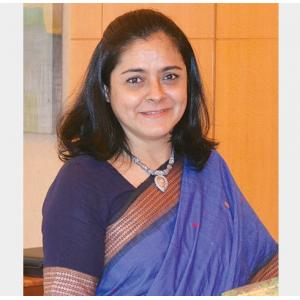 Nandita Bhavnani, an independent scholar, who was raised as a typical south Mumbai elitist kid and couldn’t read, write or fluently speak in her mother tongue, became a Sindhi historian by choice. She learnt the Persian script and worked with social anthropologist Ashis Nandy for research on “Partition Psychosis”. She has travelled many times to Pakistan to explore Sindhi culture there and her research from both sides of the border has been documented in books and articles.
Click here for Part-I