Review of the book “Paan Pasiyo Pardeh” (Seeing Foreign Lands with One’s Own Eyes), a travelogue of Spain and Andorra, authored by Mrs. Safia Ansari
By Abdullah Usman Morai | Sweden
The travelogue “Paan Pasiyo Pardeh” (“Seeing Foreign Lands with One’s Own Eyes”), written by Mrs. Safia Ansari, the wife of former banker Mr. Rafiuddin Junejo, is open on my computer screen, and I have been asked to write a few words about it.
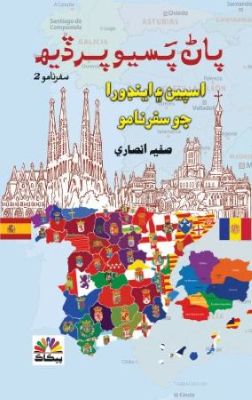 In this limited span of life, I have nurtured only a few modest wishes, and among those wishes is the desire to travel across this world created by God and witness its wonders firsthand. Traveling occupies a place in my heart akin to love itself. To the best of my ability, I often share my own travel experiences with like-minded friends, but even more than that, I greatly enjoy reading, watching, and listening to the experiences of fellow travelers.
Traveling and experiencing new places is an essential part of life. Through journeys within one’s own country or across the world, a person learns about different cultures, civilizations, lifestyles, cuisines, and the everyday lives of people elsewhere. Exploring new places broadens the mind, teaches valuable lessons, and reveals many dimensions of life that might otherwise remain hidden.
Travel also allows people to disconnect from their daily routines and temporarily forget the problems and pressures of everyday life. Some experts even believe that when individuals step away from their routine environments, they often find it easier to think about and solve problems that previously seemed overwhelming. Researchers further suggest that travel significantly reduces stress levels. One survey even indicated that when people leave their familiar surroundings and embark on a journey, both the mind and body experience a kind of reset, which may contribute to a reduced risk of heart-related illnesses.
 Sometimes, things that are close to us possess great value, yet we fail to recognize their importance. It is often said that we only appreciate something fully once it is absent. Likewise, when people spend a few weeks away from their loved ones and families, the physical distance temporarily interrupts regular contact, making them realize the true significance of those relationships. In this sense, travel often brings people emotionally closer to those they care about.
When parents travel with their children, the children gain firsthand exposure to how the world functions, and their confidence grows. Traveling with family and loved ones creates treasured memories that remain valuable throughout life.
 Solo travel, too, has its own unique pleasures. It strengthens decision-making abilities and teaches valuable skills such as time management, communication, stress management, independent problem-solving, planning, budgeting, attempting to understand foreign languages, developing mental maturity, and becoming more adaptable. When a person travels alone, they engage in an important dialogue with themselves. They become responsible for their own food, clothing, accommodation, and overall well-being. Yet traveling with friends has its own advantages as well, providing companionship and a sense of security.
Traveling can help people develop positive habits while letting go of some negative ones. Wise observers often note that frequent travelers become adept at solving problems and are less intimidated by change. Life itself is a temporary gathering that must one day come to an end. Therefore, when individuals travel, whether alone or with family, they spend some of life’s finest moments together, creating memories that remain cherished forever. After returning home, travelers can recount their adventures to friends, reliving those moments and drawing joy from their recollections. Perhaps, through travel, one also discovers and understands oneself more deeply.
And now, let us accompany Mr. Rafiuddin Junejo and Mrs. Safia Ansari on their journey through Spain and Andorra.
 This travelogue offers a comprehensive introduction to Spain and Andorra, providing readers interested in these countries with a wealth of information in one place. The reader’s curiosity is captured from the very beginning when Mrs. Safia recounts a childhood dream about Spain and recalls how a student, during her years as a college teacher, once examined her palm and predicted that she possessed a remarkably long “line of travel” in her destiny.
In my view, this is more than a mere coincidence. Destiny works in mysterious ways. First comes the passion for travel; then comes a life partner who shares that same passion; and finally, by the grace of God, come the opportunities and resources to pursue those dreams. I can confidently say that Mr. Rafiuddin and Mrs. Safia form an ideal couple who are actively fulfilling their travel aspirations and making meaningful use of their resources. The wise have spoken truly: blessed is the person whose life companion is also a companion in thought.
Reading this travelogue allows one not only to enjoy the couple’s travel experiences but also to gain fascinating historical insights into the Arab era, Islam, Christianity, Judaism, and numerous historical events. Beyond that, the book is enriched with philosophical reflections, quotations, proverbs, historical incidents, wars, and countless lesser-known facts. These elements greatly enhance both the beauty and educational value of the work.
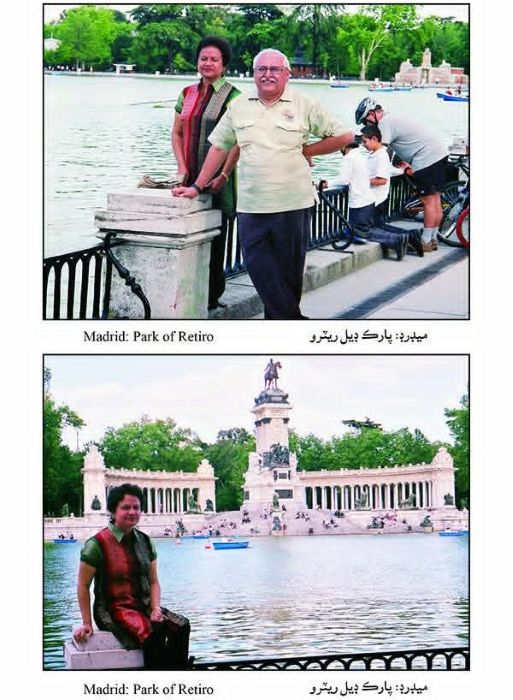 The thorough preparation undertaken before the journey, their detailed knowledge of the destinations, arriving early at bus terminals, railway stations, and airports, carrying food supplies, and carefully observing local people and surroundings are all hallmarks of experienced travelers. Such qualities are clearly evident throughout the travelogue. This approach, especially when traveling abroad, minimizes stress and enables one to address potential problems before they become serious.
The authors vividly describe experiences aboard modern high-speed trains, buses, and ships, along with their journeys by taxi, their stays in hotels, and their visits to restaurants and cafés. These details significantly enrich the narrative.
Their practical advice about saving time and purchasing inexpensive tickets directly from Pakistan is likely to prove valuable for future travelers to Europe. Rivers, forests, plains, cities, and landscapes are portrayed with such vividness that readers may feel as though they themselves are wandering through those valleys.
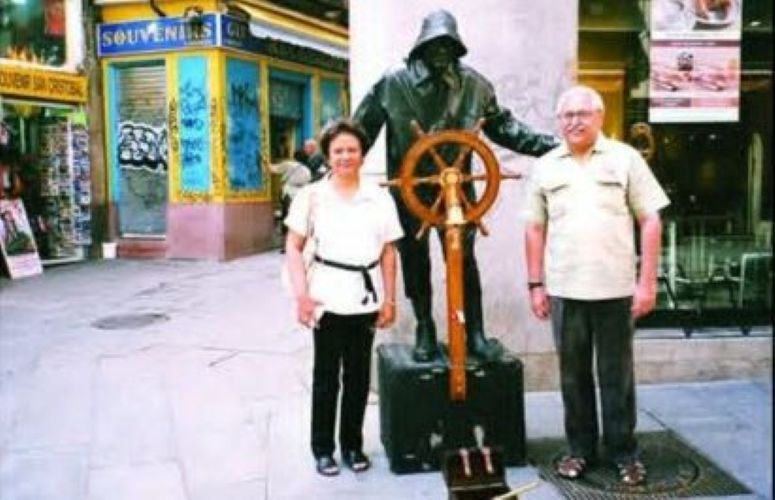 One passage particularly touched me. Imagine a Sindhi couple traveling overnight by train between Spain and Portugal, with the wife telling stories to help her husband fall asleep. To me, this represents romance at its finest, a profound level of companionship, mutual respect, care, friendship, and harmony. Such a blessing has truly been bestowed upon this couple.
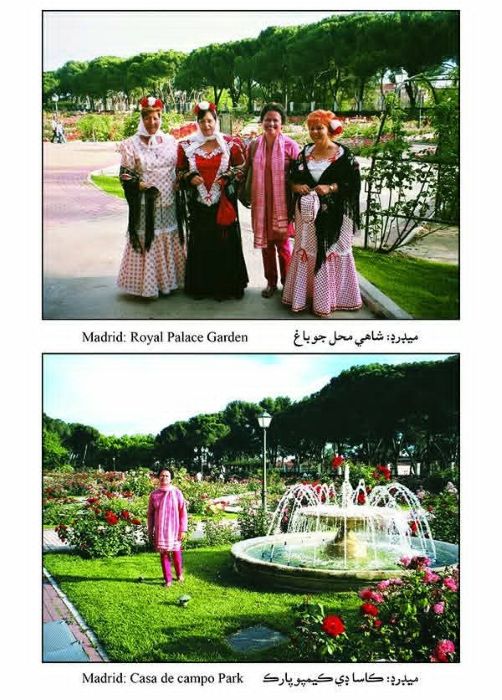
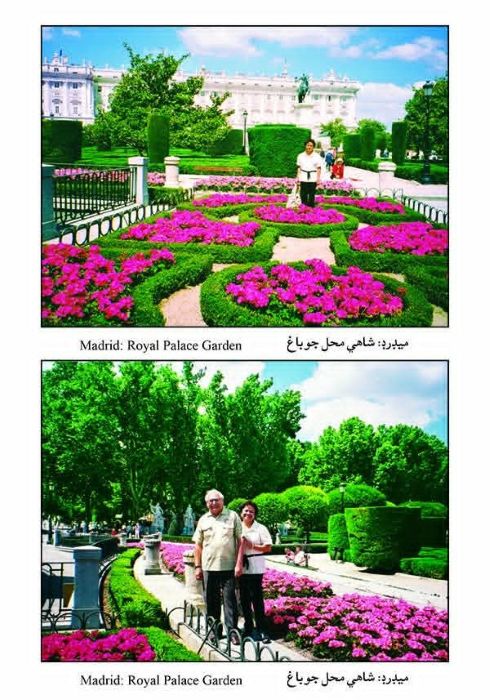
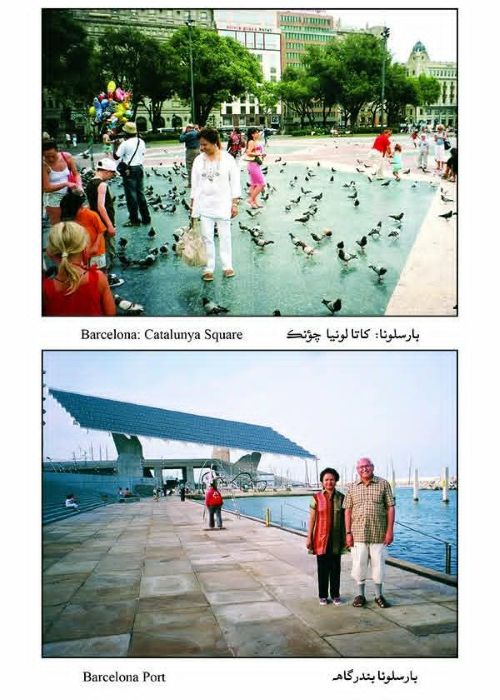
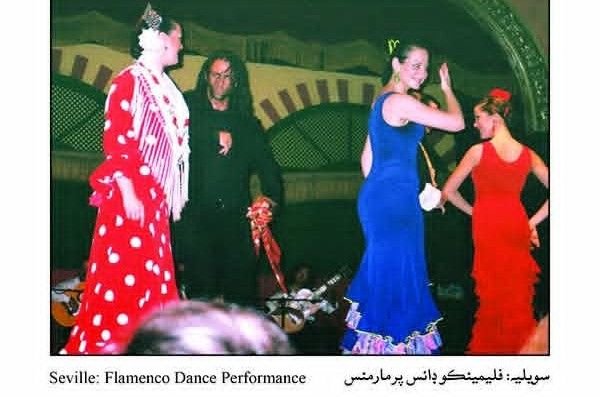
The travelogue provides detailed information about historical and modern sites, bridges, buildings, palaces, restaurants, cafeterias, coffee shops, beautiful parks, museums, archaeological sites, public squares, statues, famous boulevards, memorials, churches, renowned castles, mosques, monasteries, gates, valleys, rivers, and landscapes. Festivals, cultural traditions, customs, folk dances, music, and fairs are also described in detail, making the book both entertaining and educational.
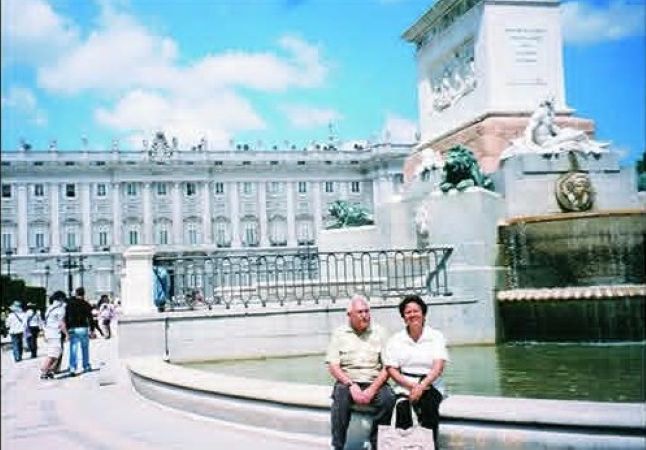 The authors faithfully record many small but memorable incidents encountered during their travels. These include a McDonald’s employee in Madrid warning them about their purse, an English couple refusing to sit beside them in a cable car, attractive young women greeting them with roses, an African girl singing a Bollywood song on a train to attract attention, a ticket inspector pronouncing Córdoba as “Cardoba,” an argument among South Asians in a restaurant involving an energetic exchange of crockery, and a couple debating newspapers and knowledge. These observations are recorded with remarkable honesty and authenticity.
The story of the African girl singing an Indian song reminded me of an incident from my own life. During my university days in Stockholm, I had an Ethiopian classmate who would jokingly greet me with the famous Bollywood dialogue, “Kuch Kuch Hota Hai,” which never failed to make us laugh.
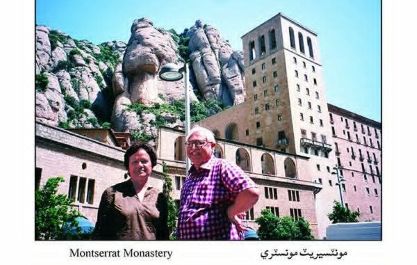
I have visited Spain several times, yet I have still not been to Madrid, Montserrat, Seville, or Toledo. Even when I visited Barcelona with my nephews, Moiz and Salar, some attractions remained unexplored. However, after reading this travelogue, I genuinely feel inspired to visit those places in the future, InshaAllah.
There is no doubt that Mr. Rafiuddin Junejo is fortunate to have a life partner with such a deep interest in and knowledge of history. That undoubtedly doubles the pleasure of traveling.
Mrs. Safia and Mr. Rafiuddin accurately observe that Pakistanis, Indians, and to some extent Bangladeshis living abroad often feel a natural closeness to one another. The book beautifully portrays nature’s splendor, including fields covered in sunflowers, groves of date palms, olive orchards, and orange plantations. The sensitivity with which Córdoba’s history is narrated is particularly commendable.
At Granada, they nearly missed visiting the Alhamra while searching for food, but fortunately, everything worked out. Based on my own experience, in such situations it is often wiser to grab a quick meal and continue walking to avoid unnecessary stress. Yet perhaps that is also part of the beauty of travel; sometimes one must rush to reach world-famous destinations, and perhaps even those moments contain hidden blessings.
The description of the Alhamra is exceptional. The stories about bumblebees, watering the gardens, throwing stones at pear trees, tales of snakes, honeybees, Moroccan mint tea, and gazing at the stars in a foreign land brought many of my own memories flooding back. Personally, I believe Granada is a city where one should spend several extra days.
Tourism experts often advise travelers to see as much of a region as possible while they are there. I noticed that Mr. Rafiuddin and Mrs. Safia followed this advice by visiting Andorra and then continuing onward to other destinations. Once one leaves a region, returning merely to see a few missed attractions can be difficult.
I felt this truth deeply while boarding a flight home from Sydney Airport. I remembered traveling through parts of Australia with my cousin Altaf. We had even considered visiting New Zealand, but ultimately did not go. Had we made a little extra effort, we might have explored that country as well. To this day, I do not know when fate will next provide such an opportunity.
The stories from Andorra make one feel that a longer stay there would have been worthwhile. Hearing about Sindhi business owners living there made my heart race with excitement. I wished I could have met them myself.
A friend of mine had a similar experience while visiting a Spanish island. He overheard people speaking Sindhi and struck up a conversation with them. One of them owned a restaurant, and throughout his stay, my friend ate there regularly. The Sindhi owners not only served what he ordered but also generously offered additional dishes out of hospitality.
 Likewise, the warm hospitality shown to Mr. Rafiuddin and Mrs. Safia by a cook from Jhang, Punjab, in the beautiful Pyrenees-surrounded nation of Andorra, as well as their meeting with a sixty-year-old Sindhi woman originally from Sukkur-Shikarpur, transformed the journey into something unforgettable. Such encounters remain with travelers for a lifetime, often bringing a smile to their faces years later. Yet to experience such moments, one must first leave home and set out into the world.
Reading this travelogue also offers opportunities to better understand the poetry of Shah Abdul Latif Bhittai, Allama Iqbal, and several other poets whose verses appear throughout the book.
In my view, this work is far more than a travelogue. It is simultaneously a book of history, language, poetry, humor, advice, autobiography, travel memories from Pakistan and abroad, a tourist guide, and a moving account of the romance and companionship shared by a Sindhi couple.
It occupies a unique place in Sindhi literature. Readers can draw inspiration and motivation from it, witnessing how a husband and wife become true friends, travel across countries together, fulfill their dreams, and care for one another every step of the way.
It is a beautiful reminder that the greatest journeys are not merely about the places we visit, but about the people with whom we share the road.
Read: In Search of Sindhri Mangoes
_______________________
 Abdullah Soomro, penname Abdullah Usman Morai, hailing from Moro town of Sindh, province of Pakistan, is based in Stockholm Sweden. Currently he is working as Groundwater Engineer in Stockholm Sweden. He did BE (Agriculture) from Sindh Agriculture University Tando Jam and MSc water systems technology from KTH Stockholm Sweden as well as MSc Management from Stockholm University. Beside this he also did masters in journalism and economics from Shah Abdul Latif University Khairpur Mirs, Sindh. He is author of a travelogue book named ‘Musafatoon’. His second book is in process. He writes articles from time to time. A frequent traveler, he also does podcast on YouTube with channel name: VASJE Podcast.