And perhaps,
When we finally grant sadness
The permission to exist,
We also grant ourselves
The permission
To be fully human.
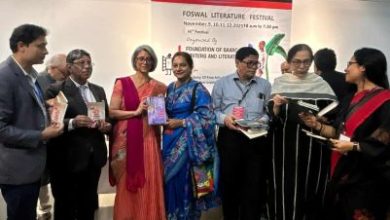
Nisar Banbhan, a seasoned poet and writer, based in Karachi, the capital city of Sindh shares his poetry
 Hailing from Village Mir Muhammad Banbhan, Taluka Mirwah, District Khiarpur and based in Karachi, the capital of Sindh, Nisar Banbhan is a seasoned professional with nearly 25 years of multifaceted experience, encompassing 3 years in journalism and over two decades of service in a public sector organization. His extensive expertise spans content creation, scriptwriting, screenwriting, lyrics, poetry, and storytelling across multiple languages, including Sindhi, Urdu, and English. Nisar has honed his skills in writing articles, columns, and short stories, contributing to various national and regional media outlets. Additionally, he brings a deep understanding of program development, educational advocacy, and strategic planning, having led initiatives that promote quality education and foster community empowerment. His passion for literature and education merges seamlessly, enabling him to craft impactful narratives that resonate with diverse audiences while driving meaningful change in society.
Permission to Be Sad
Sometimes, sorrow does not rise from within.
It falls from somewhere outside
Like a shattered piece of sky,
Breaking apart upon the floor of the heart,
Scattering its fragments across the quiet chambers of the soul.
You sit in silence,
Not because words have abandoned you,
But because you are weary
From the endless noise echoing inside your own being.
And then someone smiles and says:
“Don’t worry. Be positive. Everything will be fine.”
Strangely enough,
the world does not become lighter with those words.
Instead,
Another door quietly closes within you—
The one place
Where your grief might have rested its tired head.
It begins to feel
As though sadness itself is a transgression,
And smiling has become
The only acceptable language
Of being human.
We are living in an age
Where emotions are carefully arranged,
Like merchandise upon a brightly lit shelf:
Happiness here.
Success there.
And sadness
Please place it at the back,
Somewhere out of sight.
Yet no one pauses to ask:
What happens to a feeling
That is constantly pushed away?
Does it disappear?
Or does it remain,
Gathering weight in the dark,
Like rainwater trapped behind a forgotten wall?
Is sorrow considered unnecessary
Simply because it lacks beauty?
I often wonder
If human beings were made only of light,
Where would the shadows go?
And if there were no shadows,
How would light ever learn its own name?
For this is what it means to be human:
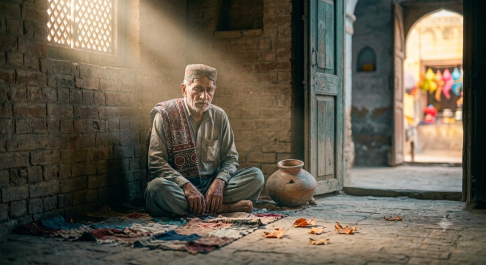
To crack like a fragile vessel.
To scatter like autumn leaves
Carried by an unseen wind.
To sit drenched
In the silent rain of one’s own thoughts.
Perhaps it was this very incompleteness of being
That Jaun Elia understood so deeply
When he wrote: “Desires have abandoned the company of my heart
And that suffering is a suffering beyond all suffering.”
These are not merely words.
They are the breath of a moment
When a person remains inside themselves,
Yet somehow becomes a stranger
To their own reflection.
And perhaps that is the real tragedy:
We have learned
To take away one another’s right to grieve.
We want everyone to appear whole,
Even while they are quietly breaking apart within.
But is being human
The same thing as always being okay?
If sorrow were allowed a language of its own,
If eyes were granted permission to become rivers,
If silence were allowed to live
Instead of being hurried toward an explanation,
Then perhaps we would understand one another
With greater honesty,
Greater tenderness,
Greater truth.
Because every feeling
Has a place in the architecture of the soul.
And sadness too
Is not a flaw to be hidden,
Nor a wound to be ashamed of.
It is a complete and sacred truth
Of being human.
A twilight that teaches us the meaning of dawn.
A shadow that reveals the shape of light.
A quiet season of the heart
Through which every soul must sometimes walk.
And perhaps,
When we finally grant sadness
The permission to exist,
We also grant ourselves
The permission
To be fully human.
***
In My Measure
After a long passage of years, she asked me,
“Where do you live these days?”
I smiled.
Then quietly searched through the pockets of my silence,
and replied,
“Oh… just within the limits of what I am.”
Within that small territory
where dreams walk barefoot,
careful not to wake reality;
where desires knock softly at the door
and return unanswered into the dusk;
and where the heart lives within itself
like an old tenant
occupying a forgotten room of memory.
She looked at me for a long while.
Her eyes…
two deep wells,
where one drowning soul
seemed to call out
to another already beneath the water.
And I knew that voice.
The same faint echo
I had heard years ago
inside a relationship
that lasted no longer than a moment.
A single moment
yet time wrapped it
in the shawl of centuries.
Now that moment rests upon my shoulders,
the way the dampness of rain-soaked clothes
clings stubbornly to the body
long after the storm has passed.
I have cared for my wounds
with an almost tender devotion.
Yes, exactly the way mothers
rock weeping children in the late hours of night,
patting their small foreheads
until sleep gently gathers them into its arms.
I do the same.
I place my palm
upon the brow of my sorrows
and sing them quiet lullabies:
“Hush now…
Go to sleep.
You have made enough noise.
You have stayed awake long enough.”
And then,
each night,
I rest my head
upon the pillow of prayer
and ask for only one thing:
My Lord…
If these wounds of my heart
have finally fallen asleep,
then grant them this mercy
never let them awaken again.
For some pains,
like ancient birds,
always know the way back home.
And some scars
are merely sleeping rivers,
waiting beneath the earth
for the season of rain.
So I pray
that the silence remains unbroken,
that the night keeps its gentle promise,
and that the dreams buried beneath my ribs
continue sleeping
like children held safely
in the lap of eternity.
_________________