Teaching License: Policy Paradox in Sindh
Sindh Needs a Phased Teaching License System

Sindh’s pioneering teacher licensing policy aims to elevate educational quality, but a severe shortage of certified candidates, risks locking qualified youth out and leaving thousands of rural schools empty.
By Abdul Qayoom Shar
Sindh made history on May 25, 2023, by becoming the first province in Pakistan to approve a comprehensive Teaching License Policy. As per the official notification issued by the School Education and Literacy Department, Government of Sindh, the policy was formulated by the Sindh Teacher Education Development Authority (STEDA) with technical support from the Aga Khan University Institute for Educational Development.
Last month, at a small tea stall near Thari Mirwah bus stop, I met a young man who had just finished his BS in 2024. He had his B Ed admission slip in one hand and a list of bridging course fees in the other. He did not ask me about the syllabus or the test pattern. He just asked, “Sir, will I even be allowed to apply?” That one question captures the entire policy paradox.
However, recent indications from the Education Department suggest that making the license mandatory for upcoming PST, JEST and JST recruitments has inadvertently generated a critical policy paradox.
This paradox manifests across two primary dimensions, eligibility and availability.
First, consider the question of eligibility for fresh graduates. While media reports indicate that Sindh Education Minister Syed Sardar Ali Shah recently hinted at opportunities in an upcoming batch of about 30,000 vacancies, current structural frameworks present a significant hurdle. Under the licensing framework notified by STEDA, a fresh BA, BSc or BS graduate from the 2024-25 cohort faces immediate ineligibility. The framework comprises three distinct categories, Primary for ADE holders, Elementary for B Ed holders and Secondary. STEDA guidelines stipulate that securing a license necessitates a prior professional degree. Furthermore, official criteria issued by STEDA show that holders of traditional 1-year B Ed degrees must complete a 6-month bridging course from an accredited institute incurring a cost between 40,000 and 60,000 rupees just to become eligible for the license test.
Second, and more critically, is the issue of market availability. Data from Pakistan’s inaugural Teaching License Test held in January 2024 reveals that approximately 4,000 candidates appeared, yet only 646 qualified for the Elementary License, resulting in a pass rate of merely 16 percent. Stakeholder estimates and private data compiled from test results suggest that to date the active pool of licensed teachers across Sindh stands at a modest 1,500 to 2,000.
In our taluka, people do not discuss pass percentages. They discuss whether the girls’ primary school in the next village will open next month. When I hear that the province has only about 1,500 licensed teachers for a projected 30,000 posts, I do not see a number. I see those schools with locked doors and waiting children.
Conversely, departmental projections indicate that between 30,000 and 50,000 teaching positions may fall vacant in coming years due to large scale retirements, though the exact official figure is yet to be notified. If licensing becomes an absolute prerequisite for the anticipated 2027-28 recruitment drive, the province could face an unprecedented mismatch, around 30,000 projected posts against a pool of only about 2,000 eligible candidates.
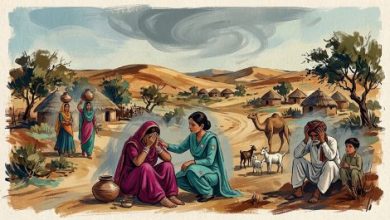
The ramifications of this imbalance will hit rural Sindh hardest. In talukas like Thari Mirwah in District Khairpur, alongside regions such as Tharparkar, Sujawal, Badin and Kashmore where educational hurdles are already profound, schools may struggle to find even a single licensed educator.
Many stakeholders frequently question why this policy was not enforced during the JST recruitment cycle concluded in early 2025. Official records clarify that those appointments did not represent a fresh advertisement, rather they constituted pending positions originating from the 2021 IBA Sukkur testing process. Citing a report published in Dawn on May 26, 2023, the licensing requirement was initially intended for future recruitments, and established legal frameworks dictate that conditions introduced in 2023 cannot be retroactively applied to a 2021 advertisement.
Moving forward constructively, abandoning the licensing policy is neither necessary nor advisable. Drawing on global best practices documented in education research, in countries like Finland and Singapore teaching licenses were progressively phased in over a 5- to 7-year window.
A practical 3-year transitional framework offers an optimal path forward. For the upcoming 2027-28 recruitment drive, holding a license should serve as a valuable merit advantage rather than an absolute disqualifier. A balanced merit formula could be structured as IBA Test Score 80 marks, Professional Qualification B Ed and ADE 10 marks and Teaching License 10 marks.
Reform is the need of the hour. But good reform fills schools with qualified teachers, it does not lock qualified youth out and leave schools empty.
____________
 The writer is a biochemistry graduate based in Thari Mirwah, District Khairpur. He writes on education and science.