A poignant journey into the heart of Tharparkar reveals a deepening humanitarian crisis, where failed crops, drying wells, and soaring inflation have pushed marginalized communities to the brink. It is an urgent call to look beyond political indifference and stand with a resilient people who ask not for pity, but simply to be counted.
Zaheer Udin Babar Junejo
On my elder son’s birthday, while leaving my second son with a high fever, with a half-filled tank, my MacBook, and some cash to fill up and buy a few days of food in my pocket, I set out for Thar, leaving early in the morning. After the current artificial tensions, fuel in the country has reached unprecedented prices; I have never seen so much in 52 years. Fewer trips by buses, higher fares, no one puts a brake, but false tears and excuses. It goes even higher the farther you go into the desert, and it makes a difference as everything becomes dearer or doesn’t come at all. Crossing Bakhtawar Bibi Farms in District Tando Allahyar, I could see land covered in green and canals full of water, and about dozens of boards pointing in front toward Bakhtawar Bibi house. As I moved toward Jhudho Naukot, one could see the victim land which, since the 2022 flood, could never recover. By noon, after crossing several herds of cows chasing back to the barrage, I reached Mithi. I had a scheduled dialogue with the people in Bon Germany about how our triggers and thresholds work for drought anticipatory action next year.
Then, I gathered some time with social activists regarding whether drought declaration is the real need or just the choice of a few? Because I still remember the words from the chairman of the leading party in power: “If critics claimed the national system has failed or collapsed, should we hand over Islamabad to the Tharparkar people for the betterment of the system?” Our dialogue closed on one note accepted by all of us: that it doesn’t matter how much the system delays, no matter blame it to climate or to authorities for poor governance, but with increasing suicides, destruction of health and no food and water storage, the people of God need hand-holding.
When you are in Thar, remember it won’t start nor end in Mithi and Islamkot. To observe, you need to dive deep; the second day is dedicated to going further into villages where no one reaches.
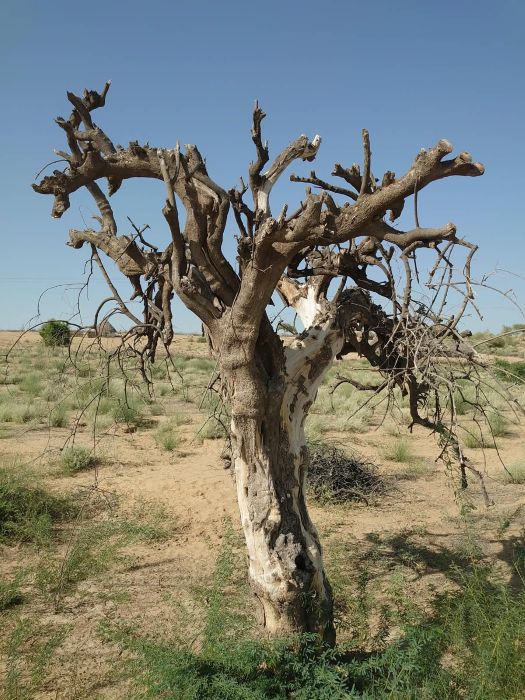
On the second morning I was leaving Mithi; when the first light of the sun hit the Kandi, a tree I am no stranger to, having seen many of them in Thar. There, staring at the Kandi, I thought of the tragic fact that so many young men and young women committed suicide (many of whom were buried without any intimation), as there was never a way out from that daily grind of theirs.
On the road from Mithi towards Tar Ahmed village, I saw the uneven bits of hope in the remaining fields. A few fractions of the earth were still green; everywhere else, farmers had used their tiny savings on tractor ploughing and purchased seed that did not yield a worthwhile crop. A common Thar farmer, even in a good monsoon, does not possess even the daily requirement of grain for the family, not to mention a surplus to sell and cover costs until the arrival of the next monsoon. But when he does harvest, the Seth (moneylender) has the right to charge him on his next account book page with the value of the remaining crop minus his debt.
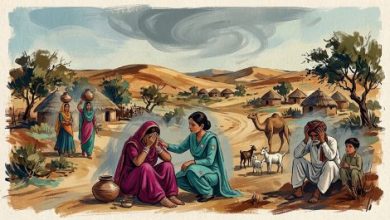
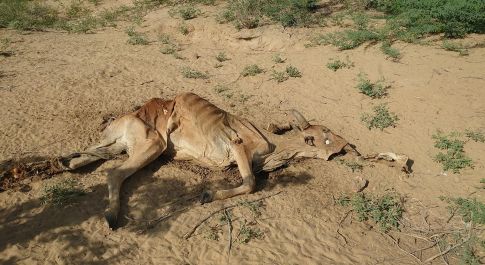
The words of those I met were soft, but their meaning was loud with despair. They believed they had been forsaken; that there was no elected official-district, provincial, national-representing them and voicing their miseries. This year they had already watched the hope for their families’ livelihoods wither away-but now their stock-their last means of livelihood, security and dignity-was wasting away. To add further to injuries, they told me, deep wells, which provide water to their communities, were starting to dry up and were no longer able to quench their thirst.
In the villages of Tar Ahmed, Lalu Tar, Jaitrar and rural vicinities of Dahili, Chachro and Diplo Thesils of Tharparkar, failure of crops is no longer an isolated issue. It has grown into a crisis of livelihood, animals, water, piling debt, and, most importantly, hope. When the land doesn’t give, animals die, and water diminishes, people ask how in a daily basis price hike, no social protection measures, they will make it till the next monsoon?
On the drive back, the sun set over the dunes in a blaze of gold, as beautiful as it must have been for generations of Tharis who have watched the sky for rain. The people there are not asking for pity. They are asking to be counted. The increasing sense of despair that I encountered serves as a reminder that drought is not just an environmental issue. It’s a human crisis that calls for immediate action, consistent assistance, and a shared resolve to walk hand-in-hand with the people of Thar before their last breaths are lost with the sun.
(All pictures used are taken by the writer himself)
Read: Stop the Tears Before They Fall
___________
 Zaheer Udin Babar Junejo is a Community-Driven Development Specialist based in Hyderabad.