
The Question of Sub-nationalism in Pakistan
Any step taken by the state to dilute the individuality of sub-nationalism and giving them a common identity, will prove to be disastrous

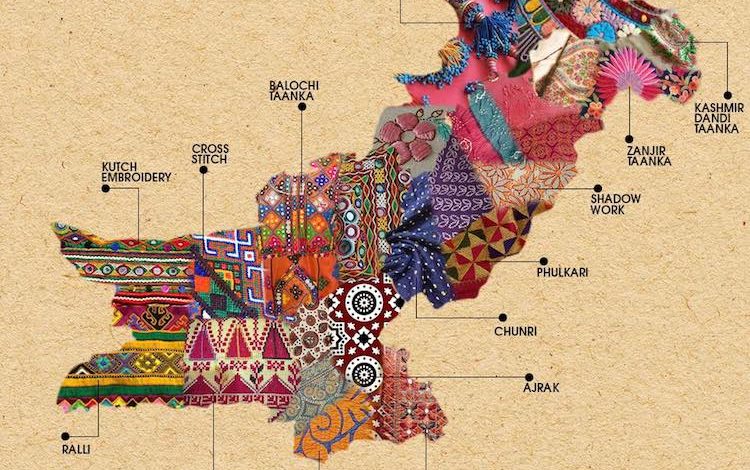
The State should not harm individually of any sub-nationalist group but accommodate their beauty as a whole.
Raza Muhammad Suhriyani
When discussing sub-nationalism in Pakistan, it is observed that entire South Asian region is ethnically diverse. And if we dig down the crisis of sub-nationalism in South Asia, it can be found that states and governments failed to manage the diversified culture of sub-nationalism.
It has been observed that most of the armed conflicts witnessed in South Asia emanate from the failure of the states to recognize virtuous diversity, and Pakistan is not an exception.
In case of Pakistan’s nationalism and sub-nationalism, it is not difficult to experience that any population divided on language, culture, and sub-nationalist group, in which element of extremism is found, seeks a solution to the problems beyond the domain of constitutional means. Here the question arises of why states failed to manage ethical diversity in South Asia. If one looks into it, he finds that states commonly perform two kinds of intervention to raise national correlation and harmony.
Firstly, it is an idealization intervention. State seeks to construct a doctrine that provides a common narrative of the past, present, and future. This creates common symbols, heroes, and stories. It does not dilute the identity of sub-nationalism.
Any step taken by the state to dilute the individuality of sub-nationalism and giving them a common identity, will prove to be disastrous. For a common identity of its people, the State should not harm individually of any sub-nationalist group but accommodate their beauty as a whole.
In the context of Pakistan, Islam is instrumental as an ideational factor to bind together people from different ethnicity and religion. It was imposed since inception of new country resulting in the 1971 fall of East Pakistan. This ideology fell short of uniting the people of Pakistan. Theoretically, most intellectuals had a conscience that ideology alone fails to unite people from different interest groups and orientations.
Secondly, material intervention complements the shortfall of the ideological front and includes good governance, equal socio-economic opportunities, meritocracy, and the end of corruption. It is the materialistic front where Pakistan always lags behind. That is exactly what led to the disintegration of Pakistan into two parts.
Yet Pakistan is focused on the ideological front, and the materialistic aspect of national integration is still ignored.
_________________


