Rooted in Pakistan, reflected in her cinema, and reconnected through her 2026 visit
- Deepa Mehta is more than a filmmaker; she is a storyteller of human experience whose work continues to provoke thought, evoke emotion, and inspire dialogue, leaving a lasting impact on global cinema and on the way stories of identity, history, and justice are told.
Kalavanti Raja
Deepa Mehta is one of the most fearless and intellectually compelling filmmakers of contemporary world cinema, an Indo-Canadian director and screenwriter whose work cuts across borders of geography, culture, and ideology, engaging deeply with questions of identity, gender, history, and human dignity, and over more than three decades she has built a body of cinema that is at once provocative, poetic, and profoundly humane.
Early Life, Birth, and Family Background
 Deepa Mehta was born on 1 January 1950 in Amritsar, India, into a Punjabi family whose ancestral roots lay in Lahore, now in Pakistan, and her life story begins in the shadow of the 1947 Partition of India; her father Satwinder, a film distributor and cinema owner, exposed her early to the world of cinema, while her mother Vimla nurtured the household, and growing up amid stories of migration, loss, and cultural displacement deeply shaped her sensibility, which later found powerful expression in her films, particularly in her exploration of Partition and identity.
Education and Intellectual Formation
She pursued higher education at the University of Delhi, earning a degree in philosophy, a discipline that significantly influenced her cinematic voice, giving her films intellectual depth and moral inquiry, and later after moving to Canada in the 1970s she studied filmmaking and television production at York University and the Ontario College of Art and Design, where her early work in documentaries and television helped refine her observational style and commitment to realism.
Migration and Life in Canada
Her migration to Toronto marked a turning point in her life, as Canada became both her home and her creative base, allowing her to explore themes that might have been constrained in South Asia, and her dual identity as both Indian and Canadian gave her cinema a distinctive global perspective, blending cultural authenticity with universal human concerns.
Marriages, Family, and Personal Life
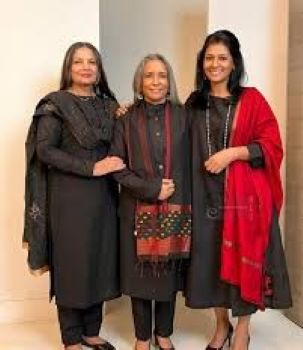 In her personal life, Deepa Mehta was first married to Canadian filmmaker Paul Saltzman during the 1970s, and from this marriage was born her daughter Devyani Saltzman in 1979, who later became a respected arts curator, writer, and cultural leader, and after their separation Mehta remained in Canada, later marrying British-Canadian cinematographer Derek Cowie, who became both her life partner and a key collaborator in her filmmaking journey, contributing to several of her major works, while her daughter Devyani also engaged deeply with her mother’s work, even writing a reflective book about the making of Water and their relationship.
Early Career and Entry into Cinema
Deepa Mehta began her career in Canada producing documentaries and television programs, gradually developing her voice as a filmmaker, and her first major breakthrough came with Sam & Me in 1991, which explored immigrant identity and earned recognition at the Cannes Film Festival, establishing her as a serious filmmaker capable of blending humor with social commentary.
Major Works and Filmography (Elements Trilogy)
Her defining contribution to cinema came through her Elements Trilogy—Fire, Earth, and Water—where Fire explored a lesbian relationship within a traditional Indian household and sparked intense protests and debates, Earth portrayed the human cost of the Partition of India with emotional depth and historical sensitivity, and Water examined the lives of widows in orthodox Hindu society, facing violent opposition during its production yet ultimately receiving international acclaim and an Academy Award nomination.
Other Major Works
Beyond the trilogy, Mehta created a diverse body of work including Bollywood/Hollywood, a satirical take on cultural identity, Heaven on Earth, which dealt with domestic abuse among immigrant women, Midnight’s Children, an adaptation of Salman Rushdie’s complex novel, Anatomy of Violence, inspired by the Delhi gang rape case and examining the roots of violence, and Funny Boy, a coming-of-age story centered on LGBTQ identity in Sri Lanka, all of which demonstrate her consistent engagement with social justice and human experience.
Recent Work and Ideological Evolution
Her recent work, particularly the documentary I Am Sirat, reflects a clear evolution in her ideological approach, moving from direct confrontation toward a more nuanced and empathetic exploration of identity, gender, migration, and memory, where her cinema now functions less as protest and more as a reflective medium encouraging dialogue and understanding, while still addressing structural inequalities and historical trauma.
Writing Style and Cinematic Language
Deepa Mehta’s writing and filmmaking style is marked by emotional realism, strong character development, symbolic depth, and philosophical undertones, as she often writes or co-writes her films, blending literary sensibility with visual storytelling to create narratives that are both intimate and socially resonant.
 Controversies and Courage
Her career has also been defined by significant controversies, particularly surrounding Fire, which faced attacks and protests from conservative groups for its depiction of same-sex relationships, and Water, whose filming in Varanasi was violently disrupted, forcing relocation to Sri Lanka, yet despite these challenges she remained steadfast in her commitment to truthful storytelling, demonstrating remarkable courage and integrity.
Recognition and Awards
Her contributions to cinema have been widely recognized, including receiving the Padma Shri from the Government of India in 1998, along with honors at major international film festivals such as Cannes and Toronto, and continued global recognition including a major honorary award at the Singapore International Film Festival in 2026.
Visit to Pakistan (2026)
In February 2026, Deepa Mehta visited Pakistan to attend the 14th Lahore Literary Festival held at the Alhamra Arts Council in Lahore, where she participated in discussions on cinema, culture, and storytelling alongside prominent writers and intellectuals, and during her visit she also explored locations connected to her family’s past, including Government College University where her father had studied, making the trip deeply emotional as she reflected on memory, loss, and belonging linked to Partition.
Connection with Pakistan in Her Work
Her connection with Pakistan is also reflected in her work, particularly in Earth, which portrays pre-Partition Lahore and highlights the shared cultural heritage and human experiences that transcend political borders, reinforcing her role as a storyteller of South Asian history and identity.
Professional Circle and Collaborations
Throughout her career, Deepa Mehta has been supported and influenced by a network of collaborators including Paul Saltzman and Derek Cowie, as well as literary figures such as Salman Rushdie and Bapsi Sidhwa, whose works and ideas have contributed to the richness of her cinematic narratives.
Language and Audience
Her films are made in multiple languages, primarily Hindi and English, with regional languages incorporated where necessary to maintain authenticity, allowing her to reach both local and global audiences while preserving cultural nuance.
 Personality and Intellectual Character
As a personality, Deepa Mehta embodies courage, intellectual depth, and artistic integrity, combining a fearless approach to difficult subjects with a deeply human and empathetic perspective, and her work reflects not a desire to provoke but a commitment to honesty and truth.
Legacy and Importance
Her legacy lies in her ability to challenge social norms, give voice to marginalized communities, bridge cultures, and transform historical and personal pain into meaningful narratives, establishing her as a feminist voice, a chronicler of memory, and a philosopher of cinema.
My Words
Ultimately, Deepa Mehta is more than a filmmaker; she is a storyteller of human experience whose work continues to provoke thought, evoke emotion, and inspire dialogue, leaving a lasting impact on global cinema and on the way stories of identity, history, and justice are told.
Read: The Pen That Spoke for Women
_____________________
Kalavanti Raja is a social and political activist from Gambat, Khairpur Mirs, with 30 years of work on women’s rights, minorities, and social justice. She has served in Sindhiyani Tahreek and participated in national and international forums across Asia, Europe, and America.. She can be reached at kalavanti.raja@gmail.com