Discovering the Swedish Countryside from Stockholm to Knivsta
By Abdullah Usman Morai | Sweden
On the 30th of May 2026, Stockholm was buzzing with excitement as thousands of runners gathered for one of the city’s largest sporting events, the Stockholm Marathon. Around 25,000 participants were expected to take part, and many roads throughout the city were either closed or partially inaccessible. Driving through Stockholm that day was hardly an attractive option.
Rather than spending the day navigating traffic diversions and crowded streets, I decided to do the opposite: escape the city and head toward the countryside. Accompanied by Pernilla, I set off on a leisurely road trip that would take us through picturesque landscapes, charming villages, and hidden corners of rural Sweden.
 Leaving the City Behind
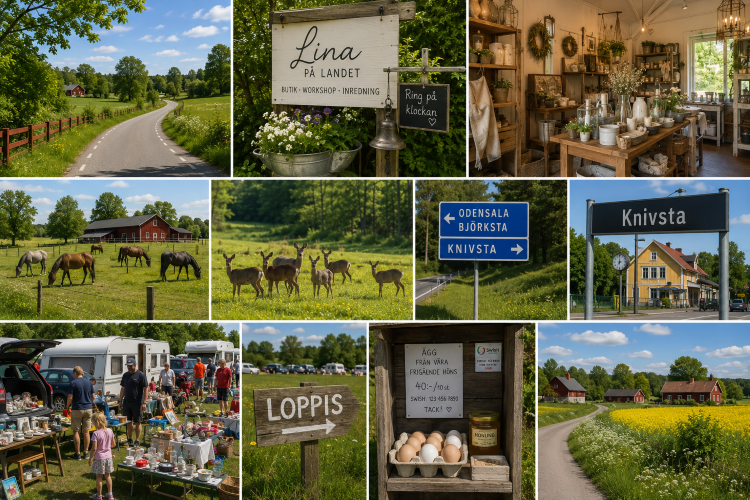
We started our journey on the E4 motorway, heading north. The further we drove from Stockholm, the more the urban scenery gave way to open fields, forests, and rolling countryside. After passing Märsta, we turned onto smaller country roads, leaving the main highway behind and embracing a slower pace of travel.
The weather could not have been better. The sun was shining, the temperature was pleasant, and nature was displaying its finest spring colours. Fresh green fields stretched in every direction, and the countryside seemed alive with activity.
Eventually, we arrived at Brunnby, where we visited Lina på Landet, a delightful combination of workshop, home décor store, and countryside boutique.
 A Charming Visit to Lina på Landet
Lina på Landet is one of those uniquely Swedish places that blends creativity, craftsmanship, and rural charm. Visitors can browse a carefully selected collection of home goods, decorative items, handcrafted products, garden accessories, furniture, seasonal decorations, and gifts. The store reflects a distinctly Scandinavian aesthetic, simple, elegant, and closely connected to nature.
What made the visit particularly memorable was the way the shop operated. The lights were on, the displays were beautifully arranged, and everything appeared open for business. Yet the door was locked. A handwritten note on the entrance instructed visitors to ring a bell for assistance.
For someone accustomed to traditional retail stores, this felt unusual and fascinating. It was my first experience of a countryside shop where customers simply ring when they arrive. It perfectly reflected the relaxed and personal nature of rural Swedish life. After ringing, we were warmly welcomed and allowed to explore the store at our own pace.
Among the many attractive items on display, we eventually purchased a small squirrel statue, a charming reminder of the day’s adventure.
Through Fields, Forests, and Horse Country
After leaving Brunnby, we continued driving deeper into the countryside. The roads became narrower and increasingly winding. Many were barely wide enough for two vehicles to pass comfortably. Fortunately, traffic was almost nonexistent.
Now and then, however, an approaching vehicle would require careful manoeuvring and a bit of patience from both drivers. Such encounters are common on country roads and somehow add to the charm of rural travel.
Along the route, we passed numerous horse stables. Horses grazed peacefully in fenced pastures, seemingly unbothered by the world around them. Sweden’s countryside has a long association with horse culture, and seeing these magnificent animals in such natural surroundings was a pleasure.
Wildlife was equally abundant. Several groups of deer could be seen feeding in open fields. They appeared and disappeared among the trees with remarkable grace, offering fleeting glimpses of nature’s quiet beauty.
Crossing into Uppsala County
As we continued our journey, we passed through areas such as Odensala and Björksta. Gradually, Stockholm County disappeared behind us, and we entered Uppsala County.
Our destination eventually became Knivsta, a growing municipality situated between Stockholm and Uppsala. Though relatively small, Knivsta has become increasingly popular due to its convenient location and pleasant quality of life.
Surrounded by farmland, forests, and nature reserves, Knivsta offers an attractive balance between modern living and rural tranquility. The town retains much of its countryside character while benefiting from excellent transport connections to Sweden’s two largest cities. It is a place where residents can enjoy nature without sacrificing accessibility.
 Discovering a Swedish Loppis
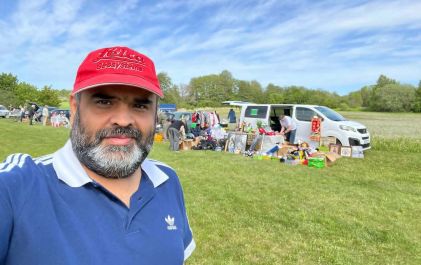
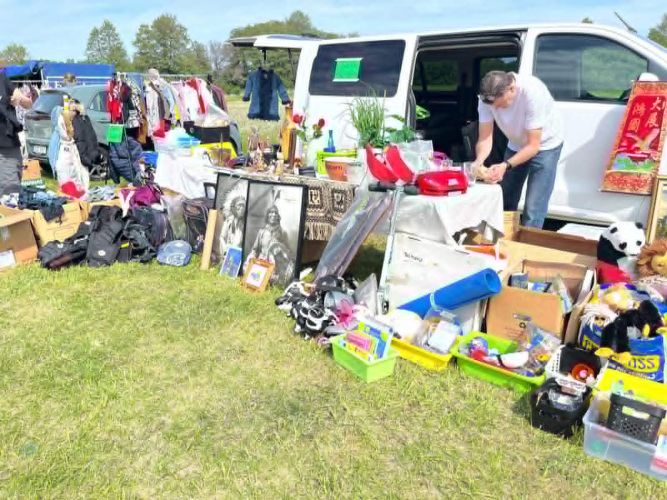
Near Knivsta, we came across a loppis at Kvarngården.
For anyone unfamiliar with Swedish culture, a loppis is much more than a simple flea market. It is a beloved social institution deeply embedded in Swedish life. The word “loppis” comes from “loppmarknad,” meaning flea market, but the concept represents sustainability, community, and the practical Swedish habit of giving things a second life.
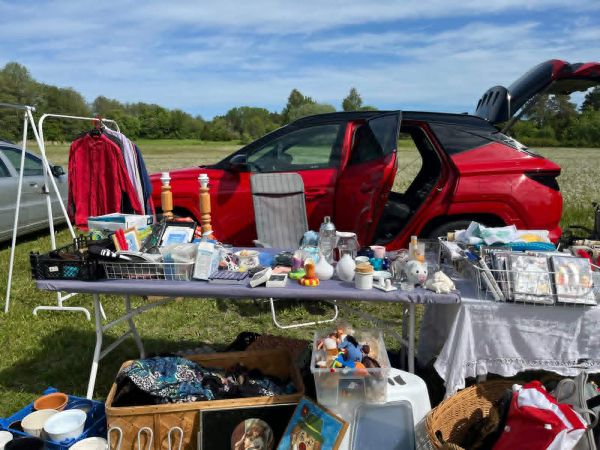
At a typical loppis, visitors can find almost anything imaginable: books, kitchenware, toys, furniture, antiques, tools, artwork, clothing, collectibles, gardening equipment, and countless unexpected treasures.
The Kvarngården location was especially interesting because it also functions as a camping site. Caravan owners park their vehicles there, stay for a few days, and continue their journeys across Sweden. On this particular day, a few campers were staying and enjoying loppis by having coffee mugs in their hands outside of their caravans.
Stalls were set up beside cars and small tents. Families, retirees, young couples, and children all participated. Some were selling items, others were browsing, and many were simply enjoying the social atmosphere.
The event felt less like a commercial marketplace and more like a community gathering. Conversations flowed easily, children played nearby, and people exchanged stories as much as they exchanged goods.
Trust: One of Sweden’s Greatest Strengths
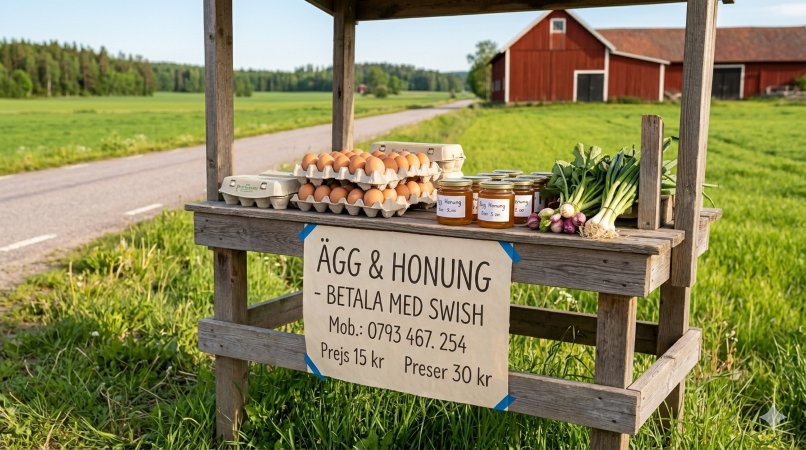
One of the most interesting discoveries at the loppis was finding fresh farm products for sale, including eggs from local farms. In Sweden, it is common to encounter small roadside stands offering eggs, honey, potatoes, vegetables, flowers, or homemade products.
Often, these stands are unattended.
Customers simply stop, select what they want, and transfer payment electronically using the seller’s account details or mobile payment information displayed on a sign.
The entire system operates largely on trust.
For visitors from many parts of the world, this can be surprising. Yet it reflects one of the strongest foundations of Swedish society: a high degree of social trust.
Trust reduces friction in daily life. It allows systems to function more efficiently and creates a sense of shared responsibility among citizens. While no society is perfect, the ability to leave products unattended and expect customers to pay honestly demonstrates a remarkable level of confidence between people.
When trust declines, societies often become burdened with additional controls, monitoring, and suspicion. When trust flourishes, everyday interactions become simpler and more pleasant.
The small roadside farm stands scattered throughout rural Sweden are a quiet but powerful example of this principle in action.
 A Day Well Spent
As the afternoon progressed, we slowly made our way back home. The marathon crowds remained far away, confined to the streets of Stockholm, while we spent the day among fields, forests, horses, deer, country roads, and friendly people.
Sometimes the best journeys are not those that take us to famous landmarks or major attractions. Sometimes they are simple drives through unfamiliar roads, spontaneous stops at local shops, conversations with strangers, and moments of quiet appreciation for nature.
While thousands of runners were completing their marathon through Stockholm, Pernilla and I enjoyed a different kind of marathon, a countryside marathon of discovery, tranquility, and simple pleasures.
It was a day spent away from the noise of the city, surrounded by nature and authenticity, and one that will remain a cherished memory for years to come.
Read: Cities Built Upon Invisible Water
______________________
Abdullah Soomro, penname Abdullah Usman Morai, hailing from Moro town of Sindh, province of Pakistan, is based in Stockholm Sweden. Currently he is working as Groundwater Engineer in Stockholm Sweden. He did BE (Agriculture) from Sindh Agriculture University Tando Jam and MSc water systems technology from KTH Stockholm Sweden as well as MSc Management from Stockholm University. Beside this he also did masters in journalism and economics from Shah Abdul Latif University Khairpur Mirs, Sindh. He is author of a travelogue book named ‘Musafatoon’. His second book is in process. He writes articles from time to time. A frequent traveler, he also does podcast on YouTube with channel name: VASJE Podcast.