A Solo Journey through Marseille, Provence, the French Riviera, and Monaco
By Abdullah Usman Morai | Sweden
Day One – From Stockholm to Provence: A Friendship Reunion and a Night in the French Countryside
10 October 2025
Some journeys begin with years of planning, detailed itineraries, and endless research. Then some journeys begin with a simple click.
For quite some time, I had been keeping an eye on flight prices to Marseille, hoping that one day an irresistible deal would appear. Eventually, it did. Ryanair announced discounted fares, and without giving myself much time to overthink, I booked the ticket. Sometimes the best travel decisions are made in a matter of minutes. When you find a remarkably cheap flight, the rule often becomes book first and decide later whether you’ll actually go.
Thankfully, I went.
 On the morning of 10 October 2025, I departed from Stockholm Arlanda Airport, filled with excitement and curiosity. Every new destination brings not only a change of scenery but also the possibility of discovering something new about the world and about oneself. The flight to Marseille lasted a little over three hours, passing comfortably above the clouds before slowly descending towards France’s beautiful Mediterranean coastline.
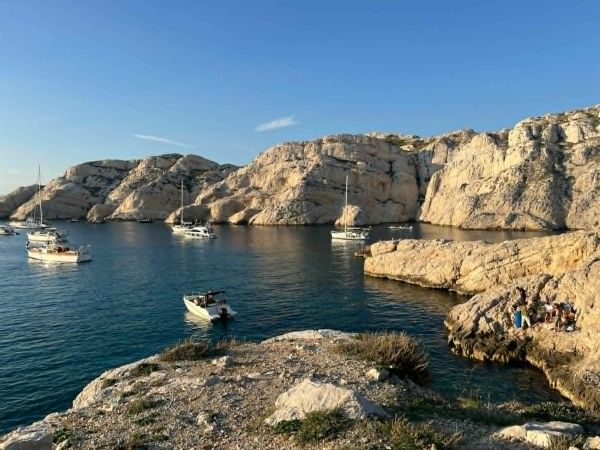
 As the aircraft began its descent, an extraordinary panorama unfolded beneath the wings. Long before my feet touched French soil, Marseille had already introduced itself. The city’s famous Old Port shimmered beside the deep blue Mediterranean, while hills and rocky landscapes surrounded neighborhoods stretching in every direction. The contrast between the azure sea, the bright autumn sky, and the rugged mountains created a breathtaking canvas. Looking through the aircraft window, I immediately understood why so many artists, writers, and travelers have been captivated by southern France.
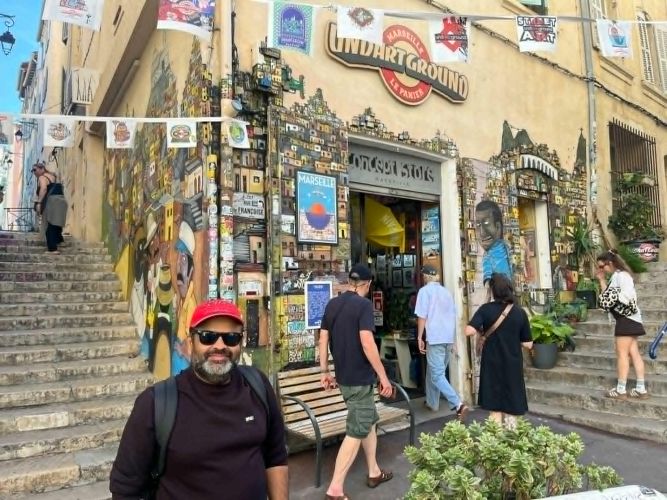
Marseille, France’s second-largest city and its oldest, has welcomed merchants, sailors, explorers, and dreamers for over 2,600 years. Founded by Greek settlers around 600 BC, it has grown into one of the Mediterranean’s most important ports. Located on France’s southeastern coast, the city is a fascinating blend of history, cultures, cuisines, and traditions. African, European, Middle Eastern, and Mediterranean influences coexist here, giving Marseille an energetic and multicultural personality unlike any other French city.
The airport itself reflected the city’s practical character. It was neither enormous nor confusing. Everything seemed straightforward, making the arrival process smooth and stress-free. The October weather was pleasantly warm, a welcome change from the cooler Scandinavian autumn I had left behind only a few hours earlier.
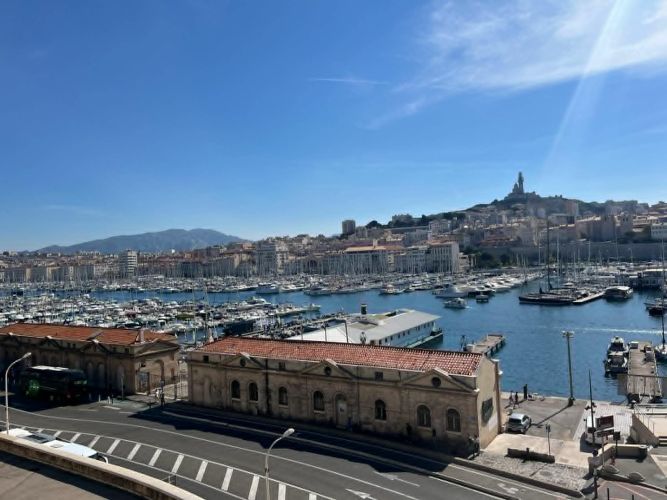 Waiting for me was my old friend Alain, who works at Marseille Airport. Our friendship stretches back nearly twenty-five years, making this reunion especially meaningful. The plan was simple: spend the first night at his farmhouse in the beautiful village of Lourmarin, approximately 67 kilometers from Marseille, just north of the elegant city of Aix-en-Provence.
Aix-en-Provence, often simply called Aix, is renowned for its graceful boulevards, charming fountains, colourful markets, and artistic heritage. It was also the birthplace of the famous painter Paul Cézanne, whose works were inspired by the landscapes of Provence. The region surrounding Aix and Lourmarin is famous for lavender fields, vineyards, olive groves, and picturesque villages that seem untouched by time.
 I stepped outside the airport terminal into the warm Mediterranean air. Alain was slightly delayed because of traffic, but soon arrived with his younger daughter, Julia. Seeing familiar faces after arriving in a foreign country always brings a special comfort. Their kindness in coming to collect me made me feel less like a visitor and more like a family friend returning after a long absence.
We began driving towards Lourmarin, but our plans soon changed.
Alain explained that their friends were waiting in Marseille’s city centre and hoped to meet us before we left. They were Amani, originally from Tunisia, and Maya, from Syria. Without hesitation, Alain steered the car back towards downtown Marseille.
Like many European cities on a Friday evening, Marseille was preparing for the weekend. Traffic crawled through the streets as commuters mixed with people heading out to enjoy restaurants, cafés, concerts, and gatherings with friends. Julia expertly navigated using Google Maps, calmly guiding her father through the maze of city streets until we finally reached the center.
Finding parking, however, proved to be another adventure.
After circling several streets, we eventually found space in an underground parking garage near Marseille’s magnificent Opera House. Illuminated against the evening sky, the elegant façade of the opera building looked almost theatrical itself, standing proudly among the bustling city streets.
Outside, Marseille was alive.
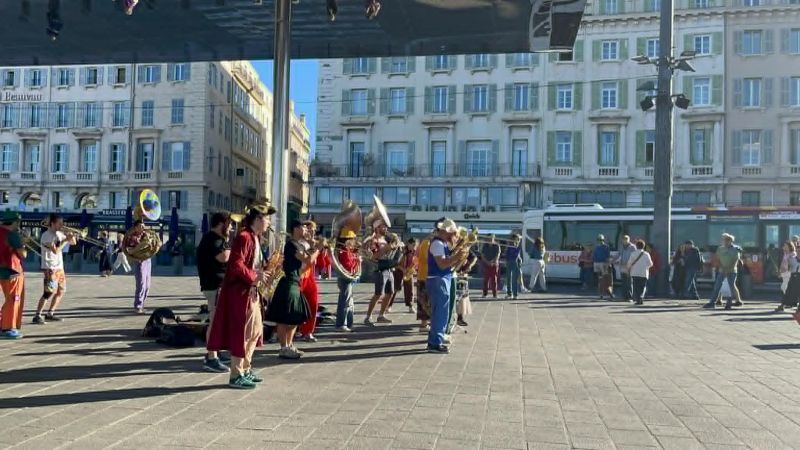
The sidewalks overflowed with people enjoying the beginning of the weekend. Restaurants buzzed with conversation, cafés spilled onto pavements, musicians filled the air with melodies, and laughter echoed through the narrow streets. There was an unmistakable sense that life here was meant to be enjoyed outdoors.
Our destination was Le Marmot, a relaxed and welcoming neighbourhood bar that has earned a reputation as a meeting place for locals, expatriates, international students, and travelers. More than simply serving drinks, it functions as a social hub where strangers become friends, languages are exchanged, cultures meet, and conversations continue late into the evening. It perfectly represented Marseille’s cosmopolitan spirit.
Interestingly, Alain and Julia themselves were meeting Amani and Maya there for the very first time, making all of us newcomers to the gathering.
The café was packed, with hardly an empty seat available, so we decided to find another nearby restaurant instead.
 Just a short walk away, we found a casual restaurant serving an interesting mix of cuisines, including Indian, Pakistani, and Middle Eastern dishes. As we ordered our meals, I noticed that the young man taking orders and preparing food was from Bangladesh. It reminded me once again how migration has enriched Europe’s culinary landscape, allowing travelers to experience tastes from every corner of the world.
Dinner soon turned into an enjoyable cultural exchange.
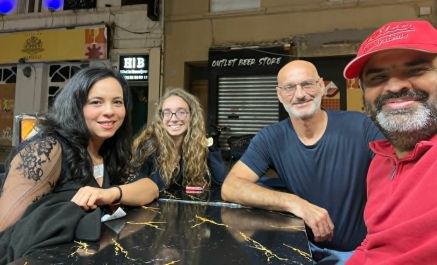
Amani worked as an IT professional and spoke fluent English and French with remarkable ease. Maya was quieter, listening thoughtfully before adding her own insights to the conversation. Around the table, we shared stories about Tunisia, Syria, France, Sweden, and Pakistan. We spoke about cultures, languages, everyday life, travel, work, and the similarities that often connect people despite their different backgrounds.
It struck me how travel continually creates these unexpected encounters. A few hours earlier, I had been sitting on an airplane. Now I was sharing dinner with people whose life stories stretched across several continents.
As enjoyable as the evening was, the following day promised another long adventure, so eventually we said our goodbyes and left Marseille behind.
Escaping the city’s Friday evening traffic required some patience, but once we reached the open roads of Provence, everything changed. The busy streets gave way to the peaceful countryside. Alain drove carefully while we chatted, and French songs played softly through the car speakers, adding a pleasant soundtrack to the journey through the dark Provençal landscape.
Around eleven o’clock at night, we finally arrived in Lourmarin.
 Nestled in the heart of the Luberon Regional Natural Park, Lourmarin is often considered one of the most beautiful villages in France. During the summer months, its narrow streets overflow with tourists, artists, cafés, markets, and cultural festivals. By October, however, the crowds had largely disappeared, allowing the village to reveal a quieter, more authentic charm.
Personally, I preferred it this way.
The peaceful atmosphere made every stone street feel timeless. At the centre of the village stood the beautifully illuminated Renaissance château, whose warm lights created an almost magical atmosphere against the night sky.
Instead of heading directly home, Alain suggested we take a short walk through the village before ending the evening.
Although most of the shops had already closed, beautifully decorated storefronts remained visible through their glass windows, showcasing the elegant French attention to detail. Window displays looked almost like small art exhibitions.
Soon, Alain’s son, Théo, joined us. He works as a firefighter in a nearby town, and together we found a cozy outdoor terrace at a local bar.
The atmosphere was wonderfully intimate. It seemed as though nearly everyone knew one another, greeting neighbours as they arrived. Sitting beneath the cool autumn sky, we talked about ordinary life, family, work, travel, and different cultures.
 During the conversation, both Théo and Julia were genuinely surprised to discover that Alain and I had been friends for twenty-five years. Time has passed remarkably quickly, yet true friendships have a wonderful way of making decades feel like yesterday.
Eventually, we made our way to Alain’s farmhouse.
Waiting patiently near the parking area was Grisette, the family’s cat, who greeted us with unmistakable feline curiosity. Watching her inspect me carefully, I couldn’t help imagining her thoughts:
“Where have all of you been? I’ve been waiting forever… and who exactly is this new human you’ve brought home?”
The farmhouse itself was everything one imagines when thinking of the French countryside.
Far removed from city traffic and urban noise, it was surrounded by nature, silence, and fresh air. Only the sounds of night birds, the gentle breeze, and rustling trees accompanied the night. Inside the house, however, another kind of harmony filled the rooms, not of music alone, but of languages. English, French, Swedish, and even Sindhi flowed naturally through our conversations, creating a delightful multilingual symphony.
The living room immediately caught my attention. A beautiful piano stood quietly in one corner, while a fireplace promised warmth during winter evenings. Hanging on the wall was an antique kerosene lamp, the kind we affectionately call “Gaaslate ware baati” in Sindhi. It reminded me how ordinary household objects can unexpectedly connect distant cultures and childhood memories.
Before retiring for the night, we sat together with cups of tea, continuing our conversations a little longer. There was no rush. The warmth of friendship, the peaceful surroundings, and the simple comfort of sharing stories made for the perfect ending to my first day in France.
It had been a long but unforgettable day.
As I finally drifted off to sleep in the quiet countryside of Provence, somewhere between dreams and reality, my mind wandered towards the adventures that awaited along the dazzling shores of the French Riviera. (Continues)
Read: Where History Whispers and Rivers Flow
__________________
Abdullah Soomro, penname Abdullah Usman Morai, hailing from Moro town of Sindh, province of Pakistan, is based in Stockholm Sweden. Currently he is working as Groundwater Engineer in Stockholm Sweden. He did BE (Agriculture) from Sindh Agriculture University Tando Jam and MSc water systems technology from KTH Stockholm Sweden as well as MSc Management from Stockholm University. Beside this he also did masters in journalism and economics from Shah Abdul Latif University Khairpur Mirs, Sindh. He is author of a travelogue book named ‘Musafatoon’. His second book is in process. He writes articles from time to time. A frequent traveler, he also does podcast on YouTube with channel name: VASJE Podcast.