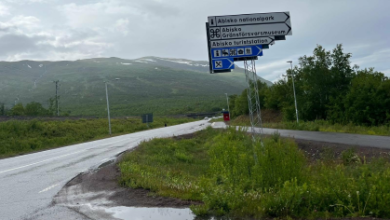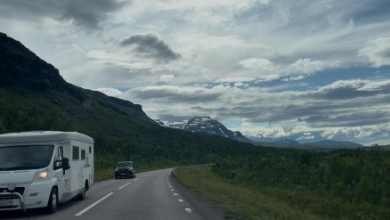
Crossing into Norway via the E10 highway replaces formal border checkpoints with breathtaking mountain scenery. The seamless transition leads directly into the expansive Arctic wilderness of the greater Narvik region.
By Abdullah Usman Morai | Sweden
Crossing an international border is often marked by immigration counters, queues, and formalities. But on this journey, the transition from Sweden to Norway felt entirely different. It was the landscape itself that welcomed us.
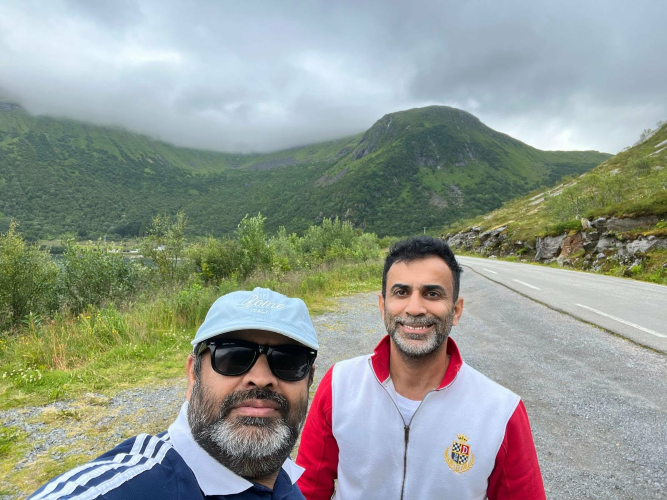
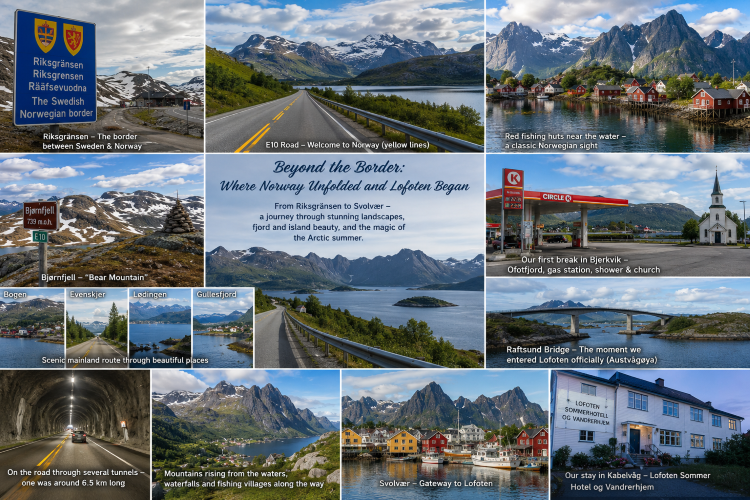 My travel companion, Dr. Imran Jamali, and I left Sweden behind as we crossed Riksgränsen, the official border between the two Nordic countries, along the legendary E10 highway. The vast wilderness of Kiruna Municipality gradually faded into the rear-view mirror, and before us lay the magnificent Norwegian municipality of Narvik. Although visiting Narvik town itself was never part of our itinerary, we would spend nearly two hours driving through its expansive region, a journey that proved to be one of the most captivating stretches of our entire Scandinavian adventure.
Narvik is much more than a northern Norwegian town. Nestled between towering mountains and the deep blue waters of the Ofotfjord, it is known worldwide for its strategic ice-free harbour and its remarkable role during the Second World War. Today, the municipality extends over a vast area of mountains, valleys, fjords, forests, and picturesque coastal settlements, making it one of northern Norway’s most scenic regions. Every kilometer seemed to reaffirm why this corner of the Arctic attracts travellers from across the globe.
Soon after crossing the border, we entered the rugged landscape of Bjørnfjell, literally meaning “Bear Mountain.” The name alone evokes the wild spirit of the region. Here the mountains stood proudly, their rocky faces still holding patches of snow despite the height of summer. The weather could not have been more photogenic. Bright sunshine danced between drifting clouds, opening windows of deep blue sky before closing them again with soft grey curtains. Every few minutes, the scenery seemed to repaint itself.
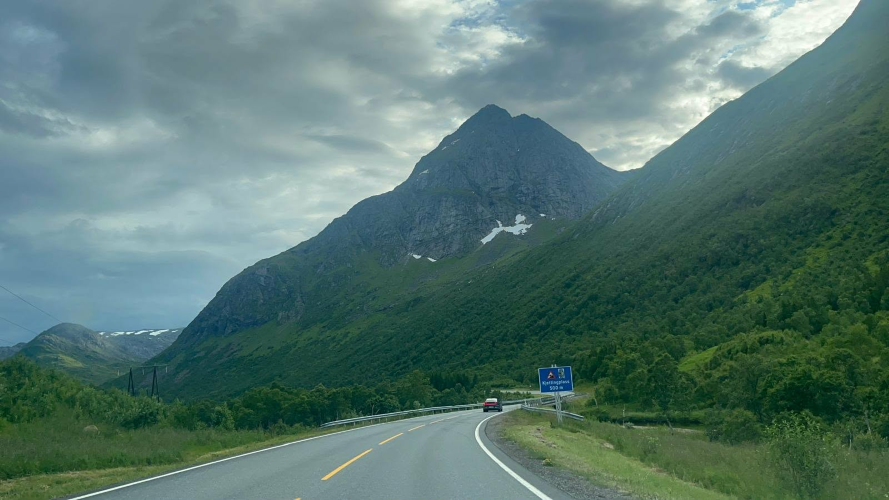 One of the first details we noticed after entering Norway was surprisingly simple yet symbolic: the center line on the road had turned yellow. Such a small difference, yet it quietly announced that we had entered another country with its own character and identity.
As we descended through the valleys, countless traditional red wooden cabins appeared along the shores of lakes and fjords. Some stood alone, while others formed tiny clusters beside quiet inlets. Many looked like classic Norwegian fishing huts, their reflections shimmering in the calm waters below. Against the backdrop of emerald forests, silver-blue fjords, and dark mountain walls, these crimson cottages seemed almost too perfect to be real. Every bend in the road revealed another postcard-worthy scene.
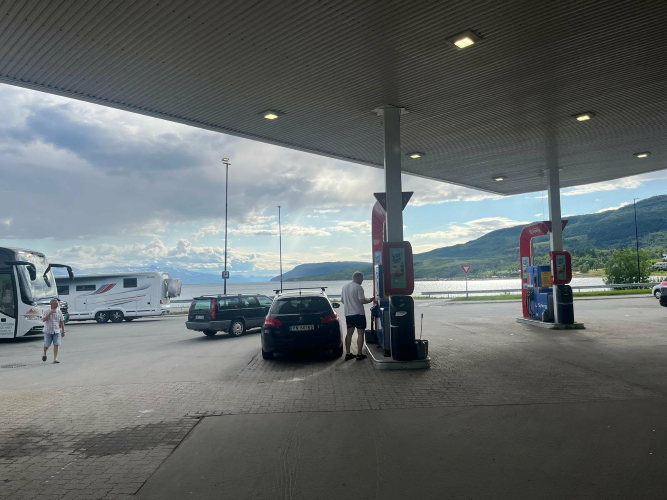 Our first stop in Norway came at a petrol station in Bjerkvik, beautifully situated beside the Ofotfjord. We stretched our legs, enjoyed the fresh Arctic air, and noticed something that genuinely impressed us. The service station was equipped with a fully operational shower for travellers, a thoughtful facility for long-distance drivers, campers, and motorcyclists exploring northern Norway. Nearby stood a charming church, adding a peaceful touch to this small settlement.
Like many visitors before us, we quickly discovered that Norway lives up to its reputation as one of Europe’s more expensive countries. Fuel prices were noticeably higher than in Sweden, and even everyday items inside the service station reflected the higher cost of living. Yet, surrounded by such extraordinary scenery, these details seemed insignificant.
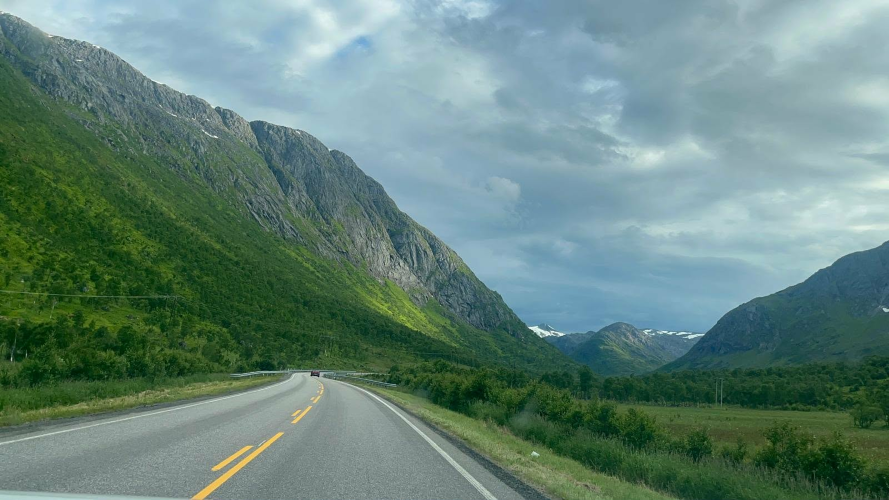 Back on the E10, the road continued to weave through some of the most breathtaking landscapes we had ever experienced. We passed places such as Bogen, Evenskjer, Lødingen, Gullesfjord, and several other beautiful settlements where mountains plunged dramatically into tranquil fjords. Waterfalls cascaded down rocky cliffs, while crystal-clear rivers quietly found their way into the sea. The further we travelled, the more we understood why Norway is often described as one of the world’s greatest scenic drives.
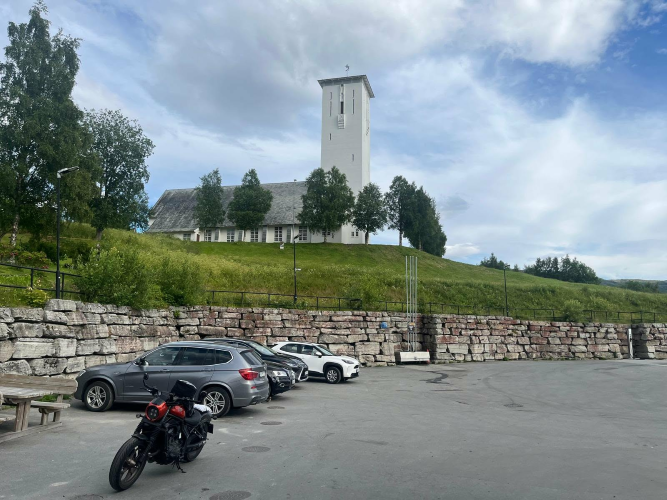 For almost two hours after crossing Riksgränsen, we were still travelling through the greater Narvik region. Many travellers assume that the moment they leave Narvik they have entered Lofoten, but geographically this is not the case. Even after passing Bjerkvik, Evenes and the Tjeldsund area, we were still driving across the Norwegian mainland. The magnificent island world of Lofoten was still waiting ahead.
Our journey carried us across Hinnøya, Norway’s largest island and the largest island on the Norwegian mainland, connected seamlessly by bridges and causeways. Hinnøya itself was spectacular, with forests climbing steep hillsides and mountains rising beside peaceful fjords. Yet even this was not truly Lofoten.
The real moment arrived when we crossed the elegant Raftsund Bridge (Raftsundbrua). Beneath us flowed the narrow Raftsundet strait, and on the opposite side lay Austvågøya, the first island of the Lofoten archipelago that we officially entered.
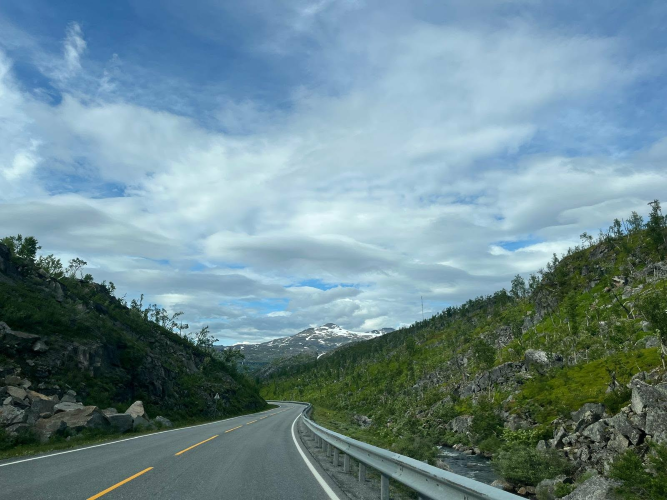 The transformation was immediate and unforgettable; it felt as though we had crossed not merely a bridge, but into an entirely different world. The mountains became sharper and more dramatic, their jagged peaks appearing to rise directly from the sea. Small fishing villages clung to rocky shorelines, colourful boats rested quietly in sheltered harbours, and the surrounding water reflected every changing shade of the northern sky.
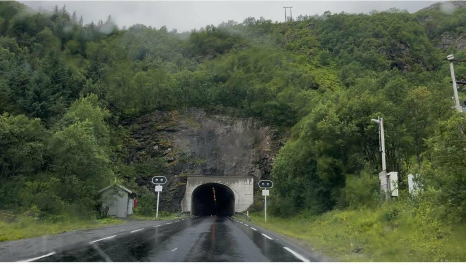
The E10 itself became an attraction. We passed through numerous tunnels carved deep into solid rock, each one revealing a fresh panorama upon emerging into daylight. One tunnel stretched for almost 6.5 kilometers, a remarkable feat of engineering that reminded us how Norway has mastered the challenge of connecting communities separated by mountains and fjords.
Every kilometer seemed more spectacular than the last. Waterfalls descended gracefully from the mountainsides into the fjords below, while every bend in the road tempted us to stop once again for photographs. The scenery possessed an almost dreamlike quality, making the drive as memorable as the destination.
By around 9:00 in the evening, we finally reached Svolvær, the vibrant gateway to Lofoten. Yet the day hardly seemed to be ending. The famous Arctic summer was working its magic. The sun still illuminated the mountains and the sea with a soft golden glow, making it feel as though it were only five o’clock in the afternoon. Low clouds drifted gracefully around the surrounding peaks, especially the mountain directly opposite us, creating an ever-changing scene that was both mysterious and mesmerizing.
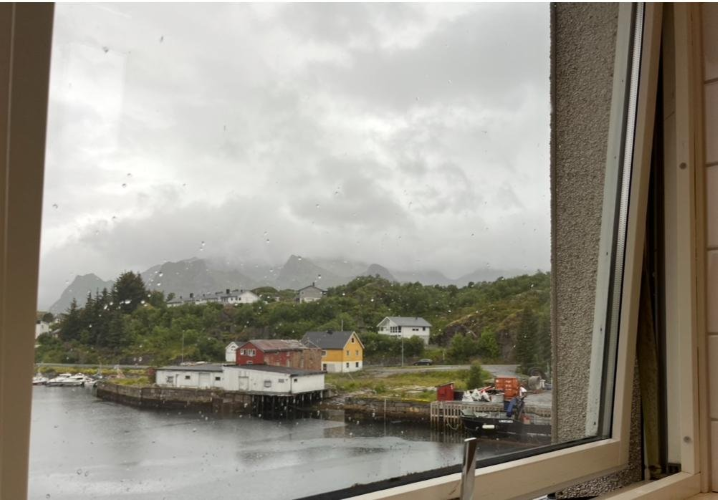
From Svolvær, it was only a short drive to the historic fishing village of Kabelvåg, where our accommodation awaited us. We had reserved a private room at Lofoten Sommerhotell og Vandrerhjem, a welcoming seasonal hostel and summer hotel located in peaceful surroundings close to the sea. Housed in former student accommodation and open mainly during the summer months, it offers comfortable, practical lodging for travellers exploring the islands. Its relaxed atmosphere, shared facilities, and convenient location make it especially popular with hikers, cyclists, road trippers, and international visitors seeking an authentic Lofoten experience rather than luxury.
As we carried our luggage inside, we paused for a moment to absorb the extraordinary silence outside. Mountains, sea, drifting clouds, and the lingering Arctic daylight surrounded us from every direction. After hundreds of kilometers on the road, we had finally reached the islands we had dreamed of visiting. Standing there in Kabelvåg under a sun that refused to set, we knew that the real Lofoten adventure was only just beginning.
Read: Preserving Arctic Flavors the Viking Way
___________________
Abdullah Soomro, penname Abdullah Usman Morai, hailing from Moro town of Sindh, province of Pakistan, is based in Stockholm Sweden. Currently he is working as Groundwater Engineer in Stockholm Sweden. He did BE (Agriculture) from Sindh Agriculture University Tando Jam and MSc water systems technology from KTH Stockholm Sweden as well as MSc Management from Stockholm University. Beside this he also did masters in journalism and economics from Shah Abdul Latif University Khairpur Mirs, Sindh. He is author of a travelogue book named ‘Musafatoon’. His second book is in process. He writes articles from time to time. A frequent traveler, he also does podcast on YouTube with channel name: VASJE Podcast.