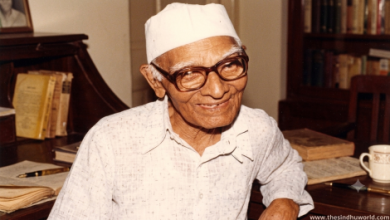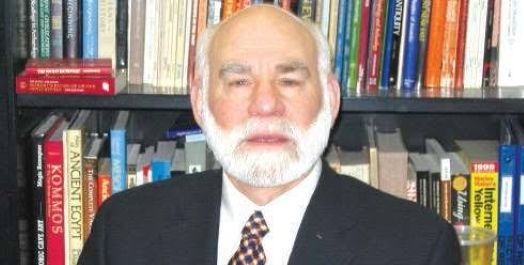
Dr. Louis Flam was a dedicated American archaeologist who devoted his life to exploring, mapping, and preserving Sindh’s prehistoric heritage. Traveling on a motorcycle with limited resources, he earned the deep affection of locals, who proudly honored him as a true “Son of Sindh.”
By: KHADIM HUSSAIN MAKHDOOM
Dr. Louis Flam was born on 31 October 1944 in the small town Passaic, New Jersey America, which even today has a population of around 75,000, with approximately 22% of Muslims. Louis lived in that town until the age of eight, after which his parents moved to the Clifton area of New Jersey, where he grew up. Louis earned his bachelor’s degree from Rutgers University. He later completed both his master’s degree and PhD in the United States. While pursuing his bachelor’s degree at Rutgers, he wrote his honors’ thesis on the Indus Civilization, which greatly impressed his professors. They encouraged him to pursue doctoral research on the Indus Civilization, a suggestion that he readily embraced. In 1967, he decided that he wanted to pursue a Ph.D. on the archaeology of Pakistan. In 1975, he received a Fulbright PhD scholarship in the United States. However, before beginning his doctoral research, he first visited Sindh in 1974 for two weeks with the cooperation of the Department of Archaeology of Pakistan. During this visit, he toured archaeological sites in western Sindh as well as several other sites across Pakistan. He lived in Sindh during 1975 and 1976, conducting research for his PhD, and returned to the United States in 1977 to complete his doctorate. The title of his dissertation was: “The Paleography and Pre-Historic Settlement Patterns in Sindh, Pakistan (Ca. 4000–2000 B.C.)” During his research, he travelled extensively—from Karachi to Sukkur, Thar to Kohistan and the Khirthar mountains. His objective was to continue the work of the Bengali archaeologist N. G. Majumdar, who, during the 1920s and 1930s, had discovered several archaeological sites in Sindh while investigating Mohenjo-daro and other contemporary settlements. Majumdar was later tragically shot dead by bandits near the Nai Gaj River in Dadu District of Sindh. Louis believed it was necessary to continue Majumdar’s work because, after Majumdar’s discoveries, only excavations at Amri by Casal and Kot Diji by Dr F. A. Khan had received significant archaeological attention. Apart from these, very little notable research had been conducted on Sindh’s ancient past. Therefore, in 1975, Louis resolved to rediscover Sindh, re-examine the sites discovered by Majumdar, and highlight their importance, believing that the significance of Sindh in the ancient world deserved far greater recognition. He was exceptionally courageous, travelling alone on a Honda CD-125 motorcycle, he journeyed from Karachi to Hyderabad, Umerkot, Sakrand, Kot Diji, Khairpur, Sukkur, Jacobabad, Larkana, Dadu, the Kachho region, Ghazi Shah, Nai Gaj, and back to Karachi, conducting field work for archaeological research throughout his travels.
Many contemporary researchers possess luxurious four-wheel-drive vehicles and research grants worth millions, they often produce mediocre research. In contrast, Louis conducted groundbreaking work with very limited resources. Throughout his research journey, Louis received tremendous love and support from the people of Sindh and from many prominent Sindhi scholars, including Dr. M. H. Rizvi, Pir Hussam Uddin Rashidi Dr. Ghulam Ali Alana, Nawabzada Shabbir Ahmed Chandio, Syed Ghulam Shah Jilani, Pir Ali Muhammad Rashdi, Begum Mumtaz Rashdi, Khan Muhammad Panhwar, Taj Sehrai, Syed Bakhsh Ali Shah of Jhangara, and Syed Atta Hussain Shah, among many others. Everywhere he travelled, ordinary Sindhis welcomed him warmly and generously assisted him. Louis later wrote that people would tell him, “Since you are working on the ancient archaeological sites of Sindh, so you are a ‘Son of Sindh.'” He took great pride in this title.
The author writes that the soil of Sindh possesses a unique quality that embraces every sincere and honest person. Louis came to Sindh merely to conduct research, but he fell deeply in love with the land, its people, culture, music, poetry, changing seasons, and the affection shown by the Sindhi people. Eventually, Sindh became like his own home. During his research in 1975 and 1976, he lived in Jamshoro and spent a considerable amount of time in Hyderabad. Although he did not know the Sindhi language, he became deeply fascinated by Sindhi music. Allan Faqir became one of his close friends and taught him his very first Sindhi words. Louis was also an enthusiastic admirer of the music of Abida Parveen, Faqir Abdul Ghafoor, Allah Bachayo Khoso, and Iqbal Jogi. He was equally captivated by Sindhi culture and greatly admired traditional handicrafts such as Ajrak, Khes, Ralli, and Susi cloth. Every spring he would visit the camel fair in Badin. One of his greatest wish was to learn Sindhi well enough to read Shah Abdul Latif Bhittai in the original language. Every year he visited Bhit Shah to listen to Shah’s traditional music.
Around 1975, when Hamida Khuhro organized a conference in Karachi entitled “Sindh Through the Centuries,” Louis also played an important role in it. In fact, he believed that the conference should have been titled “Sindh Through the Millennia,” which he felt better reflected Sindh’s long history. Thirty scholars specializing in history, archaeology, language, and culture presented research papers at the conference. Recognizing his deep love for Sindh’s history and archaeology, Ghulam Ali Alana appointed him as the first honorary Director of the Archaeological and Anthropological Research Centre at the Institute of Sindhology in 1982.
Louis often remarked that the Sindhi people’s love for their language, culture, and history was admirable. He observed that they took immense pride in scholarly research conducted on their heritage. He maintained close relationships with distinguished scholars including Dr Nabi Bakhsh Baloch, Taj Sehrai, Ghulam Ali Alana, Pir Hussam Uddin Rashdi, Hamida Khuhro, Ghulam Mustafa Shah, Ali Ahmad Brohi, M. H. Panhwar, Abdullah Waryah, Syed Hakim Ali Shah Bukhari, Hamid Akhund, Dur Mohammad Pathan and Syed Zafar Kazmi, benefiting greatly from their knowledge. Among his most important contributions was his research into the changing courses of the Nara River, documenting how it had shifted over the previous 10,000 years. He also researched how environmental changes in Sindh influenced human settlement patterns and lifestyles. Louis argued that Sindh’s prehistoric cultural and archaeological heritage was far richer than most people realized. He also studied ancient irrigation and canal systems, demonstrating their remarkable sophistication. He supported the theory that a highly developed, diverse civilization existed in Sindh approximately one thousand years before Mohenjo-daro. His research highlighted the environmental background of pre-Mohenjo-daro cultures and brought attention to the technological innovations and achievements of these ancient Sindhi societies, which he believed were unparalleled in the ancient world.
Another of his important projects was the excavation of Ghazi (Gaji) Shah Mound, also known as Mari Kharr Mound, in Johi Taluka, District Dadu. For this project, he established a collaborative partnership between the University of Pennsylvania, Colorado State University, the Institute of Sindhology at the University of Sindh, and the University of Karachi. He dated the Ghazi Shah site to approximately 5,500 years ago, suggesting that it had been inhabited between 3500 BCE and 2000 BCE. He also regarded the site as an ideal field school for Pakistani archaeology students, believing that Pakistan lacked sufficient archaeological researchers and expressing his desire to train a new generation of scholars devoted to archaeology, history, and culture. Whenever friends asked him why he had never married, he would reply that he had dedicated himself entirely to the study of Sindh’s ancient archaeology. He would jokingly once said that “it seemed unlikely any American woman would marry him and move to Sindh, though if he found someone in Pakistan, he would certainly marry”. He devoted the best years of his life to researching Sindh.
Returning to the United States in 1992, he taught for some time at Union College and Rutgers University, before becoming an Associate Professor in the Department of Anthropology at Lehman College, where he remained until the end of his career.
Over four decades, he carried out fieldwork in many regions, including Sistan Iran, Afghanistan (at the Sulaiman Tower and ruins), New Mexico (at the Eleanor Site and Chaco Canyon), Thailand (Ban Chiang), and archaeological sites on the islands of Kuwait.
Pity that, Pakistan failed to properly honour such a devoted admirer of the great Indus Civilization. Louis brought his PhD dissertation, “The Paleography and Pre-Historic Settlement Patterns in Sindh, Pakistan (Ca. 4000–2000 B.C.),” to Pakistan for publication. Although he could easily have published it in the United States, he believed that because it dealt with Sindh and Pakistan, it deserved to be published there, where local scholars and readers would have easier access to it. Sadly, he was unable to find a publisher anywhere in Pakistan willing to publish it. Even more disappointing, according to the author, was that the Institute of Sindhology—where Louis had been closely associated—declined to publish the thesis. Both of its then directors, Ghulam Ali Alana and Mehtab Akbar Rashdi, reportedly explained that many books were already waiting in the publication queue. The author questions whether such an important dissertation should not have been given priority over other publications. Louis eventually returned to America with his dream of seeing his dissertation published in Pakistan unfulfilled. He had suffered from diabetes since childhood and died in the United States on 18 February 2016, at the age of 71, due to complications arising from the disease.
According to Dr Zafar Junejo, after Louis’s death, his room still contained Sindhi cultural artefacts, pottery, stones, and research materials relating to the history and archaeology of Sindh. The author concludes with regret that none of his research has been properly preserved in book form in Pakistan, suggesting that Louis’s spirit would perhaps still feel saddened that the appreciation he deserved was never fully given. If you’d like, I can also produce a polished, publication-quality English biography with smoother academic prose while preserving the original meaning.
________________
 Writer is a sociologist and development professional based in Sindh, Pakistan, with a deep passion for the social history, archaeology, and cultural heritage of Sindh. He can be contacted at khadim_soomro@hotmail.com.