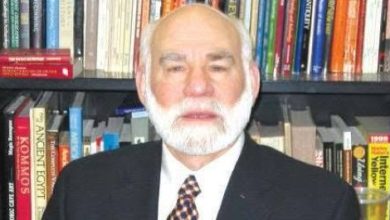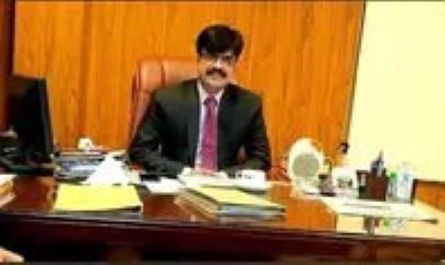
In memory of Pir Khalid Ahmed Qureshi, Inland Revenue Service, 28th Common Training Program, Civil Services Academy, Government of Pakistan, Lahore
By: Raphic Burdo
Some deaths are sudden. Others seem to occur gradually, long before the heart finally stops beating. The death of Pir Khalid Ahmed Qureshi feels like the latter.
Khalid was laid to rest on Monday, 24 August 2026, at Khyari Sharif (Mian Shora), Sakrand, in Shaheed Benazirabad, in the place that was not merely his ancestral home but the spiritual center of his family and a dargah (spiritual hospice) revered by followers far beyond his immediate surroundings.
Pir Khalid had joined Civil Service of Pakistan on 1st January 2001, as an officer of Pakistan’s Inland Revenue Service. A member of the 28th Common Training Program, he belonged to a generation of doctors and civil servants who entered public service with ambition, identity and a strong sense of professional purpose. But to reduce Khalid to his designation would be to miss the man that he was.
Those who knew him in his better years remember Pir Khalid as an exceptionally pleasant human being: courteous, warm, generous in conversation and, above all, ever smiling. That smile remained one of the most memorable things about him. Yet the last years of his life were very different. They became a succession of battles. There was the battle with a compulsive addiction. There was the battle with his health. There were battles over land, with neighbours and with members of his own family. There were professional frustrations and difficulties surrounding his postings. There were increasingly public disagreements that moved from private conversations into the unforgiving arena of social media. And beneath all of these battles was another, perhaps more important one: the battle to find a reason to keep going.
To understand Khalid, one has to understand the family from which he came. His father, the late Dr. Pir Noor Ahmed Qureshi, was a distinguished medical man. He was, according to family accounts, FRCS from London, a qualification representing a very high level of professional medical training and distinction. He was also associated with Peoples Medical College and served as its Principal in 2001. He died on 24 March 2021 and is buried within the courtyard of Dargah Khayari Sharif like most members of his family. Dr. Pir Noor Ahmed Qureshi’s generation represented a remarkable combination of worlds: modern professional education on one side and the spiritual and ancestral inheritance of Khyari Sharif on the other. That dual inheritance passed to his children.
Khalid entered the civil service. His brother Pir Shoaib Ahmed Qureshi entered the legal profession and became an advocate. Their lives therefore unfolded through institutions of the modern state, tax administration and law, while remaining connected to an older world of land, lineage, shrine and spiritual authority. That combination can be a source of enormous strength. It can also create enormous burdens. Because inheritance is not only about what one receives. It is also about what one feels obliged to protect.
Khyari Sharif
Khyari Sharif has never simply been land to Khalid and his family. It is identity. It was ancestry. It is memory. It is kind of part of faith. It was the place where generations of the family had lived, served and been remembered.
Historical accounts of Khiyari Sharif describe the spiritual influence of its Pirs over surrounding communities and villages. The institution therefore existed in a social world considerably larger than the immediate family. Today, the spiritual lineage continues through Pir Hammad Khiyarvi, the Gaddi Nasheen, according to the family and local account. That distinction is important.
A dargah is not merely a family property. It belongs, in a deeper sense, to the community of devotees who attach their hopes, prayers and memories to it. And that is why the conflicts surrounding Khalid’s family became so painful. When disagreements over land and inheritance entered the public arena, particularly through social-media platforms, the damage could not remain confined to the people involved. Private family disputes became public spectacle. Arguments that might once have been contained within the family were witnessed by strangers. And when the people involved are associated with a revered spiritual institution, the institution itself can become an unintended casualty.
The brothers
Much has been written and said publicly about the disagreements between Khalid and his brother Shoaib.
I knew enough of the circumstances to understand that the relationship had become deeply strained. There were disputes concerning property and family interests. There were disagreements with neighbouring landowners. There were matters that entered formal administrative and legal channels. Eventually, some of the family’s disputes spilled into social media. I do not think it is useful, after Khalid’s death, to reopen every allegation made by either side. Nor would it be fair. Death should not become another courtroom. What matters is that two brothers who shared a father, a family history and an extraordinary ancestral inheritance found themselves publicly divided.
The tragedy was not merely that they disagreed. It was that the disagreements became part of their identities. Once private conflict enters social media, reconciliation becomes much harder. Every argument acquires an audience. Every accusation acquires a permanent digital life. And every attempt at retreat can appear to be surrender. The wise person sometimes has to walk away from a fight not because he has lost, but because he has finally understood that winning is no longer worth the cost. I feel as if Khalid has been able to do that with his death. He simply walked away from all fights considering them not worth the cost.
A man unable to leave his Land
Over the years, I repeatedly advised Khalid to consider leaving the immediate environment of these conflicts. I suggested Islamabad or another city. There was also a practical reason. His wife is associated with Liaquat University of Medical & Health Sciences in Hyderabad/Jamshoro. Her professional commitments were therefore geographically rooted in Hyderabad, Sindh. A different posting might have created some distance between Khalid and the disputes surrounding his ancestral property. But Khalid could not easily detach himself from the land, Nawabshah and Hyderabad. He was deeply possessive of it, not necessarily merely in the material sense, but in the emotional sense in which ancestral land becomes inseparable from personal identity. I remember suggesting that the land could be divided among the brothers. Perhaps each could take his share. Perhaps the family could preserve its relationships even if it could not preserve every inch of common ownership. But Khalid found separation from the land extremely difficult. Looking back, one wonders whether the land that represented his deepest connection to his family also became the anchor that prevented him from escaping the conflicts that were consuming him.
The civil servant without a battlefield
There was another important dimension to Khalid’s decline. He was a civil servant. For a professional officer, a posting is not merely a place where one goes to work. It is part of one’s identity. It provides structure. It provides colleagues. It provides authority. It gives a person somewhere to be every morning and something to accomplish during the day. Pir Khalid experienced repeated transfers and difficulties in obtaining a stable and suitable posting. Eventually, he was placed in an administrative or surplus pool. I do not claim that this caused his decline. Nor can anyone responsibly reduce a complicated human life to a single administrative decision. But I do believe that the loss of professional purpose can be deeply damaging to someone whose identity has been built around public service. When there is no office to go to, no file to resolve, no team to lead and no professional problem demanding your attention, the mind can return to whatever problems remain unresolved at home. For Khalid, there were plenty. The land was still there. The family disagreements were still there. The neighbouring disputes were still there. The social-media battles were still there. And now there was less professional life to distract him from them. The battlefield had followed him to his home.
The accident
Then came the physical deterioration. A few months back, Khalid suffered a serious accident in which he injured his back and sustained other injuries, including significant problems. Over time, his physical condition subsequently deteriorated. There were medical complications, including elevated bilirubin and severe kidney dysfunction, eventually leading to organ failure. Whatever role his addiction may have played in the broader deterioration of his health, it would be simplistic to say that unhealthy habits alone explains his death. It does not. His story was much more complicated. He had been fighting addiction. He had been fighting physical injury. He had been fighting illness. He had been fighting family disputes. He had been fighting property disputes. He had been fighting professional uncertainty. And, increasingly, he seemed to be fighting the accumulated weight of his own circumstances. Eventually he and his body surrendered.
The last battle
Khalid died in the early hours of Monday 24 August 2026 and he was brought back to Khyari Sharif. There is a painful symmetry in that journey. He spent much of his later life fighting over the very place where he has now been laid to rest. But at the funeral, none of the arguments mattered. The land remained. The dargah remained. The family remained. The disputes remained. But their central participant, a protagonist, was gone. This is perhaps the most sobering lesson of Khalid’s life. We imagine that we are fighting for the land. We imagine that we are fighting for justice. We imagine that we are fighting for our rights. We imagine that we are fighting for our honour. Sometimes we genuinely are. But life has a cruel way of asking a final question: What did the fight cost? If the answer is peace, relationships, health and eventually life, then perhaps the victory was never worth having. This is why Khalid preferred surrendering over winning.
What should remain?
I do not want Pir Khalid to be remembered principally through the controversies of his final years. Those controversies were real but they were not the whole man. I remember the smiling officer. The friend who would call without hesitation when he needed help. The man who believed passionately in his land and his family. The man who remained attached to Khyari Sharif because it meant something far deeper to him than property. The man who, despite all his difficulties, retained something of the warmth and charm that had marked his earlier years. That is the Khalid I would prefer to remember. Perhaps his death should become an occasion not merely for mourning him, but for reconciliation among those who remain. His brothers have lost an elder brother. His wife has lost her husband. His family has lost a member. His friends have lost a friend. And Khyari Sharif has lost a son of its soil. There is no inheritance greater than reconciliation. If Khalid’s life can leave one final message to those who loved him, perhaps it is this: Do not spend the remainder of your lives fighting the battles that consumed his. Divide what can be divided. Forgive what can be forgiven. Withdraw from arguments that have become poisonous. Protect the dignity of the family. Above all, protect Khyari Sharif from becoming a monument to division when it has the potential to remain a sanctuary of faith and reconciliation.
Pir Khalid’s father, Dr. Pir Noor Ahmed Qureshi, left behind a legacy of medicine and service. Khalid leaves behind a more complicated legacy. A legacy that reminds us that intelligence, professional achievement, family inheritance and social standing cannot by themselves protect a human being from despair. Sometimes what saves us is much simpler. A friend who listens. A family that forgives. A purpose that survives retirement. The courage to walk away from a fight. And the humility to say: Enough.
Khalid’s battles are over now. May Allah forgive his shortcomings, accept his good deeds, grant him maghfirat and eternal peace, and give his wife, brothers, children, relatives and friends the strength to bear his loss. May Khyari Sharif, after all the noise and conflict that surrounded it, return to what it was meant to be: a spiritual hospice, a place of faith, peace, prayer and reconciliation. May Pir Khalid Ahmed Qureshi rest in eternal peace!
Read: Wealth and Leadership: Timeless Principles
________________
Raphic Burdo writes on leadership and entrepreneurship