What Jahangir Siddiqui Teaches Us About Building Wealth, Character and Institutions
By: Raphic Burdo
Few people inherit wealth. Fewer still inherit businesses. Hardly any inherits a way of seeing the world. The rest of us must learn this craft of seeing the world the way these rare people do.
There is a mistaken belief that entrepreneurs are born different. That somewhere in their DNA lies a mysterious founder gene. According to this view, certain children are destined to build companies while everyone else is destined to become their employees. It is a comforting theory. It absolves us of responsibility. If success belongs to genes, failure belongs to fate. History, however, tells a different story.
The life of Jahangir Siddiqui is one such story. His is not merely the biography of a successful businessman. It is the story of a young man who slowly trained his eyes to notice what others overlooked. Before he built one of Pakistan’s largest financial groups, he built something far more valuable: a mind that could recognize opportunity. That transformation is the real beginning of every fortune.
Most biographies begin where success becomes visible. Though, the more interesting story begins much earlier. Many stories compress the early struggle part where the founder-in-making was striving hard.
Born in July 1948, somewhere in the 1960s, a young Jahangir Siddiqui failed his Intermediate examination. There is something refreshingly ordinary about this episode. Our culture worships flawless report cards. We quietly assume that the future belongs to those who never stumble. Yet markets, businesses and history show the opposite. They reward people who recover. Failure, by itself, predicts very little. Response predicts almost everything. He appeared again and passed. The incident soon disappeared from public memory. But perhaps it should not. Every entrepreneur will fail many more times after school than during it. The ability to recover quickly is therefore a far more valuable asset than the ability never to fail.
Jahangir Siddiqui completed a Bachelor of Commerce and began articled training to become a Chartered Accountant. That is the formal story. The informal story is much more revealing. During lunch breaks he wandered into the Karachi Stock Exchange. Can you Imagine the scene. A crowded trading floor. Voices rising and falling with prices. Fear travelling faster than facts. Greed disguising itself as confidence. No textbook could teach this. Markets are theatres of human psychology. Every trade contains hope, fear, conviction, ignorance, discipline and ego in unequal proportions. Most people saw noise. Siddiqui was learning to hear information. That habit would shape the rest of his life. Great investors are not merely readers of balance sheets. They become avid readers of people, their moods, their hopes, fears and greed.
Long before finance entered his life, commerce already had. As a teenager Jahangir Sidfiqui distributed Coca-Cola and ice cream, buying it from Karachi selling it in Hyderabad. It sounds almost insignificant. However, it was not. Many young people dream of creating billion-dollar companies without first learning how difficult it is to persuade one customer to buy one product. Distribution teaches lessons that no MBA can fully replicate. Inventory ties up cash. Customers delay payments. Margins disappear through carelessness. Reputation travels faster than advertising. Every day becomes an examination in economics. Looking back, those modest ventures appear less like side businesses and more like apprenticeships. Business was quietly educating him long before business schools could. Every entrepreneur eventually encounters a moment when aspiration collides with limited resources. The difference between dreamers and founders is often determined in that moment. According to one widely repeated account, Siddiqui approached his father for capital to begin his own venture. The answer was no. Many careers end with that word but his did not. Jahangir Siddiqui’s instead took off from there on.
The now-famous story of selling family assets to assemble the capital needed to begin has become part history and part legend. Whether every detail has acquired embellishment over time matters less than the principle beneath it. Entrepreneurs like Siddiqui are distinguished less by access to capital than by their unwillingness to surrender to its absence. Money follows resourcefulness far more often than resourcefulness follows money.
One notices a pattern running quietly through Jahangir Siddiqui’s life. Before every expansion came a period of observation. Before brokerage came watching markets. Before banking came understanding finance. Before building institutions came understanding systems. This sequence deserves attention. Modern culture celebrates speed. Markets reward preparation. The best entrepreneurs spend years accumulating invisible knowledge before the world notices visible success. People see the tree. They rarely see the decades spent growing roots.
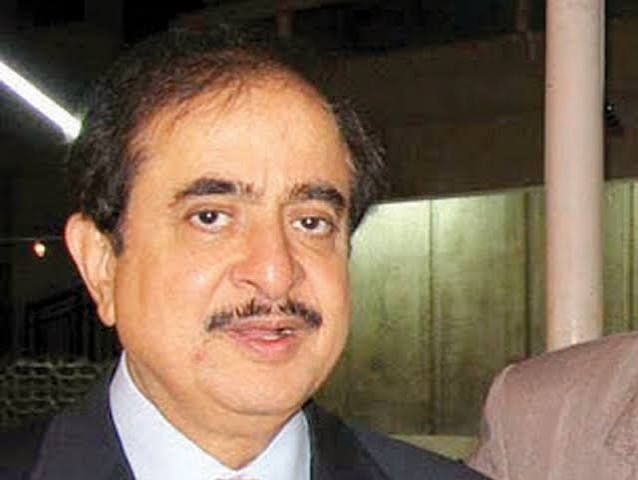 By the early 1970s Jahangir Siddiqui had founded a modest brokerage. Nothing about it suggested that it would one day become a diversified financial group spanning banking, investment management, insurance and capital markets. Yet there was a hidden advantage. He was not merely buying and selling securities. He was studying how capital itself moved through an economy. Brokerage revealed investors. Investment banking revealed businesses. Commercial banking revealed credit. Asset management revealed long-term behaviour. Insurance revealed risk. Each business became a window into another layer of the economic system. He was not diversifying randomly. He was constructing an increasingly complete map of how wealth is created. That distinction explains why some entrepreneurs build collections of companies while others build ecosystems.
Accumulating wealth is difficult. Building institutions is even harder. Institutions require trust that cannot be purchased. It compounds slowly through decisions repeated over decades. Siddiqui’s contribution to modernizing Pakistan’s financial markets is perhaps less celebrated than the growth of his own group, yet it may prove equally important. Markets flourish when participants trust the rules, the infrastructure and the integrity of transactions. In strengthening the system, he strengthened opportunities for countless others. That is the highest expression of entrepreneurship. The entrepreneur graduates from creating wealth for himself to creating conditions under which others may create wealth as well.
People continue searching for a founder gene among successful entrepreneurs. Perhaps because genes are easier to admire than habits. Genes ask nothing of us. Habits do. If Siddiqui possessed a defining advantage, it was not an inherited chromosome but disciplined curiosity. He watched longer. He learned faster. He connected ideas across industries. He treated every experience as an education. Above all, he acted. Knowledge without action becomes trivia. Action without knowledge becomes gambling. His career demonstrates the extraordinary power of combining the two.
When people look at Jahangir Siddiqui, they see banks, investment companies, boardrooms and billions. Those are visible assets. The invisible assets came first: Curiosity, Patience, Observation, Credibility, Judgment, and Trust. These qualities seldom appear on balance sheets yet they are the assets from which every enduring fortune is ultimately constructed.
Young people often ask how much capital they need before starting a business. They ask the wrong question. The more important question is this: Capital can be borrowed, Ideas can be copied, and Technology can be purchased but judgment, the ability to distinguish a passing trend from a lasting opportunity, is earned slowly, through years of observation, reflection and disciplined action.
Jahangir Siddiqui’s true inheritance is not wealth, not connections, not destiny but a way of seeing things differently. Everything else has followed. The book on entrepreneurship that Siddiqui is writing, like Warren Buffer, is not finished yet.
Read: Billionaire Sindhis: Forbes Billionaires Index
________
(Raphic Burdo writes on leadership and entrepreneurship.)