Five Essential Books on Terrorism, Political Violence and Urban Conflict
Karachi’s violent history is complicated, involving ethnicity, migration, political competition, criminal economies, militant organizations, state institutions, and the everyday experiences of ordinary citizens.
By: Kalavanti Raja
For young people in Pakistan who want to explore and study terrorism in Karachi, political violence, militancy, and urban conflict, it is important to go beyond newspaper headlines, political speeches, social-media narratives, and partisan accounts. Karachi’s violent history is complicated, involving ethnicity, migration, political competition, criminal economies, militant organizations, state institutions, and the everyday experiences of ordinary citizens. A serious student should therefore approach the subject through research-based books that present evidence, historical context, fieldwork and competing interpretations. I suggest the following five books as a useful starting point. They are available online, while some are also listed by Pakistani booksellers; for example, Cityscapes of Violence in Karachi is listed by Liberty Books.
- Karachi: Ordered Disorder and the Struggle for the City
Laurent Gayer — 2014 — Hurst & Company / Oxford University Press
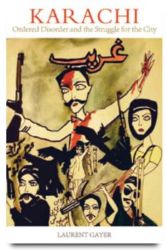 Laurent Gayer is a French political scientist and researcher whose work focuses on political violence, armed groups and urban politics in South Asia. His Karachi: Ordered Disorder and the Struggle for the City is one of the most useful books for anyone attempting to understand the structure behind Karachi’s prolonged political violence. Published in 2014, the book examines a city that, despite recurring violence, remained the economic center of Pakistan. Gayer challenges the simple description of Karachi as merely a chaotic or ungovernable city. Instead, he uses the idea of “ordered disorder” to explain how political and criminal violence could coexist with functioning economic and political systems. He examines struggles over votes, land and bhatta or protection money, and shows how these struggles became increasingly connected with ethnic divisions. The book is particularly valuable because it looks at violence geographically and politically: neighborhoods, territory, political organization, criminal networks and competing claims over the city all become part of the explanation. Rather than seeing terrorism in Karachi as a series of isolated incidents, Gayer encourages readers to examine the structures that allowed violence to become part of urban political life. For students, the book provides a framework for asking difficult questions: Who controlled particular areas? Why did political competition become violent? How were economic interests connected with political power? And how could Karachi continue to function despite prolonged urban conflict? This makes the book an important foundation for serious research into Karachi’s turbulent political history. The bibliographic record at the Institute of Business Administration also identifies the 2014 edition as published by Hurst & Company in London.
- Migrants and Militants: Fun and Urban Violence in Pakistan
Oskar Verkaaik — 2004 — Princeton University Press
 Oskar Verkaaik is an anthropologist whose research examines migration, nationalism, religion, identity and political violence in South Asia. Published by Princeton University Press in 2004, Migrants and Militants takes a very different approach from a conventional political history. Instead of concentrating primarily on political leaders and institutions, Verkaaik explores the experiences of young people who became involved in urban militancy in Karachi. The book combines historical analysis with anthropological fieldwork, including participatory observation among political militants. Verkaaik explores how migration, the legacy of Partition, Muhajir identity, nationalism, youth culture and political mobilization contributed to the development of militant political communities. One of the book’s most interesting contributions is its attempt to understand why violence could become meaningful and attractive to some young men. Rather than simply categorizing militants as criminals, Verkaaik examines the social environment in which political violence developed and the sense of identity and belonging that could accompany participation in militant groups. This makes the book particularly valuable for students interested in the human and sociological dimensions of terrorism in Karachi. It also demonstrates that urban violence cannot always be understood through statistics about killings or descriptions of armed confrontations. Behind those statistics were individuals, neighborhoods, friendships, identities, fears and political loyalties. Although the book requires more concentration than a journalistic account, it offers an important perspective on the social roots of militancy and the transformation of Karachi’s political culture.
- Cityscapes of Violence in Karachi: Publics and Counterpublics
Edited by Nichola Khan — 2017 — Oxford University Press
 Nichola Khan is an anthropologist and scholar whose research has focused extensively on Karachi, political violence, ethnicity, migration and the social consequences of conflict. Published by Oxford University Press in 2017, Cityscapes of Violence in Karachi: Publics and Counterpublics is different from the other books because it brings together contributions from academics, journalists, writers and activists. Oxford Academic describes the collection as an effort to bring diverse specialist perspectives into discussion about the recurring crises and violence of Karachi.
The book is valuable because it does not attempt to reduce Karachi’s violence to one organization, one ethnic community or one political explanation. Instead, it examines the ways in which violence affects public space, personal experience, political discourse, journalism and everyday life. Karachi is presented not simply as a location where violence occurs but as a city whose residents have had to develop ways of living with insecurity and political uncertainty. The contributors examine different forms and experiences of urban violence and question the familiar ways in which Karachi is represented in the media and public debate. For young Pakistani readers, this book can be particularly useful because it encourages them to distinguish between what happened, how it was reported, and how different communities experienced and interpreted it. Its concept of “publics and counterpublics” also draws attention to voices that may be missing from conventional political narratives. The book is therefore an important resource for studying the human consequences of terrorism, political violence and urban conflict rather than viewing Karachi merely through the lens of security operations and casualty figures. Liberty Books currently lists the book in its catalogue, including its 2017 publication information and Oxford University Press details.
- Under the Gun: Political Parties and Violence in Pakistan
Niloufer A. Siddiqui — 2022 — Cambridge University Press
 Niloufer A. Siddiqui is a political scientist at the University at Albany, State University of New York, whose research focuses on political violence, political parties, elections and South Asian politics. Published by Cambridge University Press in 2022, Under the Gun provides a particularly important political-science perspective on violence in Pakistan.
The book asks a fundamental question: under what circumstances do political parties engage in, facilitate or avoid violence? Rather than assuming that political violence is simply the result of weak government institutions, Siddiqui argues that political incentives, the strength of a party’s support base, the political landscape and organizational capacity can influence the strategies adopted by political actors. Her research combines more than one hundred interviews, surveys, historical data and qualitative fieldwork.
Karachi receives particular attention: one of the book’s chapters examines the relationship between political organization and violence in the city, while another looks at gangs in Lyari.
This comparative approach is one of the book’s greatest strengths. It allows students to examine Karachi alongside other cases in Pakistan instead of treating its violence as an isolated phenomenon. The book is particularly valuable for understanding the relationship between democracy and political violence. It asks readers to consider whether violence can sometimes be politically useful, how organizations decide between electoral competition and coercion, and why citizens may continue to participate in political systems affected by violence. For students seeking a rigorous academic explanation of political violence in Karachi, this is an especially important addition to the reading list.
Karachi in Turmoil
- Zia Ur Rehman — 2013 — Narratives
 Zia Ur Rehman is a Karachi-based journalist and researcher who has written extensively about militancy, security and political violence in Pakistan. His Karachi in Turmoil, published in 2013 by Narratives, is a shorter and more accessible work than the academic studies by Gayer, Verkaaik and Siddiqui. The book examines the political, economic, social and security factors behind Karachi’s instability and discusses the principal actors and forces involved in the city’s violence. Its journalistic approach makes it particularly accessible to students who are beginning their study of terrorism in Karachi. The book explores the interaction between ethnic conflict, political competition, criminal activity and religious militancy and attempts to explain why violence became so persistent in the city. Rather than treating each violent episode as a separate event, it looks at the broader environment in which political and militant organizations operated. Its relatively short length also makes it a practical introductory text before moving to the more demanding academic literature. At the same time, students should read it critically and compare its reporting and interpretations with academic research, primary sources and human-rights documentation. That approach is especially important when studying a politically sensitive subject such as Karachi’s violent history. The book is most useful as an accessible starting point that can help a young reader identify the major themes and questions that require deeper investigation.
Together, these five books provide five different windows into the same troubled city. Gayer explains the relationship between territory, resources and political power; Verkaaik explores identity, youth and militancy; Khan brings attention to personal experience and the social landscape of violence; Siddiqui provides a systematic explanation of the relationship between political organizations and violence; and Rehman provides an accessible journalistic overview. Reading them together can help Pakistan’s youth move beyond simplified narratives and investigate terrorism in Karachi, political violence, militancy and urban conflict through evidence, history and multiple perspectives. The most productive approach is not to accept any one book as the final word, but to compare their arguments, examine their sources, identify where they agree and disagree, and then develop an independent understanding of Karachi’s difficult past.
Read: Poverty is not the Destiny
______________
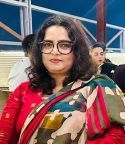 Kalavanti Raja is a social and political activist from Gambat, Khairpur Mirs, with 30 years of work on women’s rights, minorities, and social justice. She has served in Sindhiyani Tahreek and participated in national and international forums across Asia, Europe, and America.. She can be reached at kalavanti.raja@gmail.com