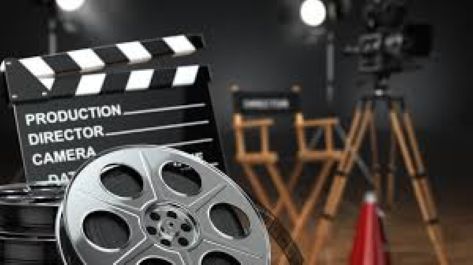
Cinema and poetry, two distinct artistic forms, share a remarkable relationship that transcends mere inspiration
Souad Khalil | Libya
Cinema and poetry, two distinct artistic forms, share a remarkable relationship that transcends mere inspiration. While each maintains its unique language and medium, the cross-influences between them enrich both arts, creating new dimensions of expression. Poetry’s rhythm, imagery, and emotional depth have inspired filmmakers to infuse cinematic works with lyrical qualities, giving rise to the phenomenon known as poetic cinema. This study explores the intersection of these two art forms, examining how cinematic techniques can emulate the nuances of poetry and how poetry itself can inspire visual storytelling, ultimately highlighting the profound impact of poetic sensibilities on the cinematic experience.
 When the arts influence each other, this does not mean that one art abandons its medium, or more precisely, its language that gives it its unique personality and independence. Influence occurs when any art form incorporates aspects of another art form into itself in order to deepen the artistic work and enhance its impact on the audience. Therefore, we see the influence of music on poetry, the influence of visual arts on visual media such as cinema and television, and the influence of poetry on the plastic arts, especially painting, as well as its influence on cinema, to the extent that critics have coined the term “poetic cinematic film.”
What is poetry? Is it an emotional or fleeting experience? Is it a spear plunged into the poet’s heart? Is it the creativity born from moments of observation, contemplation, reflection, and wonder? Or, in other words, as the English poet William Wordsworth states, is it the expression of experiences that the poet stores within and later re-expresses in moments of solitude and stillness? Some see poetry as a closeness to human experience, approached in a perspective different from that of others. The poet observes the same experiences that a screenwriter, novelist, or dramatist does, but presents them differently. The poet conveys these experiences with poetic characteristics such as meter, rhyme, color, or emotional qualities translated into the poetic work. These qualities can also exist in works belonging to other arts, which may create confusion; yet, we can say that the uniqueness in poetry lies in its construction. This structure gives it its individuality, authenticity, and powerful impact. While drama focuses on vertical development, for example from a minor initial situation to another, or from one feeling to another, poetry delves into the essence of the moment, attending to its qualities and nuances. Unlike drama, poetry does not focus on what happens, but on sensation and meaning.
Professor Mustafa Muharram, an Egyptian writer, wrote about visual poetry as a creative equivalent of cinema. In a short study, he adds that the poem creates visual or auditory forms of something invisible—the feeling, emotion, or metaphysical content of movement. The American poet and critic Ezra Pound sees the poetic image as a composition of emotion and intellect, grasped by the poet at a moment in time. He considers it a direct and rapid method to express ideas, similar in brevity, strength, and immediate impact to the cinematic image. Consequently, the great English poet and critic T.S. Eliot sees the strength of the Italian poet Dante in his ability to create clear visual images, since a poet’s task is not merely to arouse, but to embody something tangible before the reader’s eyes, engaging the senses. The most important aspect of good poetry, therefore, is the depiction of fine details, echoing Hume’s statement that the ultimate aim of poetry is precise and detailed description.
 Dr. Magdy Wahba summarizes these views by defining poetry as the expression of strong feeling, deep influence, and a perspective on life that cannot be fully comprehended or expressed through mere logic or argument. The selection and musical arrangement of words expresses this through meter. Additionally, Wordsworth and his colleague, the great poet and critic Samuel Taylor Coleridge, emphasized imaginative expression and mental imagery that evokes imagination or transforms reality into imagination and vice versa. This perspective has influenced both scientific literature and science fiction films.
It is possible for two authors to co-write a novel or a play, and many examples exist, but it is rare to find a poem co-authored by two poets. Uniqueness and subjectivity are key traits of poetic creativity. In contrast, cinematic production involves multiple creative talents such as the screenwriter, director, cinematographer, set designer, composer, and editor. Despite this difference, cinema often seeks to incorporate poetic qualities into its art, giving rise to poetic cinema, where images are used intentionally to generate ideas.
Poetic cinema possesses its own cinematic language. Camera movements and film rhythms reflect poetry, transforming reality into a poetic vision that reveals subtle aspects of the world. The poetic filmmaker captures fragments of the world and arranges them into aesthetic units that convey a cohesive artistic work. As the Italian aesthete Croce compared an artwork to a pile of pebbles, any minor change in the components creates a new, distinct whole. Every artistic work consists of cohesive impressions; any alteration in a part affects the whole.
Jean Cocteau is considered the father of poetic cinema, pioneering this field with films emphasizing poetry as a visual medium, such as “Blood of the Poet,” “Beauty and the Beast,” and “Orpheus.” Luis Buñuel collaborated with Salvador Dalí on “The Andalusian Heart.” Other notable filmmakers include W. Watson with “Lot’s Language in Sodom,” Maya Deren, James S. Brathen, Kenneth Anger, Curtis Harrington, and Mary Mankin, who focused on abstract cinema. These films often lacked dialogue, sometimes accompanied by music, reflecting the silent and black-and-white nature of dreams, as psychological studies affirm.
The essence of cinematic composition resembles the mechanics of dreaming, where overlapping images and symbolic cuts occur naturally. In cinema, images and words are sometimes superfluous, as many critics argue, especially concerning silent film, where words might indicate a failure of imagination by the screenwriter or viewer. Cinema conveys images larger than life, often unnecessary to explain with words. Unlike novels or poems, film communicates directly through perceivable images and sounds.
Poetry differs from prose in the selection and arrangement of words to create images that produce the intended meaning. Similarly, individual film shots have no meaning alone, but their sequence through editing conveys significance. Marcel Martin supports this by stating that an image alone has literal meaning but gains flexible meaning when juxtaposed with adjacent shots to deliver the director’s intent. The Kuleshov effect exemplifies this, where the same neutral face conveys different meanings depending on the sequence of shots.
In the 1920s, the cinematic poem emerged, aligned with Impressionism, focusing on visual concepts of urban and natural life and abstract patterns. Purely abstract cinema, akin to “painting in motion,” was pioneered by Canadian Norman McLaren, the Whitney brothers, and others. Other schools include poetic realism led by Robert Flaherty and John Grierson, dream sequences, hallucinations, and commercial fantasy films by Jean Vigo, emphasizing the visual. Avant-garde films like those of Sidney Peterson, Willard Maas, and Hideo experimented with poetic narratives. Soviet formalist cinema, exemplified by Sergei Eisenstein, emphasized pure cinematic poetry.
Despite some films adapting literary works, translating poetry into cinema is challenging. One cannot simply adapt a poem into a film unless it serves as a conceptual or thematic starting point. Unlike novels, where vertical narrative development aids cinematic adaptation, poetry requires a horizontal, poetic construction to achieve cinematic expression. The poem’s influence stems from its intrinsic characteristics, often described as its poetic quality. Works of cinema embodying these qualities can be deemed poetic films.
Poetic qualities are not exclusive to one art; they are present in any work characterized by poetic atmosphere, imaginative traits, and expressive depth. These qualities enhance aesthetic value and creative impact but are difficult to achieve. Studying the relationship between poetic and cinematic expression reveals how cinema has adopted aspects of poetry, particularly in montage, rhythm, conciseness, and imagery.
Roehr Manville asserts that contrast in poetry and cinema is the selection, rhythm, and presentation of images to achieve the intended audience effect. Poetry derives vitality from contrasting imagery, enhancing precision and enriching experience. Similarly, cinema, like poetry, employs rapid associative imagery to convey human experiences. Russian filmmakers, inspired by Griffith, developed montage techniques reflecting these principles.
Poetry’s influence extends to all arts, as each seeks to emulate poetry’s ability to engage the audience emotionally. Music, for example, communicates directly with the senses and may have predated language. Poetry, influenced by music, eventually influenced it in return, paralleling theater’s influence on cinema and vice versa. Caspiar notes that film studies often analyze cinema in light of other arts. Those with drama backgrounds highlight shared elements with theater, such as acting, direction, and dialogue.
 Art historians view film composition through balance, proportion, rhythm, scale, and structure. Literary critics apply linguistic and symbolic analysis to films, although we note literary methods may not always suit cinematic evaluation. Joseph Bugez adds that film, as a form of expression, shares foundational traits with other media and incorporates composite elements from all visual arts: line, shape, volume, texture, light, shadow, three-dimensional space, movement, and rhythm. Film communicates through metaphor, analogy, and symbolism.
Arts continuously draw from one another to achieve aesthetic goals, enhancing each art form. Maya Deren, a pioneer of poetic cinema, states that cinema is a medium of extraordinary expressive capacity, sharing with visual arts its two-dimensional surface, with dance its treatment of coordinated movement, with theater its dramatic intensity, with music its rhythm, and with poetry its juxtaposition of images. Literature is engaged through abstraction conveyed via the soundtrack.
Poetry breathes life into other arts; cinema has incorporated poetic techniques, especially in montage, to determine rhythm and sequence. Contrasts, conciseness, rhythm, and poetic quality are core traits of poetry and simultaneously key characteristics of impactful cinema. A film’s construction mirrors the mind that creates it; a coherent, unified vision produces a poetic film, fulfilling the aesthetic purpose of art. Monroe states in his book “A Return to Beauty” that to articulate the aesthetic is one thing, but to describe its effect on us is another.
In conclusion, the dialogue between poetry and cinema demonstrates the boundless possibilities of artistic interaction. Poetic techniques—such as rhythm, imagery, and emotional resonance—enhance the visual and auditory language of film, while cinema, in turn, offers poetry a dynamic canvas to explore spatial and temporal dimensions. The result is a rich, multilayered experience where the essence of human emotion and imagination is conveyed with heightened intensity. Recognizing and studying these intersections not only deepens our appreciation of both art forms but also affirms that the ultimate aim of all artistic creation remains the pursuit of beauty, meaning, and emotional resonance.
Read: Drama and Theatre: Art in multiple forms
____________________
 Souad Khalil, hailing from Benghazi Libya, is a writer, poet, and translator. She has been writing on culture, literature and other general topics.