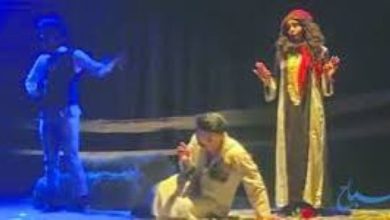
Drama and theatre have long occupied a central position in human civilization, not merely as artistic expressions but as profound modes of communication and reflection
Souad Khalil | Libya
Drama and theatre have long occupied a central position in human civilization, not merely as artistic expressions but as profound modes of communication and reflection. Unlike other art forms, drama embodies a unique fusion of illusion and reality, imagination and presence, text and performance. It speaks directly to the human condition by staging conflict, emotion, and thought within a living space shared by actors and audience.
The study of drama therefore extends beyond literary analysis to encompass performance, visuality, rhythm, suspense, and the dynamic interaction between the written word and its embodiment on stage. Through this complex interplay, theatre transforms fixed text into living experience. This article explores the essential characteristics of drama, focusing on the relationship between illusion and reality, the mechanics of suspense and attention, and the vital role of the actor as the central element in the creation of theatrical art.
 Much has been written about theatre and drama—about remarkable theories and stimulating discoveries concerning the structure and meaning of theatrical works. All those interested in art turn to drama as a form of communication, believing that the dramatic form is superior to any other means of reaching the human being.
The critic Eric Bentley, in his book The Life of the Drama, states that every form of drama has its own particular relationship with madness. If drama concerns itself with extreme situations, then the ultimate human condition—short of death—is that boundary at which the light of reason is extinguished.
When we speak of madness in theatre, we do not mean madness in its conventional sense. Rather, it is a different kind of madness, varying in degree according to circumstances, situations, and characters. Since the Greek era, characters have often found themselves entangled in strange ideas and behaviors. Madness was sometimes portrayed as a curse inflicted by the gods upon the tragic hero; in certain dramatic works, the gods punish tragic protagonists for what they consider to be a transgression.
However, this is not the central concern of our article, as it relates to multiple dimensions of dramatic action.
In Anatomy of Drama, Martin Esslin discusses, in the chapter “Illusion and Reality,” the nature of theatre as a mimetic act—a representation of the real world through play and pretense. The drama we witness on stage, television, or cinema is a carefully crafted illusion. Yet, compared with other arts that produce illusion, drama—particularly as performed text—contains the greatest element of reality.
When observing a painting, for example, it offers the illusion of a landscape, a house, or a human figure in drawn form. The only real elements it contains are colors and canvas. A play similarly presents an illusion: Hamlet in his castle in Elsinore. Yet Hamlet, here and now, is the young man standing on stage—an actor who is genuinely present, sitting on a real chair. The assumption that this chair belongs to a Danish castle centuries ago is the illusion we are invited to accept. But the chair remains a real chair in every sense.
Thus, during performance, drama—unlike other illusion-producing arts—can be said to contain a higher proportion of reality.
One of the principal characteristics of drama lies in this duality: the play as pure imagination, the product of the playwright’s mind, which once fixed in text becomes, in a sense, a “dead letter.” Yet it is fused with the living reality of actors—their costumes, surrounding furniture, and the objects they handle, such as swords, fans, or knives. Each performance of a play written centuries ago may therefore be seen as an act of resurrection. Dead words and actions are revived through the living presence of actors. It is no wonder that theatrical language describes staging an old play as “bringing it back to life.”
In purely academic study, attention naturally focuses on the most accessible element for analysis: the text—the play as literature. Other elements—performance, lighting, the charisma of actors—are far more elusive and were nearly lost before the invention of recording technologies. Yet these are precisely the elements that decisively attract audiences to theatre, cinema, and television. When we analyze the impact of theatrical experience on spectators, we find that they are the source of the profound pleasure derived from it.
In live theatre, the fusion of a fixed element (the text) with a fluid element (the actors) makes each performance a unique work of art—even within a long-running production with the same cast, scenery, and lighting. Consider classical Chinese theatre, where audiences are thoroughly familiar with canonical texts. They attend not to discover the story but to observe how particular actors perform it. The same applies to classical Western drama, especially Shakespeare: audiences judge actors based on how each interpretation differs from another.
The fundamental task of dramatic structure is to use the simplest and most accessible means—regardless of genre or audience—to capture and sustain attention for the required duration. To achieve higher goals—communicating wisdom and insight, poetry and beauty, entertainment and relaxation, enlightenment and emotional catharsis—we must first secure attention. If we fail to do so, everything is lost.
The creation of interest and suspense forms the foundation of the dramatic edifice. Expectations must be aroused but not fully satisfied until the final curtain falls. Events should appear to approach their goal without fully reaching it before the conclusion. Above all, there must be continuous variation in rhythm and pace; monotony in any form invites distraction and boredom.
Suspense is not created solely by plot devices. In ballet, for example, there may be no narrative plot, yet the beauty of the dancers and the anticipation of successive movements sustain attention. Suspense may arise from the question, “What happens next?” But it may also stem from, “I know what will happen—but how?” or “How will character X react?” Early in any dramatic structure, spectators must grasp its central suspense element.
A single major suspense is insufficient to sustain an entire play. Each scene requires its own suspense, connected to the overarching objective. Directors and actors must be aware of both strategic (primary) and tactical (secondary) objectives within each scene.
 There is also a third, localized suspense operating moment by moment within dialogue or action. Suspense depends on the presence of at least two possible outcomes: Will the criminal be discovered or not? Will the boy marry the girl or not? Even the smallest unit of dialogue must contain multiple potential responses. Predictability is the death of suspense—and therefore of drama. Good dialogue resists anticipation; lines that merely confirm what is already expected are lifeless and must be eliminated.
Great playwrights such as Shakespeare, Noël Coward, and Oscar Wilde are masters of defying expectation and employing surprise. Each unexpected turn of phrase, each witty expression, each original verbal image contributes to sustaining attention.
In cinema and television drama, camera movement and visual artistry fulfill a similar function. A seemingly lifeless line can become charged with suspense through an unexpected glance or a flash in the actor’s eyes.
Theatre is art in multiple forms and images. It evolves from within and emerges from its environment even as it reaches outward.
Drama and theatre are two distinct entities that must ultimately become one. Their unity alone produces authentic theatrical art. This union is not easily achieved, yet without it, living theatre cannot exist.
Finally, drama that pulses with life—born of intellect, emotion, and imagination—requires live theatre, capable of representing, expressing, dancing, singing, and embodying the fullness of human experience. Historically and artistically, drama emerged from Greek tragedy, which itself grew out of Dionysian rituals—religious and musical ceremonies that were, in essence, profoundly theatrical..
In essence, drama and theatre are inseparable dimensions of a single artistic phenomenon. The written play, though foundational, attains its full vitality only through performance; and performance, in turn, draws its depth and coherence from dramatic structure. Their union generates the living theatrical art that continues to captivate audiences across cultures and centuries.
Suspense, unpredictability, rhythm, and the constant negotiation between reality and illusion remain the structural pillars upon which drama stands. Yet it is the actor—through gesture, voice, timing, and presence—who ultimately unites these elements and transforms words into experience. From its origins in Greek ritual to its contemporary manifestations on stage and screen, drama persists as a living art form, sustained by imagination, intellect, and emotional truth. It is this enduring vitality that affirms theatre not merely as performance, but as a dynamic expression of human life itself.
Read: The Heritage in Theatre
____________________
 Souad Khalil, hailing from Benghazi Libya, is a writer, poet, and translator. She has been writing on culture, literature and other general topics.