
The drama and dreams alike remain spaces of purification, liberation, and renewal, affirming that art is not only a mirror of reality but also a means of discovering human depth and reshaping existence through beauty and meaning.
Souad Khalil | Libya
Drama goes beyond being merely a form of entertainment or a means of visual and emotional pleasure; it becomes a universal language through which human beings search for themselves and an instrument for expressing the inner conflicts that agitate both the subconscious and the collective consciousness. Ever since humans began imitating nature and the surrounding world, drama has been their first mirror, reflecting fear and hope, as well as the desire to break free from the constraints of reality.
In this article, I approach drama as a counterpart to dreams; both emerge from the depths of the psyche and express the human need for purification, liberation, and psychological balance. The writer draws a parallel between theatre as a conscious representational act and dreams as an unconscious symbolic representation, affirming that both are grounded in imitation and in the expression of what is repressed and suppressed within the human self.
By engaging with the ideas of Aristotle, Freud, Jung, Hadfield, and others, I offer an in-depth reading of the therapeutic and intellectual function of drama, highlighting its ability to reshape the human psychological reality, just as dreams do within their free symbolic space. Thus, drama is no longer merely an expressive art form but becomes a space of spiritual healing and a laboratory for understanding the self and the world.
Some people misunderstand drama, reducing it to nothing more than an entertaining or recreational medium. Others go further in undervaluing this ancient art—older than human creativity itself—by diminishing its social and educational role as an effective force capable of influencing and transforming various aspects of life. Meanwhile, some believe that reflecting on the nature and function of drama may distract us from its primary purpose as a source of pleasure for both reader and spectator.
However, merely engaging with these ideas and attempting to understand the latent energies within drama, and the necessity of studying its importance as one of the most significant forms of human expression, helps us place drama in its proper position among literary genres, thereby enriching the dramatic experience and elevating theatrical taste.
In a study by Dr. Gamal Abdel Nasser on the relationship between acting and psychology, he notes that many people view drama and performance only as sources of viewing pleasure, without any awareness of how performance develops or expands intellectual horizons. This has raised debates about the role of drama in everyday life and its relevance in education. While it is, at its core, a theatrical game intended for entertainment and leisure—and perhaps also for moral reflection—it may nevertheless carry deeper aims and long-term intellectual and ethical value.
There is a need, therefore, to re-examine the fundamental nature of drama. Despite the long path it has taken throughout its history—especially in its social, moral, and philosophical dimensions—we have often overlooked a fundamental truth: humans have always used drama since ancient times. From the earliest stages of civilization, primitive humans sought means to adapt to reality and confront life’s challenges, eventually discovering in imitation and performance a way of expression.
From early childhood, humans are instinctively driven toward dramatic expression as a means of communicating their needs, hopes, and suffering. As self-awareness grows, so does the impulse to express oneself dramatically.
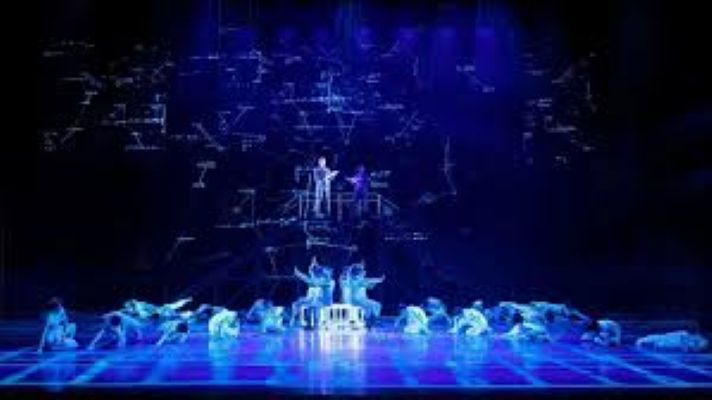 Thus, drama appeared in primitive societies and in childhood as an expressive representational world, long before the emergence of written dramatic texts or theatrical scripts. Later, Aristotle in the fourth century BCE laid foundational aesthetic principles for dramatic art, focusing on movement, voice, and music, followed by continuous theatrical development. The French actor and director Jean-Louis Barrault emphasized that drama is as old as humanity itself and deeply connected to human existence. Constantin Stanislavski highlighted actor training and performance development, while Bertolt Brecht emphasized the ideological and artistic function of theatre.
Drama, however, has proven its effectiveness beyond the stage, functioning as a spiritual and psychological stabilizer for individuals and societies, and as a means of understanding and addressing human problems. It has become a tool for studying human behavior and a continuation of childhood expression into adulthood. Hence, drama has been used in psychotherapy, and its importance has become evident in dreams as well.
This connection became clearer after it was recognized that dreams are deeply linked to the human need to create meaning and structure in life. This idea inspired the formation of beliefs and interpretations of social taboos. Primitive rituals often involved strong performative and mimetic elements, aiming to reconcile humans with the mysteries of existence and supernatural forces, while also serving as a means of emotional release, skill development, and psychological purification.
Aristotle addressed many of these aspects in Poetics, though he did not explicitly explore unconscious desires and fears, which later became central in psychoanalytic thought. Freud, for instance, studied dreams and their symbolic complexity, using free association to uncover hidden meanings, while also drawing parallels between dreams and dramatic representation.
Dreams, like theatrical plays created by adults, are silent performances enacted in secrecy. The adult does not dare to express them openly, nor even fully acknowledge them internally. Thus, dreams can be understood as symbolic dramatizations of unresolved psychological conflicts.
Barrault noted that as humans become more conscious of how others perceive them, they tend to suppress their true selves and conform to external expectations. This leads to repression, which accumulates in the unconscious and eventually finds expression in dreams. Freud, Adler, Jung, and later Hadfield further explored these ideas.
Hadfield, in particular, emphasized the therapeutic function of dreams, arguing that dreams replay life experiences and unresolved problems, forcing individuals to confront issues they tend to avoid in waking life. Dreams reveal weaknesses, expose illusions, and compel psychological confrontation, ultimately restoring inner balance.
Dreams therefore perform a biological function that no other mental process achieves. They release hidden energies and restore psychological wholeness.
The question remains: what is the value of dreams if they are not understood? The answer lies in intuition, where meaning can be sensed even if not fully understood. Dream analysis therefore requires both conscious and unconscious participation.
This symbolic function of dreams is also present in children’s play, where children express their inner conflicts through symbolic roles. A child may act as an animal or punish a toy, unknowingly projecting inner psychological struggles. Through such play, children attempt to restore emotional balance.
Aggressive play among children similarly allows them to confront fear and tension in symbolic form, ultimately achieving psychological equilibrium.
Dreams and play both transform emotions and ideas into symbolic characters and scenarios. They allow unconscious problems to emerge in representational form, whether through familiar or unfamiliar figures engaged in dialogue-like situations resembling theatre.
Dreams thus function as a complete dramatic structure, where psychological conflicts are externalized into characters and interactions. By analyzing these symbolic representations, one can better understand internal psychological conflicts and seek harmony.
Finally, this reading aligns with major studies such as Margaret Lowenfeld’s Play in Childhood (1935), Jean Piaget’s Play, Dreams and Imitation in Childhood (1962), and J.L. Moreno’s Psychodrama (1946). Although no final interpretation of dreams or psychodrama has been reached, several conclusions can be drawn:
Dreams, like drama, have multiple functions.
Their intuitive value exists even when their meaning is not fully understood.
There is value in diagnosing unconscious psychological distress.
Both dreams and drama provide emotional release.
Drama, like dreams, restores psychological balance and remains one of the most fundamental functions of art, with theatre as its most authentic form.
Drama, like dreams, reveals human beings as seekers of truth through imagination and of balance through symbolic confrontation with the self. It is not merely a reflection of life but a re-enactment of life in its deepest form, where desire, memory, reality, and imagination converge in a single existential scene.
Thus, drama and dreams alike remain spaces of purification, liberation, and renewal, affirming that art is not only a mirror of reality but also a means of discovering human depth and reshaping existence through beauty and meaning.
Read: The Vision in Image Theatre
__________________
 Souad Khalil, hailing from Benghazi Libya, is a writer, poet, and translator. She has been writing on culture, literature and other general topics.