Let us replace the culture of gathering beside polluted highways with a culture of gathering beside clean, living waterways.
By Ramesh Raja
Every evening, as the day’s work comes to an end, hundreds of people in Gambat head towards the town’s bypass. Friends gather over cups of tea, conversations stretch for hours, and the roadside becomes an informal social club. It appears to be the perfect place to unwind after a demanding day.
Unfortunately, this sense of relaxation is largely an illusion.
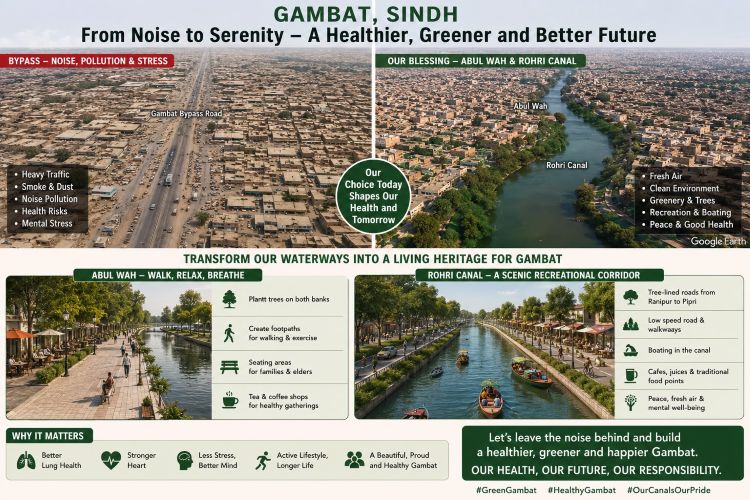
The bypass is one of the most polluted places in the town. Continuous streams of vehicles release harmful gases and microscopic dust particles into the air, while the relentless roar of engines creates an invisible burden on the human mind. People who spend hours there unknowingly inhale pollutants that damage the lungs and cardiovascular system. Medical research has consistently shown that prolonged exposure to traffic pollution increases the risk of asthma, chronic respiratory diseases, hypertension, heart disease, anxiety, sleep disorders, and even cognitive decline.
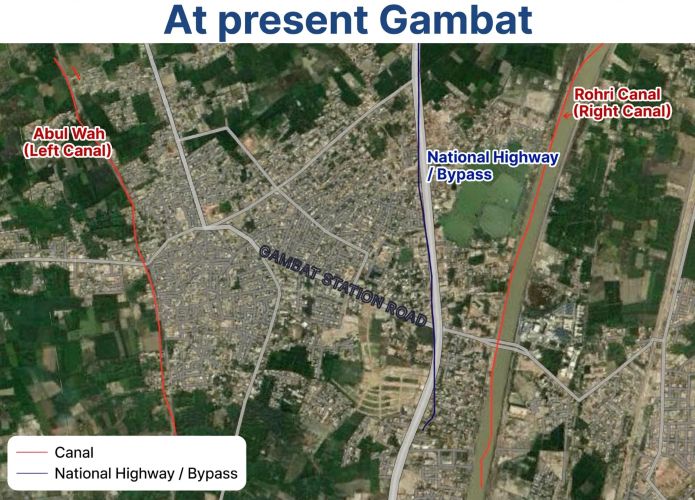 Ironically, many people visit the bypass in search of peace, yet they expose themselves to conditions that gradually rob them of both physical and mental well-being.
This raises an important question: Why should our evenings be spent beside traffic when nature has already gifted Gambat something far more valuable?
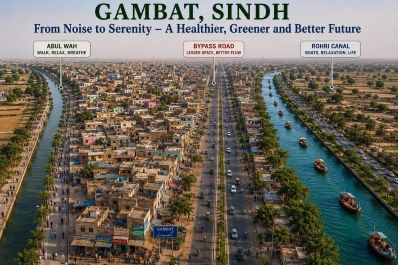
Unlike many towns, Gambat is fortunate to have two flowing waterways, the Abul Wah and the Rohri Canal. These are not merely irrigation channels. They represent an extraordinary opportunity to redefine the town’s future.
Around the world, waterways have become the heart of urban life. Cities in Europe have transformed rivers and canals into vibrant public spaces where people walk, cycle, enjoy cafés, take boat rides, and spend time with their families. Green corridors along waterways improve air quality, lower urban temperatures, encourage physical activity, reduce stress, and attract tourism and local businesses.
The secret behind these successful cities is simple. They chose nature over noise.
Gambat can make the same choice
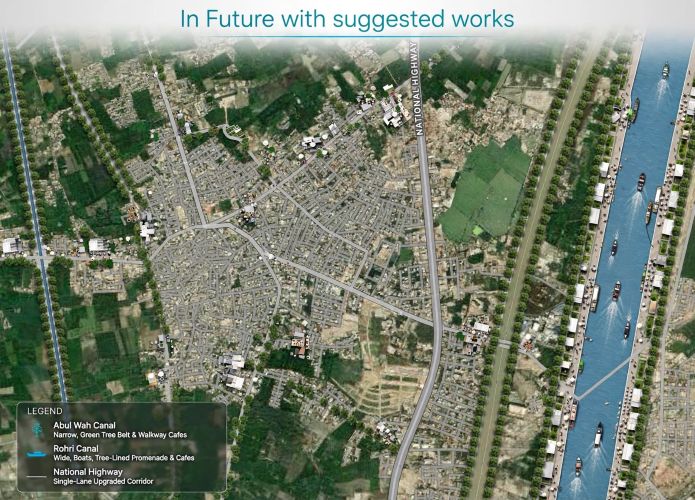
Although encroachments have narrowed parts of the Abul Wah, much can still be achieved. Its banks can be planted with indigenous shade trees. Walking tracks and seating areas can be developed. Small cafés serving tea, coffee, fresh juices, and traditional snacks can create lively yet peaceful public spaces where families feel welcome.
The Rohri Canal presents an even greater opportunity
Imagine a beautifully landscaped corridor stretching from Ranipur to Pipri. Tree-lined roads, dedicated walking and cycling tracks, carefully regulated low-speed traffic, boating facilities, gardens, viewing decks, children’s play areas, and environmentally friendly cafés could transform the canal into one of Sindh’s finest recreational destinations.
Instead of sitting beside roaring trucks, families would stroll under the shade of trees. Instead of breathing polluted air, children would inhale fresh oxygen. Instead of returning home exhausted by traffic noise, people would carry back calm minds and healthier bodies.
Such a project is not merely about beautification. It is an investment in public health. It is an investment in climate resilience. It is an investment in tourism. It is an investment in local employment.It is an investment in the future of Gambat.
The question is no longer whether this vision is possible. The question is whether those entrusted with public office have the foresight and determination to make it a reality.
 The elected representatives of Khairpur District, including the area’s Senators, Members of the National Assembly (MNAs), Members of the Provincial Assembly (MPAs), and the Government of Sindh, should treat this as a public health and urban development priority. The Provincial Ministers for Health, Local Government, Irrigation, Forests, and Works & Highways, together with their respective Secretaries, have both the authority and the responsibility to initiate an integrated development plan for the Abul Wah and Rohri Canal corridors. This is not the responsibility of one department alone. It requires coordinated action across multiple institutions.
At the same time, meaningful change rarely begins in government offices alone. It begins with public demand. The educated citizens of Gambat, engineers, architects, doctors, environmentalists, teachers, lawyers, students, business leaders, journalists, social organizations, and civil society must raise their voices. They should write to the Government of Sindh, submit proposals, engage their elected representatives, use the print and social media responsibly, and advocate for transforming these waterways into healthy public spaces. A vision supported by an informed and united community is difficult for any government to ignore.
History shows that great cities are built not merely by governments but by citizens who care enough to imagine something better and persist until it becomes reality.
 As cities around the world struggle to create green public spaces, Gambat already possesses the natural foundation. All that is needed is thoughtful planning, visionary leadership, community participation, and the collective determination to protect and enhance what nature has generously provided.
Development should not be measured solely by wider roads and faster traffic. A truly successful city is one where people can breathe clean air, walk safely, enjoy nature, and spend quality time with their families.
The time has come to rethink where we spend our evenings and how we shape our urban future.
Let us replace the culture of gathering beside polluted highways with a culture of gathering beside clean, living waterways.
The bypass may offer convenience, but the canals can offer life
The future of Gambat will not be determined by what nature has given it, but by what its people choose to do with that gift. If citizens speak, professionals contribute, and governments act, Gambat can become a model for healthy, sustainable, and people-centered urban development across Sindh.
Read: Modern Highways and Pakistan’s Path
_____________________
 Engr. Ramesh Raja is a civil engineer and managerial/ planning professional who also contributes as a freelance writer on technical matters. He may be reached at engineer.raja@gmail.com