Travels in life have indeed left me speechless, then turned me into a storyteller
- I have carried only memories, and left nothing but my footprints wherever I traveled.
By Nazarul Islam
Our small blue planet is made up of so many countries. I am fortunate to have visited only 40 of them. My passion to travel across the continents may have catalyzed from my belief that adventures begin, where the familiar ends—it may be a city you’re visiting for the first time, a path you’ve never followed before, a mountain you’ve never climbed, a country whose language you don’t speak and whose traditions you don’t know. And there is nothing like the curiosity mingled with surprise and wonder that results from these new experiences.
As I recall some of my journeys, I am filled with pride and memories of excitement that I have experienced. Many years ago I was fascinated to read about Ibn Battuta, a ‘Maghrebi traveler’, explorer and scholar. Over a period of 30 years from 1325 to 1354, he had traveled 25,000 miles across distant lands, enjoying the hospitality of Emperors, sailing the seas, oceans and the lands of the Far East. He visited much of Africa, the Middle East, Asia and the Iberian Peninsula.
After many years of my travels, I have slowed down, coming to terms with how many adventures I had lived, how many beautiful places I had seen and how many wonderful people I had met. There exist remote and lonely locations where I sat holding my notebook, with Goosebumps all over my arms and tears of thankfulness in my eyes. I initiated my journeys way back in 1988.
Unlike In Battuta who journeyed on foot, and small sea vessels, I have traveled on modern jetliners, fast moving trains, and buses, on cars and on foot. This madness had continued until the dawn of a new century 2000. After having been on the move for so long, it is a time for my reflections.
Did I learn my lessons from my travels? To me, it has been my inner urge to share my stories. And that is exactly what I intend to do in this article. Among us, many people desire to travel, yet are unable to realize their dreams. I have traveled extensively in cities, dense forests, deserts and n biting cold. I always felt I could discuss those journeys, on a virtual tour of sorts, offering listeners a little glimpse into the wisdom which I have gained through my travels.
Let me share with you some of the most important things I have learned through my journeys—about our volatile, not so complicated world where people of different ethnicities, color and habits thrive, including myself.
Even if others haven’t had an opportunity to step foot on places I have visited, chances are they have already heard or read stories about it. A challenge which travelers like me have encountered before embarking on a trip, is leaving preconceived notions behind and arriving at my chosen destination with a fresh, open mind.
The massive rock-cut temples of Abu Simbel, built by Pharaoh Ramses II, are a major draw in southern Egypt. Further upriver, you can find the Temple of Philae on Agilkia Island near Aswan, and the well-preserved Temple of Edfu, dedicated to the falcon god Horus.
The Nile River is more than just a waterway; it’s an essential element of Egypt’s history, culture, and daily life, shaping the civilization that flourished along its banks for millennia.
In Syria, I was escorted by four armed guards during my trip, and yes, I saw a lot of destruction, as well as refugees living in dire conditions. But I also felt welcome, and I felt the incredible energy of resilient people eager to build a better future. When I left, I realized that my image of the country had greatly changed.
In life, when we have to make a decision, we generally weigh our options in a logical way. While it is good to listen to our brains, it is equally important to take our gut feelings into account. In my travels, I have often chosen to do something because my intuition told me to do it, not because it seemed like the best decision in a rational way.
These situations have involved choices where boldness and courage were required, like quitting a well-paying job and my career to travel or setting my goal to visit many countries on our planet, even though government advisories told me to stay away from some of them. While people close to me didn’t understand my decisions, these choices were among the best I ever made, and they changed my life for good.
Traveling, by definition, means meeting people from different backgrounds and cultures. You inevitably meet people who do and say things you would never do or say yourself, and on the flip side, people in the country you’re visiting might not be used to foreigners or know how to deal with them. They might have a preconception about you, the stranger.
The key is to arrive with an open mind. Be kind and modest, smile and try to connect with the people you’re dealing with. By being human and accessible, most people will open up to you, and you’ll likely receive kindness in return. If the opportunity presents itself, try to make an innocent joke—laughter is a universal icebreaker.
A few years ago, when I arrived at a checkpoint in the middle of the Colombian jungle in South America, on the back of a motorbike, an officer stopped me. I have had my share of greedy officials fishing for bribes and was tired of it. Still, I shook hands and asked what he wanted. He started by saying that I should pay money if I wanted to proceed. I pointed at the dusty motorbike I was traveling at the back seat, my worn backpack and then my skin, and said, “You are assuming I am rich because I have white skin … but would a rich person really travel like this?” He laughed, shook my hand again, gave me a pat on my shoulder and wished me a safe trip.
We live in an incredibly diverse world. Even in my adopted country, the United States, there are quite a few dialects. Of course, these differences are precisely what makes travel so fascinating. But I have come to realize that we are much more similar than we think.
We all want to be healthy, we all want the best for our kids and we all want to have good meals. At the end of the day, no matter where we’re from, we are all humans sharing the same blue planet.
It is surprising how many people complain about the weather. And the traffic. Whether you are in New York, Dhaka, Istanbul, Bangkok or almost any other location, people think their traffic is the worst in the world. I’m convinced that if we would look for the things we have in common, we would have a better understanding of one another.
On all my travels, I have preferred to take it slow. I took public transportation where possible. I often explored cities and the countryside walking or on a bicycle. I ate at local restaurants, and I slept in modest, local accommodations. This immersion had guaranteed a better understanding of the life locals live. It also meant that I get to meet a lot of people, and there is no better way to begin to grasp a country than to listen to its inhabitants.
One of the things that has struck me most is that even in the poorest countries, people make the best of their lives. They work very hard to make ends meet, hoping for a better life for their children, even when the odds are stacked against them. Rather than complain, they do their best. As a result, I have come to appreciate my life and what I have. It doesn’t make sense to complain. If something isn’t right, you can decide to improve it, fight it or forget about it.
This lesson has also made me to see the beauty of small things. I get thrilled when I witness a spectacular sunset, a brilliant rainbow or a ray of sunlight seeping through gaps between enormous clouds. There is so much to be grateful for, and if you acknowledge it, it brings a lot of positivity into your life.
One of the things that touched me most on my travels to Malaysia, Austria, and the Balkans is how people welcome me to their country. People have gone out of their way to help me, invited me to their homes, made sure I was safe, gave me a drink and prepared food for me. Over the years, I’ve realized that those who have less often share more.
Forty years ago, I had dreaded going to scary destinations like Pyongyang, the capital city of North Korea—a mysterious country and a taboo destination, where locals tactfully avoid meeting visitors to their land. Officially, North Korean society is closed and harshly regulated, where human choices and freedoms are few or unavailable.
This did not deter me because I knew if I wanted to achieve my goal of visiting as many countries in the world, I would have to go to dangerous places, where freedoms are restricted. I also knew the country was ruled by a tyrant dictator.
When I arrived at Kim Il Sung airport, I was embraced by my ‘guide’ who in fact was an intelligence officer. I toured the city, and he showed me the birth place of the nation’s founder, remains of destruction caused by civil wars, their national monuments, and the devastation of what once had been beautiful Russian structures. I was invited for a chat and tea by men in the street, which was well orchestrated by the state functionaries, pretending to be ordinary North Koreans gracefully welcoming foreigners into their land. I played football with a few guys on the city park Later on, I was invited at the Ice Rink to meet the country’s top rulers and nation’s founder and President Kim Il Sung.
I was escorted to the country’s industrial complexes, national monuments, the Parliament and institutions where people greeted me and shared how their nation has progressed socially, economically and militarily over the years.
Finally, I was taken to the dreaded border, located on the 38th. Parallel, where their alert soldiers stood battle ready, face to face with American and South Korean counterparts.
I had always longed to walk on the banks River Nile near Cairo, and the walk down the pathways leading to the ancient Library of Al-Azhar University, travel in the streets of Alexandria, which is one of the oldest cities in Africa. I had embarked on my journey to Cairo, in February of 1994.
Exploring the Al-Azhar University in Cairo is not just visiting a university, but stepping foot on a site with over a millennium of history and influence within the Islamic world. It was established by the Fatimid Caliphate in 970 AD. Here’s a glimpse of what you might see:
The central point of the university, the mosque displays a mix of architectural styles from the Fatimid, Mamluk, and Ottoman periods. Key features include a marble-paved central courtyard designed for prayer and five minarets with distinct designs from different historical eras. The prayer hall is decorated with detailed arabesque designs and calligraphy.
The mosque is adorned with stucco decorations, marble columns, and ornate minarets that showcase Islamic art and design from various periods. Notable entrances include the Bab al-Muzayinīn (“Gate of the Barbers”) and the Gate of Sultan Qaytbay.
Al-Azhar includes various educational spaces and specialized schools covering religious and secular subjects. One may observe students and scholars in different programs, including halls for Islamic jurisprudence, Quranic studies, and foreign languages.
Al-Azhar had played a significant role in resisting the French occupation in the late 18th century, demonstrating its historical importance as a symbol of resilience and national pride.
Along the banks of the Nile River in Egypt, a visitor can experience a rich blend of history, culture, and natural beauty.
Many iconic monuments and temples are located directly on the Nile’s banks, including the Temples of Luxor and Karnak on the East Bank and the Valley of the Kings, with tombs like Tutankhamen, the Temple of Hatshepsut, Ramesseum and the Colossi of Memnon located on West Bank in Luxor.
The massive rock-cut temples of Abu Simbel, built by Pharaoh Ramses II, are a major draw in southern Egypt. Further upriver, you can find the Temple of Philae on Agilkia Island near Aswan, and the well-preserved Temple of Edfu, dedicated to the falcon god Horus.
The Nile River is more than just a waterway; it’s an essential element of Egypt’s history, culture, and daily life, shaping the civilization that once flourished along its banks for millennia.
In Syria, I was escorted by four armed guards during my trip, and yes, I saw a lot of destruction, as well as refugees living in dire conditions. But I also felt welcome, and I felt the incredible energy of resilient people eager to build a better future. When I left, I realized that my image of the country had greatly changed.
When I was traveling in Egypt Suon a local bus, I noticed an old woman and her son. It was obvious that they were poor from the ragged clothes they wore and the bag they carried, which was full of holes. The woman did not seem to see much, and one of her son’s feet was distorted, and he had trouble walking.
Whenever we stopped, I helped them get out and back onto the bus. Unfortunately, we couldn’t talk more than a few words. I had felt sympathy for them and were considering what we could give them before we reached our destination.
Then, unexpectedly, the bus stopped, and they got off. It all went too fast, and I couldn’t manage to give them anything. When we reached our destination and went to pay our fare, the driver told us that it had already been paid. It turned out that the frail mother had given him the money for my fares when she got off with her son. We looked at each other, tears welling up in our eyes.
Perhaps acts of impulsive generosity have made me a more generous person too. Giving not only makes the receiver happy—it also makes you feel good.
A rapidly increasing number of people have the means to travel today, and more destinations are within reach of potentially millions of visitors. In many ways, this is good. Travel can lead to mutual understanding and a deeper sense of international awareness. However, I’ve been noticing more and more lately how the influx of tourism can have a negative impact on local communities—for example, through pollution and rising prices—and the area on a social and cultural level. Tourism in Spain has suffered due public reaction and protests in Barcelona.
Moreover, tourist money often doesn’t go to the local economy but to big international brands (think: hotels, tour operators, cruise companies and the like).
In my travels to Spain and Portugal, I visited the traditional the nomadic people, who live deep inside Spain into two primary groups in Spain and Portugal that have historically engaged in nomadic or semi-nomadic lifestyles: Romani People (Gitanos in Spain, Ciganos in Portugal).
They are the most widely recognized nomadic group in the Iberian Peninsula. They first arrived in the region in the 15th century and their presence in Portugal is recorded as early as the late 15th century, crossing from Spain. Traditional ways of life often involved metalworking and operating small circuses, which led to a mobile lifestyle.
However, centuries of discrimination and persecution have aimed at forced sedentarization and assimilation, banning aspects of their traditional life such as language and attire. Today, many Romani communities have settled in urban areas, but some still practice a degree of itinerancy associated with their trades.
I must also highlight the Vaqueiros de Alzada (Northern Spain): They are a distinct nomadic group in the mountains of Asturias and León, traditionally practicing transhumance, which is the seasonal movement of livestock. While many Vaqueiros have assimilated into non-Vaqueiro society, some continue to practice transhumance, albeit to a lesser extent in the historical context.
Transhumance is a unique livestock practice involving driving herds from summer pastures to winter pastures, potentially hundreds of kilometers apart. These migrations play a vital role in maintaining biodiversity by dispersing seeds and fertilizing the land through animal waste.
Before the Roman conquest, the Iberian Peninsula was inhabited by various peoples, including Iberians, Celts, Aquitanians, and Lusitanians.
Transhumance practices predate the Romans, driven by climate differences requiring seasonal movement of livestock between mountain pastures and warmer lowlands.
The Romani people arrived much later, in the 15th century, with their nomadic lifestyle becoming a target of discriminatory policies from the 15th century onwards, aimed at forcing assimilation and sedentarization.
A fellow traveler in Grenada Spain had shared with me his unique experiences during the Gerewol Festival held in Niger, Africa, where young people from nomadic tribes hope to find a future spouse.
These are unique experiences where foreigners poke their big lenses into kids’ faces without bothering to ask and fly drones in the middle of the event to capture the image of young men all painted for the occasion, just to have the best shot. This had made me feel awful, because the tourists may have thought they were in a zoo looking at animals instead of respectfully watching the nomads perform their age-old traditions.
I am convinced that in order to keep travel attractive in the long run for both travelers and host countries alike, measures will have to be taken.
One of the main concerns you during travel is whether or not you can trust strangers. How do you know if they will stick to their word? Travel quickly teaches you what to look for in a person. It teaches you to listen carefully to what someone says and how they say it, and to listen to your intuition. Trusting your intuition is one of the most helpful things you can do in travel (and life, in general).
Nearly seven years ago, I had set out on my very first solo trip. I traveled by train through Western Europe, crossed the Mediterranean and ended up in Morocco. There, I was besieged by young men who claimed to want to practice English. I ignored them. I had traveled around three continents with my parents and thought I was an experienced traveler.
Ah, the innocent overestimation of youngsters! The guys continued to follow me until I gave in. Over the next few days, they took me out for tea, for walks through Tanger, for talks about the things young guys talk about.
They invited me to a traditional party in their village. And then, suddenly, they asked me how many drugs I wanted to buy. None, I told them. They turned aggressive, claiming I had wasted their time and that I had to pay them compensation for it.
I managed to negotiate the amount down, but when I left, I felt empty.
They had broken my trust, and I considered that unforgivable. It took a while before I trusted people again. It also taught me to listen and look carefully, to stand my ground and to walk out of situations that didn’t feel good. Nothing like this ever happened to me again. I still want to trust strangers, but I will always hold a healthy dose of skepticism.
My journeys have remained the defining moments in my life. I realized that even though I was young and fit, life was very fragile. You can’t take anything for granted, and you simply don’t know how long you will be on our beautiful planet.
This realization instilled a kind of urgency in me—a deep desire to enjoy life, explore the world and make the most out of it. Knowing that I have lived my life fully gives me some peace of mind whenever I undertake a risky journey.
Are you a millionaire?” “How do you pay for all your travel?” These are a couple of the questions I regularly get. While travel does not have to cost a fortune, I certainly have spent a good amount of money on it over the years. But it was money well spent.
I can look back on so many fantastic memories, have learned so much from so many people and have been thrilled, awed and blown away by so many places. This is something that no one can ever take away from me—and it’s something I will cherish for the rest of my life.
Travels in life have indeed left me speechless, then turned me into a storyteller. I am sure Ibn Battuta must have felt this when he finally returned to Tangiers. The Chinese saying that a journey of a thousand miles begins with a single step, continues to inspire me every day in life. I have carried only memories, and left nothing but my footprints wherever I traveled.
Read: Conscious Journeys into Afterlife
_________________
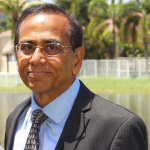 The Bengal-born writer Nazarul Islam is a senior educationist based in USA. He writes for Sindh Courier and the newspapers of Bangladesh, India and America. He is author of a recently published book ‘Chasing Hope’ – a compilation of his articles.