Remembering Tailor Masters of Moro City of Sindh and their Treadle Sewing Machines in a Sweden Café
Some places don’t just serve coffee or food; they serve memories.
By Abdullah Usman Morai | Sweden
We used to go often to a cozy café called Värmdö Bageri Stugan, in recent times, it’s about a twenty-minute drive from home in Nacka. Bageri means bakery, and stugan means cottage, a simple name for a warm little place tucked inside the beautiful Stockholm Skärgård, known in English as the Stockholm Archipelago.
In Sweden, there’s a beautiful word: fika. It’s not just about coffee or cake. It’s a small ritual of togetherness, meeting friends or family, sitting down, sharing something to eat or drink, and talking about life. In summer, people swim in the nearby waters; in winter, when much of it freezes, they skate, children play on the ice, and afterward everyone looks for a warm corner to rest their tired bodies and cold hands. And of course to fika.
 Inside the bakery, you mostly see young people working behind the counter, energetic, polite, and focused. Maybe it’s a family business, maybe not. But what’s certain is that these young workers carry responsibility on their shoulders while still building their futures. They reminded me of something deeply familiar: the dignity of working while learning, earning while growing.
It’s something I strongly believe in, young people should study, yes, but also work when they can. Not only for money, but for discipline, humility, and understanding the value of effort. Education shapes the mind; work shapes character. Both are equally important.
As we sat there one afternoon, watching children happily devour cinnamon buns after outdoor play while their parents exchanged laughter, something unusual caught my eye.
 A few of the café tables were made from old sewing-machine platforms, the kind once produced by Singer. Heavy iron bases, now holding wooden tabletops.
I smiled.
Not because it was trendy but because it felt thoughtful. A quiet example of reusing instead of discarding. A Swedish mindset, perhaps: give old things a new life. It’s environmentally friendly, practical, and poetic in its own way.
And just like that, I was no longer in Sweden. I was back in Moro, Sindh, Pakistan.
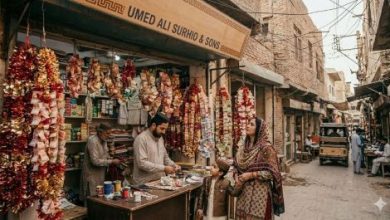
Back on Soomra Muhalla Shahi Bazaar, the main street of my hometown.
 I could almost hear the rhythmic thump-thump of foot-powered sewing machines. I could see Ustad Abdul Khalique urf Chacha Karo Darzi, Ustad Maqbool, and the ever-jolly Atta Surhio, stitching clothes for the neighborhood. In those days, motors were rare. Most machines ran on feet alone, honest physical labor, day after day. Sewing was not just a skill; it was an exercise.
Those tailors didn’t just mend clothes; they held the social fabric of the street together.
We brothers, used to help Baba at his shop after school, just like those young people at the bakery today. Homework waited; responsibility didn’t. Looking back, that routine quietly taught us commitment, teamwork, and respect for labor.
And then there was laughter.
Seeing families laugh inside Bageri Stugan suddenly brought back two unforgettable characters from Moro: Atta Surhio and Noor Muhammad Nawal, lovingly known as Noro Nawal.
Noro used to bring tea kettles, cups, sacuers and cakes to shopkeepers and tailors. But his real talent was comedy.
Both Atta and Noro were natural entertainers, charchai, as we say in Sindhi. As soon as Noro entered the street, Atta would fire the first joke. Noro would reply. Within moments, not only shopkeepers but customers too stepped out, paused their errands, and gathered around.
For ten or fifteen minutes, the whole bazaar became a live comedy stage.
No tickets. No microphones.
Just wit, warmth, and human connection.
And it didn’t matter whether it was the cold afternoons of December and January or the hottest noons of June and July, people still gathered, still smiled, still enjoyed their jokes. Those brief exchanges gave everyone a break from work, a dose of joy, and a sense of community.
They reminded people that even in hardworking lives, laughter deserves its place.
Noro is no longer with us.
Atta, thankfully, still carries that same cheerful spirit. Whenever I visit Moro and see him, it feels like greeting a living memory.
Sitting in that Swedish bakery, surrounded by young workers, reused sewing-machine tables, laughing families, and post-skating fika crowds, I realized something powerful:
Across continents and cultures, life follows similar rhythms.
Young people work.
Parents worry and smile.
Children play and eat.
Old tools find new purposes.
Communities gather.
Stories repeat in different accents.
Whether it’s a bakery in the Stockholm Archipelago or a tailor shop in Shahi Bazaar Moro, the essence is the same: hard work, shared moments, respect for resources, and the simple magic of human connection.
Perhaps progress doesn’t always mean forgetting the past.
Sometimes, it means carrying it forward in recycled furniture, in youthful determination, in warm cups of tea, and in memories that travel with us wherever we go.
And sometimes, all it takes is a fika table made from an old sewing machine to remind you where you come from.
And yes, my roots are in Sindh, in Moro, in Shahi Bazaar’s Soomra Muhalla, where I grew up. It remains with my soul at all times, and there is great joy in that.
Read: Tale of Camel Caravans and a Darwesh
___________________
Abdullah Soomro, penname Abdullah Usman Morai, hailing from Moro town of Sindh, province of Pakistan, is based in Stockholm Sweden. Currently he is working as Groundwater Engineer in Stockholm Sweden. He did BE (Agriculture) from Sindh Agriculture University Tando Jam and MSc water systems technology from KTH Stockholm Sweden as well as MSc Management from Stockholm University. Beside this he also did masters in journalism and economics from Shah Abdul Latif University Khairpur Mirs, Sindh. He is author of a travelogue book named ‘Musafatoon’. His second book is in process. He writes articles from time to time. A frequent traveler, he also does podcast on YouTube with channel name: VASJE Podcast.