

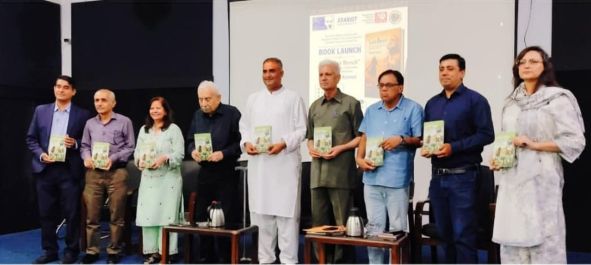
SZABIST University and the Progressive Writers Association hosted the launch of Professor Vijesh Kumar’s novel, The Last Bench, in Karachi. Key speakers and scholars gathered to discuss the book’s real-life portrayal of religious discrimination, class hierarchies, and human rights issues in Sindhi society.
Karachi
The launch ceremony for novelist and Professor Vijesh Kumar’s English novel ‘The Last Bench’ was held at the Media Hall of SZABIST, Karachi, on Aug 19, with discussions focusing on the role of literature in challenging religious discrimination and the class system.
The event was jointly organized by the Karachi Chapter of the Progressive Writers Association and SZABIST University under the auspices of the Sindh Studies Academy. The ceremony was presided over by Dr. Suleman Sheikh, founder of Sindh Graduates Association (SGA).
Speakers included Progressive Writers Association Sindh President Riaz Shahid Dayo, SZABIST University Director Riaz Sheikh, social activist Anita Panjwani, Advocate Faheem Noonari, social reformer Sadaf Thalho and others. The event was moderated by Ameen Joyo of the Sindh Studies Academy.
The program began with a rendition of Shah Abdul Latif Bhittai’s wai, presented melodiously by Naeem Shah.
 In his welcome address, Dr. Suleman Sheikh said the Sindh Studies Academy, a subsidiary of SZABIST, was working for the promotion of Sindhi literature and playing a role in introducing Sindh’s cultural and national heritage to institutions around the world.
Speaking about the novel, Riaz Shahid Dayo said The Last Bench reflects the continuity of history and portrays the pain and suffering of three generations. He said Professor Vijesh Kumar had observed society closely and transformed those experiences into a literary work. He noted that religious discrimination and the class system still existed in society and were essentially creations of human beings. He also referred to Mulk Raj Anand’s Untouchable and Arundhati Roy’s The God of Small Things.
Anita Panjwani described the novel as the true story of a person presented in fictional form. She said many wars throughout history had been linked to conflicts carried out in the name of religion, making it necessary to separate the state from religion. She alleged that influential groups in Sindh continued to use religion for personal interests in various matters.
Novelist Professor Vijesh Kumar said the plot and story of The Last Bench were based on real-life events. Many of the incidents described in the novel, he said, had occurred before his eyes, which he later transformed into a literary narrative. Despite the passage of the 21st century, religious discrimination had not disappeared, with such incidents still being reported in various districts of Sindh, particularly Ghotki and Pano Aqil. Verses by Shah Abdul Latif Bhittai have also been incorporated into the novel as part of its background.
Kumar said his earlier book, Sketches, had already been published, while five more novels dealing with philosophy and intellectual themes were also scheduled for publication.
Professor Riaz Sheikh said the novel sheds light on the religious and caste-based structure of Sindhi society. He observed that eliminating religious customs and traditions that had existed for centuries was not an easy task because their roots were deeply entrenched.
Advocate Faheem Noonari said the novel carries a message of humanity. Despite claims of a progressive society, religious discrimination and social hierarchy still existed, he said, adding that even access to a natural blessing such as water could be viewed through religious divisions. “When a human being is born, they are simply a human being; it is society that later divides them into different religious identities,” he said.
Social activist Sadaf Thalho said art provides a means of expressing emotions and that every person possesses an inner creative potential that can be revealed through artistic expression. She noted that children in society had traditionally been made to sit on the last bench in classrooms as a form of punishment, and the novel uses a similar social experience as its theme. She stressed that understanding Shah Abdul Latif Bhittai’s philosophy was essential for bringing about positive social change.
Speaking about the book, Nasir Soomro said the novel deals with religious discrimination while combining fiction with the poetry of Shah Abdul Latif Bhittai, demonstrating the author’s extensive study and hard work.
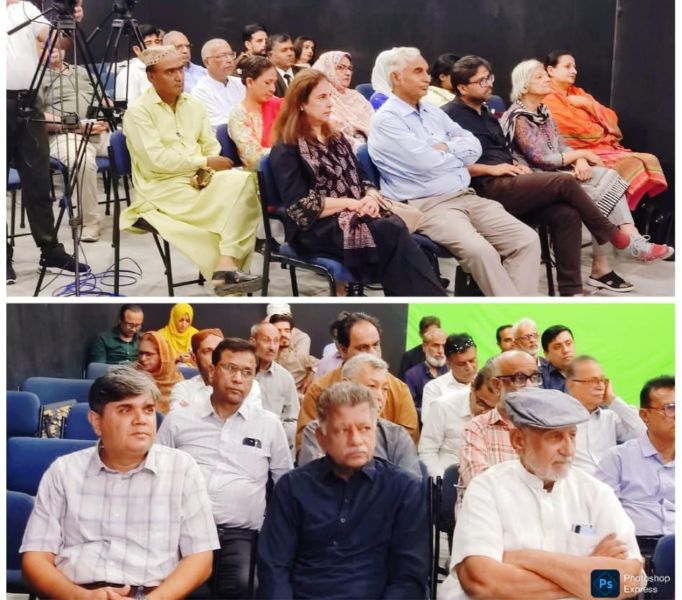
A large number of writers, journalists, members of the Sindhi Adabi Sangat and Progressive Writers Association, literature enthusiasts and people associated with different schools of thought attended the ceremony.
In his concluding remarks, Dr. Suleman Sheikh thanked the guests and said the event was particularly successful because all the speakers had read the book before discussing it. He noted that speakers at literary events often admit that they have not read the books being discussed.
Members of the Progressive Writers Association Karachi Chapter including Naeem Sheikh, Manzor Ujan, William Sadiq, Malik Muqadar Zaman, Zia Bhatti, Liaquat Abbasi, Latif Rawalani, as well as Comrade Gulnaz Mangi, also attended the event. (Press Release)
______________



Thanks dear sir.