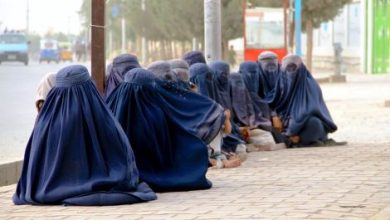
The agitated crowd began chanting victory slogans in praise of Maharani Didda. Some among the people chased after Prime Minister Phalguna. Startled and disoriented, he ran in all directions in panic.
Maharani Didda: Witch Queen of Kashmir
By Debasree Chakraborti
The news of Maharaja Kshemagupta’s death spread across the entire kingdom like a storm. In view of the Maharaja’s illness, no one considered bringing his body back to Srinagar, for it was feared that the people of the regions through which the Maharaja would have been carried might become infected by the disease. For this reason, it was decided that he would be cremated on the banks of the Vitasta at Hunkpur in Varahakshetra. Queen Chandralekha was asked to prepare herself for sati. Chandralekha placed her complete faith in her father, Phalguna; she believed that he would never allow her to become sati and that he would arrive in time to save his daughter. Therefore, despite her ailing body, she calmly began preparing herself for the rite.
 When the news of the Maharaja’s death reached the royal palace in Srinagar, the Queen Mother was sitting with her grandson Abhimanyu in her lap. She had endured many storms and upheavals in her life; so although the news of her son’s death struck her heart with a terrible shock, she composed herself by thinking of the situation that lay ahead. She lifted her grandson in both arms and kissed him on the forehead. Abhimanyu felt deeply comforted in his grandmother’s embrace.
The Queen Mother was gazing steadily at him; drops of tears from her eyes were falling onto the face of the infant Abhimanyu, yet Abhimanyu was smiling and waving his little hands in delight. He had no ability to comprehend how tragic a misfortune the loss of a father is in a child’s life. Looking at him, the Queen Mother said, “The reins of Kashmir’s governance will now have to be taken into your own hands.”
At that moment, Naravahana entered Didda’s apartments. Didda was then in the same chamber with the Queen Mother. She had mentally prepared herself for such a day, but she was still pondering what her next step should be.
The Queen Mother said, “I believe that becoming sati is entirely a woman’s own choice. If she wishes, she may do so; if she does not, she need not.”
Bhalaga also entered the chamber along with Naravahana. On seeing Naravahana, Bhalaga asked with great urgency, “Will Didda have to commit sati?”
Before Naravahana could reply, the Queen Mother said, “I believe that becoming sati is entirely a woman’s own choice. If she wishes, she may do so; if she does not, she need not.”
“I did not become sati, thinking of the upbringing and care of my son. Nor will Didda. She is the Queen Mother, and the Crown Prince is still a nursing infant. If the mother were to die prematurely, the child’s life would be ruined. Therefore, Didda will under no circumstances become sati.”
Naravahana added, “Moreover, before his death, the Maharaja entrusted the responsibility of his kingdom to Maharani Didda. Hence, there is no question at all of Maharani Didda becoming sati.”
At that moment, Didda spoke, “It is not right to take such a decision within the four walls of the palace. I place my decision about becoming sati in the hands of the people. If they wish, I shall become sati; otherwise, I shall not.”
Rising to her feet with her grandson in her arms, the Queen Mother stepped toward Didda and said, “Do not take any decision in a moment of emotion. You must think of your child above all else.”
Placing her hand on Abhimanyu’s head, Didda said, “As long as you are here, I have no concern about my child’s future.”
Naravahana protested, “But the responsibility of governing Kashmir will have to be taken up by you alone.”
Didda said with firmness, “Let the people take that decision. I leave both my existence and my non-existence in their hands.”
Sensing imminent danger, Naravahana stepped out of the palace. He had very little time at his disposal; within this brief interval he needed to spread Didda’s decision among the people.
While everyone else was deeply anxious about Didda’s decision, Bhalaga, however, supported it with complete calm. No one knew Didda better than he did. Bhalaga understood what decisions Didda would take at different moments and the reasons behind them. Perhaps for this very reason, he silently gave his assent and began preparing Didda.
Those in the kingdom who were supporters of Naravahana quickly spread the news among the populace that Maharani Didda was going to commit sati. On hearing this, the citizens set out toward Hushkpur of Varahakshetra, for they did not wish to lose their queen at any cost. Didda was dressed in red garments; elderly women came and adorned her like a bride, applying vermilion to the parting of her hair one by one. She was then placed upon a grand chariot and taken along the road to Hushkpur. Lining both sides of the road, the citizens stood with folded hands, tears streaming from their eyes, imploring their queen not to become sati. Such behavior of the people filled Didda with strength; she realized that she was walking on the absolutely right path.
Before Didda’s arrival, Kshemagupta’s funeral pyre had already been prepared at Hushkpur. As Abhimanyu was extremely young, it was not possible for him to perform his father’s last rites; therefore, a distant kinsman was present to offer the mukhāgni to Kshemagupta. The Queen Mother and Bhalaga remained in the royal palace with Abhimanyu. Since the Maharaja had died of a contagious disease, taking a childlike Abhimanyu to such a place could expose him to the illness; considering all this, they stayed back in the palace with the young prince. Bhalaga found the Queen Mother’s conduct in this matter rather surprising, and out of curiosity he once asked her whether she would not even see her son one last time?
In reply, the Queen Mother had said that she had never truly received the respect due to her from this son. He had spent his life in unrestrained debauchery and had never shown the slightest inclination to inquire after his mother. Only after Didda’s arrival had he shown her some measure of respect and spent time with her. Therefore, she felt no real attachment to her son; in her heart she had erased him long ago. At one point, overwhelmed by sorrow, she had even gone away to Varanasi. Now Abhimanyu alone was everything in her life, and she wished to spend the last days of her life with him. Bhalaga understood the state of the Queen Mother’s mind and, with all the strength of his own heart, began to pray for Didda’s victory.
Prime Minister Phalguna had arrived much earlier to attend the Maharaja’s last rites. He saw his daughter Chandralekha watching him as she circumambulated the corpse with folded hands. Even then, Chandralekha believed that her father would do something to save her from becoming sati.
But Prime Minister Phalguna knew that if his daughter became sati, his name would be glorified everywhere and the path to the throne of Kashmir would become free of obstacles for him. When the circumambulation ended, two lamps were placed in Chandralekha’s hands and she was seated upon the funeral pyre. Her heart pounding, Chandralekha looked toward her father—surely now he would rescue her from this dreadful situation. But nothing of the sort happened. A kinsman of Kshemagupta stepped forward and set the pyre alight. The flames slowly began to rise upward; amid the terrifying heat and smoke, Chandralekha’s breath began to fail, yet her father did not come to save her. By then, Chandralekha realized that there was no one in this world more selfish than her father. For the sake of power, he had sacrificed his only daughter. Gradually, the fire consumed Chandralekha’s entire body.
After this, it was Didda’s turn; by then she had already arrived there. As Didda was about to circumambulate the burning pyre, a movement arose among the people. In one voice they cried out, “Maharani Didda is our protecting mother, she is the living embodiment of Mother Bhavani. After the Maharaja, the throne of Kashmir belongs to her.”
They continued to cry out, “If you leave us, we shall be left orphaned. No, Queen Mother, you cannot go like this.” Another group shouted, “If you leave, what will become of our Crown Prince? He is still a nursing infant.”
Hearing such words from the people, Prime Minister Phalguna stepped forward and said, “I will raise the Crown Prince. If the Queen Mother does not become sati, Kashmir will face misfortune.” Then Naravahana and a few of his associates came forward and said, “But before his death, the Maharaja entrusted the responsibility of the people of Kashmir to Maharani Didda.” Naravahana produced a letter and showed it, saying, “Look, the Maharaja has clearly written this here.”
As Didda was about to circumambulate the burning pyre, a movement arose among the people. In one voice they cried out, “Maharani Didda is our protecting mother, she is the living embodiment of Mother Bhavani. After the Maharaja, the throne of Kashmir belongs to her.”
After seeing the letter, Prime Minister Phalguna said, “This is not the Maharaja’s handwriting. A false conspiracy is being hatched to place the younger queen, Didda, upon the throne.” Before the Prime Minister could finish his statement, the agitated crowd began chanting victory slogans in praise of Maharani Didda. Some among the people chased after Prime Minister Phalguna. Startled and disoriented, he ran in all directions in panic.
Bowing her head in respect to the people’s demand, Didda returned to the royal palace with Naravahana. That very night, before meeting her own son, she hurried to Chandralekha’s apartments. There, in the darkness of night amid the dimly lit corridors of the palace, she heard the cries of two little girls. There were no maidservants or anyone else present anywhere in those quarters. Didda felt as though she were witnessing a scene from her own childhood. Searching through the vast palace, she finally reached a particular spot and saw two lovely infant girls standing in a corner of a room, crying.
Didda realized that after the news of Chandralekha’s death, everyone had abandoned her two daughters. On seeing Didda, the two children began to move toward her. Didda understood that they were extremely hungry and deeply frightened after being alone for so long. She rushed forward and lifted the two children into her arms; they rested their heads on Didda’s shoulders and began to sob uncontrollably.
Carrying the two children, Didda walked through the dimly lit passages of Chandralekha’s apartments toward her own quarters. Bright light was streaming from her chambers, and she could hear the joyful sounds of the infant Abhimanyu. Thus, from the dark and tainted chapter of Kshemagupta’s reign, the future of Kashmir slowly moved toward a bright and radiant chapter. (Continues)
Click here for Part-1, Part-2, Part-3, Part-4, Part-5, Part-6, Part-7, Part-8, Part-9, Part-10, Part-11, Part-12, Part-13, Part-14, Part-15, Part-16, Part-17, Part-18,
_________________
 Debasree Chakraborti is a renowned novel writer of Bengali language. Based in Kolkata, West Bengal, India, she has done Master’s in Modern History from the Kolkata University, and authored some thirty books, mostly the novels, with historical perspective and themes. Her novel is ‘Maharaja Dahir’ that covers the history of Sindh from 662, the year of first attack on Sindh by the Arab armies till date, was published last year and translated by Nasir Aijaz into Sindhi language.