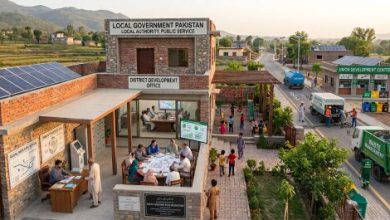
Population Growth Outstrips Resources
Pakistan's Population Crisis: Time for Urgent Action


The future of Pakistan will not be determined by how many people it has, but by how well it invests in them.
Mahjabeen Channa
Everyday across Pakistan, thousands of babies are born into a nation already struggling to provide enough schools, hospitals, jobs, clean drinking water, and affordable housing for its people. Each new life brings hope to a family, yet collectively these births are adding to one of the country’s most pressing development challenges rapid population growth.
Population is often described as a nation’s greatest asset. Countries with healthy, educated, and skilled citizens can transform their demographic strength into economic prosperity. However, when population growth outpaces economic development and public services, the same demographic advantage can become a heavy burden. Pakistan finds itself at precisely this crossroads.
Despite decades of development planning, millions of Pakistanis continue to live below or just above the poverty line. Families across urban slums and remote villages struggle to earn enough to feed their children, send them to school, or access quality healthcare. For many households, every additional child means stretching already limited resources even further. Parents who dream of providing better lives for their children often find themselves trapped in an endless cycle of financial hardship.
The effects are visible everywhere. Overcrowded classrooms, overburdened hospitals, congested cities, rising unemployment, and increasing pressure on natural resources have become part of everyday life. These challenges are not caused by population growth alone, but rapid growth undoubtedly magnifies each of them.
One of the underlying reasons for Pakistan’s continuing population increase is the limited use of family planning services. Although modern contraceptive methods are available through government health facilities and private providers, many couples still lack access to accurate information or face cultural, social, and economic barriers that prevent them from using these services. In some communities, misconceptions and misinformation continue to discourage healthy birth spacing.
Family planning should never be viewed simply as limiting the number of children. It is about empowering parents to make informed decisions regarding the timing and spacing of pregnancies. When families are able to plan responsibly, mothers are healthier, children receive better care, household finances improve, and communities become more resilient.
Unfortunately, public awareness regarding reproductive health remains insufficient. Many young couples enter marriage with little understanding of maternal health, birth spacing, nutrition, or the long-term economic implications of raising large families. Early marriages and closely spaced pregnancies continue to increase health risks for both mothers and newborns, while contributing to higher healthcare costs for families and the state.
Pakistan’s healthcare system is already operating under immense pressure. Public hospitals frequently struggle with shortages of doctors, nurses, medicines, and diagnostic facilities. Every year, millions more people depend on services that have not expanded at the same pace as the population.
The responsibility for addressing population growth does not rest with one institution alone. The Population Welfare Department has long worked to promote reproductive health and family planning through counseling, community outreach, and family welfare centers. However, its efforts are often constrained by limited financial resources, staffing shortages, and inadequate outreach in remote districts. Strengthening this institution is essential if Pakistan is serious about slowing unsustainable population growth.
Equally important is Pakistan’s National Program for Lady Health Workers. For decades, Lady Health Workers have served as the bridge between healthcare facilities and communities. They visit households, educate mothers about maternal and child health, promote immunization, encourage nutrition, and provide guidance on family planning. Their trusted relationship with local communities makes them one of Pakistan’s most effective public health resources. Expanding their coverage and strengthening their training could significantly improve awareness and access to reproductive health services.
Civil society organizations and non-governmental organizations have also played a valuable role by reaching communities where government services remain limited. Through awareness campaigns, youth engagement, women’s empowerment initiatives, and community education programs, they have helped promote informed family planning and healthier lifestyles. Greater collaboration between government institutions and development partners can further amplify these efforts.
Perhaps the single most powerful intervention, however, is the education of girls. Around the world, evidence consistently shows that educated women tend to marry later, have healthier pregnancies, participate more actively in the workforce, and make informed decisions about family size. Educating girls is therefore not merely an investment in individual futures—it is an investment in national development, poverty reduction, and public health.
If Pakistan’s population continues to expand rapidly without corresponding improvements in employment, education, healthcare, housing, and infrastructure, the consequences will become increasingly severe. More people will compete for fewer jobs. Demand for food, water, electricity, transport, and housing will continue to rise. Agricultural land will shrink under expanding settlements, while climate change and water scarcity will place additional stress on already fragile natural resources.
The challenge is not that Pakistan has too many people; rather, it is that population growth is outpacing the country’s ability to provide opportunities and essential services. A growing population can become a tremendous strength only when people are healthy, educated, productive, and economically empowered.
Addressing this challenge requires political commitment and sustained public investment. Expanding voluntary family planning services, strengthening the Population Welfare Department, increasing support for Lady Health Workers, improving maternal and child healthcare, investing in girls’ education, empowering women economically, and launching nationwide public awareness campaigns must become national priorities rather than isolated initiatives.
Pakistan still has an opportunity to shape its demographic future. The decisions made today will determine whether the country’s growing population becomes a driver of economic progress or an obstacle to sustainable development. Population growth should not be viewed simply as a matter of numbers; it is ultimately about the quality of life that every Pakistani family deserves.
The future of Pakistan will not be determined by how many people it has, but by how well it invests in them. A healthy, educated, skilled, and empowered population is the country’s greatest resource. Achieving that vision requires informed choices, effective public policies, and a collective commitment to building a prosperous and sustainable future for generations to come.
Read: Breast Cancer: Early Detection Saves Lives
___________________
 Mahjabeen Channa is Social Development Professional based at Mithi, Tharparkar Sindh.