Pregnant Women and Extreme Heat Exposure
A case study of Shamo Patel Village, Hyderabad


Unless maternal health initiatives are redesigned to address climate induced challenges such as extreme heat exposure and the prevention of malnutrition, women in villages will continue to sacrifice their health
By Sidra Shaikh
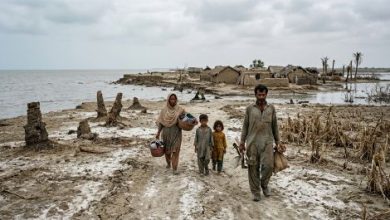
Pakistan is one of the countries that is most susceptible to climate change impacts. Sindh is the second largest province of Pakistan struggling through the worst health conditions from both the urban and rural sides especially when it comes to women`s health. Extreme heat exposure is one of the global health concerns nowadays particularly for pregnant women. Prolonged heat exposure to high temperatures can evaluate the maternal blood pressure and can be severely dangerous in the Second Trimester (20 weeks) while increasing the risk of developing preeclampsia. Whereas facing Extreme Heat exposure without access to cooling points, bearing and raising children along with, making family income, performing 24 hours care responsibilities and subsistence agriculture is the everyday activity of women in Shamu Patel Village Hyderabad. In which most of the work is unpaid and solely considered as women’s work” yet they continue with quiet resilience since they don’t have any other way to run their household expenses. And their only silent complaint is “what else can we do?” Summer’s sun is a daily burden which feels more when it comes to pregnancy and becomes even harsher and affects marginalized communities disproportionately. Bharti, a field laborer, told that:
“Village women are very strong but being pregnant in front of the burning sun feels like dying”
 From An Anthropological Lens
From an Anthropological perspective her words are crucial to reveal heat exposure as a burden not just biologically but also a socially constructed one where physical and emotional Exhaustion, Malnutrition and the rigid gender norms combine to create dangerous conditions. Early age pregnancies and late pregnancies in women`s 40s further complicate their health reflecting a lack of family planning and high parity. These risks are compounded by discriminatory gender norms that force women to continue work under harsh conditions. Since their agriculture labor in these villages is 75% carried out by women of all ages they spend 10 to 11 hours of each day under scorching heat. As a result of this constant exhaustion many suffer from restless sleep or not enough sleep “Insomnia and Anemia” a condition affecting nearly 47% of Pakistan’s rural population 3, and has become a very common complaint. Unfortunately it’s not just the case of Shamo Patel Village; rather it’s a reality of the women of our 75% portion population in Pakistan.
 Climate Justice and Maternal Health
According to the National Childbirth Trust (NCT) “If a pregnant woman’s body temperature rises above 39.2°C in the first 12 weeks of pregnancy, the baby has a slightly increased risk of having a birth defect.”4. However these women endure 50°C daily temperature as a result the Intrauterine Growth Restriction (IUGR), Preeclampsia, Gestational hypertension, and poor birth outcome linked to maternal under-nutrition are common features of birth profile in Shamo Patel village. Where their child birth is not simply about bringing new life into the world but represents a cost that mothers pay in a poorly organized and inequitable health and social structure. In which their life as individual get compromised, as Shoni a young pregnant lady shared that:
“We ignore our thirst three to four times before finally drinking, since there is only one cooler to serve the 45 workers at a time. That is why the fainting spells happen on a regular basis as another participant shared that “fainting spells during field work is as common as just to feel dehydration and exhaustion”. While such incidences are normalized in the community and the consequences are overlooked so that the cycle of maternal malnutrition continues and antenatal care remains ignored since there is not even a single official dispensary by the government. No doubt that broader health policies exist, but the approach of one size fits all is a big neglect for marginalized populations like Shamo Patel where the basics of maternal care feels like a luxury. In fact the community remains excluded from programs such as the Benazir Nashunuma Program BNP. Unless maternal health initiatives are redesigned to address climate induced challenges such as extreme heat exposure and the prevention of malnutrition, women in villages like Shamo Patel will continue to sacrifice their health for the nation’s survival, maternal health justice is essential.
Read: Systemic Discrimination against Rural Women
____________
 The writer is a recent Graduate from University of Sindh Jamshoro. She is working as Research Associate at Agha Khan University`s Matiari Research and Training Center.