Sit in silence, listen to the rain, the midnight hour
Is perfect for pouring myself a bowl of mild wine
Only so can I continue to witness
Days stretched long like purple copper…
Gangcan Gsomsdong
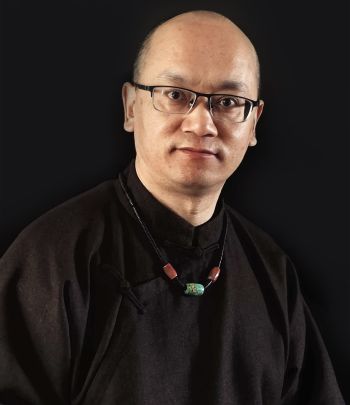 Gangcan Gsomsdong, of Tibetan ethnicity, also known by his Han name Lai Xinhua, was born in Zhuoni, Gansu Province. He is a member of the China Writers Association. His poems, essays, literary criticisms and fictions have appeared in numerous periodicals including Xinhua Digest, Guangming Daily, October, Contemporary Literature, Readers, Poetry Periodical, Ethnic Literature, Sichuan Literature and Feitian. His works have been collected in over one hundred anthologies and translated into multiple languages. He has published one poetry collection, My Hometown Is Gannan. Currently, he works at the College of Chinese Language and Literature, Northwest Normal University.
刚杰•索木东(Gangcan•Gsomsdong),藏族,又名来鑫华,甘肃卓尼人。中国作家协会会员。有诗歌、散文、评论、小说散见于《新华文摘》《光明日报》《十月》《当代》《读者》《诗刊》《民族文学》《四川文学》《飞天》等刊物,作品入选百余个总结性选本,译成多种文字。著有诗集《故乡是甘南》。现供职于西北师大文学院。
Translated by Ma Yongbo
Purple Copper
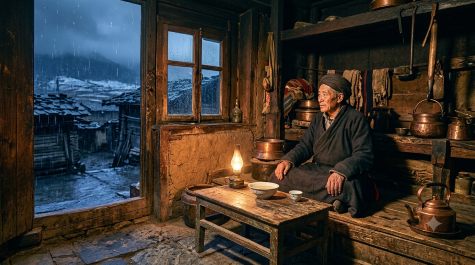
Sit in silence, listen to the rain, the midnight hour
Is perfect for pouring myself a bowl of mild wine
Only so can I continue to witness
Days stretched long like purple copper
Only so can I hold fast to the village’s
Tangled, unbroken bloodline
The wind gradually settles
As still as the dust left behind by my old grandmother
Thirty years later, within the crevices of my bones
It slowly settles into the mark of purple copper
The snow still falls in Gannan, even in May
Such cold clarity pierces all gloom
This lamp still burns as bright as ever
Flowers bloom and fade, the moon waxes and wanes
All living things, inside a single dewdrop
Strain to utter the sound of growing upward
The wind rises again, thick and palpable…
紫铜
静坐。听雨。后半夜的时间
正好适合给自己斟满一碗淡酒
如此就能,继续目睹
紫铜般的日子被拉得漫长
如此就能,留住村庄
拖泥带水的血脉
风,也就开始慢慢静了下去
静得就像老祖母留下的尘埃
三十年后,才在骨头缝里
逐渐堆成紫铜的印记
甘南的雪依旧下着,在五月
这样的清冷,足以洞穿幽暗
此灯依旧明亮如初
花开花谢,月盈月亏
万物,皆在一滴露珠里
努力发出拔节的声音
风,又开始浓烈了起来……
_____
Hometown
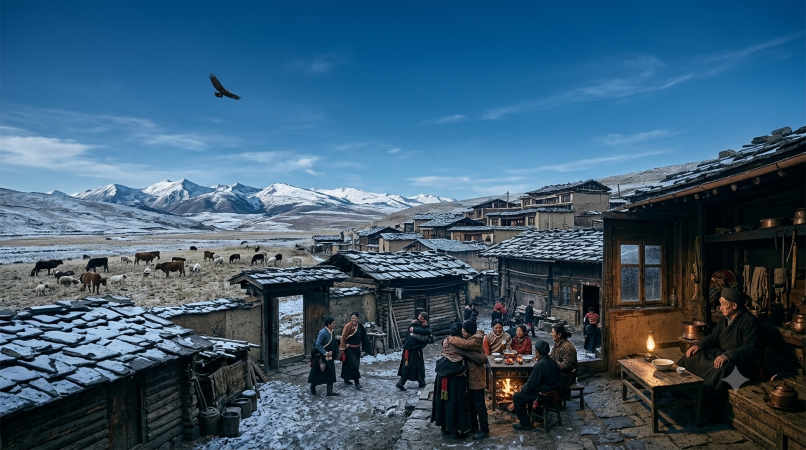
That eagle still circles high in the firmament
Those cattle and sheep still graze the withered winter grass
An immense solitude suffices to deepen the sky’s blue
The earth lies in solemn stillness, beneath the lucid snowlight
Still, there are things unknown to us
Hidden deep within the dim recesses of years
As the year draws near, people journey home
From all directions, yards once empty and desolate
Fill once again with the joy of reunion—
Beneath the familiar eaves, more often than not
We sit in silence, quietly mending
The weary rituals of life
故乡
那只鹰,还在苍穹里盘旋
那些牛羊仍旧啃食着枯黄的冬日
巨大的寂寥,足以让天空愈发湛蓝
大地如此静穆,清澈的雪光里
依旧,有我们所不知道的
深藏在岁月幽暗之处
年关将近,四面八方的人
又回到了故乡,曾经空空的院落
再次充盈着团聚的喜悦——
在熟悉的屋檐下,更多的时候
我们相对无言,默默擦拭着
那些略显疲惫的仪轨
_____
 Hexi Corridor
 Hexi Corridor
Snow after snow drifts down upon Hexi
Wind after wind scours the Western Regions bare
A thousand li of Qilian Mountains stretch beneath ash-grey skies
Their summits capped white, a mirror of worn, aged yesteryears
Where we once wandered
To the left lie pastures, to the right, boundless gobi
Climb higher, and the snow-clad Qinghai-Tibet Plateau unfolds
Press farther west, and endless wilderness stretches on
I recall those years roaming these western lands
Grapes ripen, cotton blooms, even gravel matures in the sun
All things under heaven wait alone
For autumn, whose days are fleeting to the bone!
Speak of autumn, and heaven and earth
Yawn vast and hollow. Speak of villages
And an unnameable melancholy settles over us
—this bustling, clamorous mortal world
May redeem all living souls, yet it cannot save
A wisp of homesickness, half a sleepless night
And this moon, thin as a flake of snow
Hexi Corridor Introduction
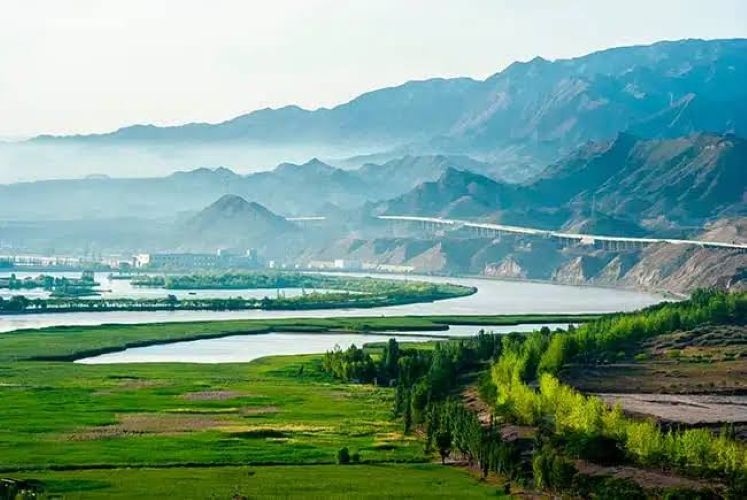
Also known as the Gansu Corridor, the Hexi Corridor is a narrow stretch of land west of the Yellow River in northwest Gansu Province. Stretching roughly 1,000 kilometers from the Wushao Ridge in the east to the ancient Yumen Pass at the Gansu-Xinjiang border, it is sandwiched between the snow-capped Qilian Mountains to the south and the Longshou, Heli and Mazong Mountains to the north.
Watered by glacial meltwater from the Qilian Range, it boasts scattered oases amid gobi deserts, grasslands, snow peaks and Danxia landforms, earning it the title “Granary of Northwest China”. Strategically vital, it is the only natural passage connecting Central Plains, the Mongolian steppe, Qinghai-Tibet Plateau and Western Regions.
Conquered by General Huo Qubing in the Western Han Dynasty, four prefectures—Wuwei, Zhangye, Jiuquan and Dunhuang—were established here. It became the golden artery of the ancient Silk Road, where Chinese silk, papermaking technology traveled west, while Buddhism, grapes, cotton and exotic cultures spread eastward. It preserves world-famous grotto art including Mogao Grottoes, ancient frontier passes and multi-ethnic folk cultures. Today it remains a crucial transport and energy corridor for the Belt and Road Initiative.
河西
一场接一场的大雪落在了河西
一场接一场的风,吹空了整个西域
千里祁连横亘在灰色的天空下
白了头的样子,像极了沧桑的往昔
我们曾经走过的地方
左手叫牧场,右手叫戈壁
再往高处走,就是雪域青藏
再往远处走便是没有尽头的西方
想起那些年漫游西域大地
葡萄熟了,棉花熟了,沙砾也熟了
所有的一切,都是为了等待
短得不能再短的秋日
说到秋日,所有的天和地
就都显得空旷。说起村庄
总让我们感到无可名状的惆怅
——众声鼎沸的人间
能普度众生,却普度不了
一缕乡愁,半个长夜
和薄如轻雪的这轮月亮
____________________
Read: Poetic Traces Along Shan Creek