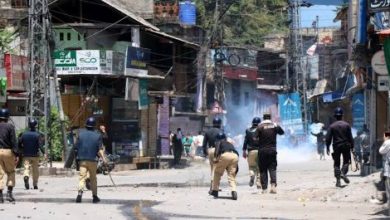
Sindh breathes through contrasts, pain and pride, chaos and beauty, uncertainty and hope
By Abdullah Usman Morai | Sweden
Sindh is a land of stories, stories of ancient civilizations, flowing rivers, warm hospitality, rich culture, and deep spirituality. Yet, when one travels across Sindh today, a striking paradox emerges: on one hand, there is visible poverty, deprivation, and social stress, and on the other hand, there are pockets of great wealth, luxury, and privilege. These contrasts are not just economic; they are lived realities shaping people’s emotions, values, language, and everyday survival.

During my recent visit, I heard simple but powerful sentences such as: “We only need wheat flour, even bread with onion is enough.” These words reflect dignity in hardship, but also a silent cry for basic needs. Public resources are misused, bribes exist at multiple levels, and in many government offices, and subordinates are treated like personal servants of those in power.
Medical stores are full of customers, even though many people complain that medicines are not original. Stress seems to walk side by side with social life, unemployment, uncertainty, financial insecurity, and emotional exhaustion are visible on many faces. People stay awake late into the night; addiction among some youngsters is heartbreaking, and some are falling unconscious on pavements due to drugs. Crime, snatching, and insecurity still exist, and many people express declining trust, not only in the state but also in one another.
Public transportation remains insufficient. Those who can afford vehicles struggle with rising expenses, while the majority simply cannot afford them. Load-shedding of electricity and gas remains a routine burden. Around 70 percent of groundwater is reported to be arsenic-contaminated, yet awareness and guidance for the youth are limited. A large number of youngsters dream of leaving the country permanently, seeking stability, dignity, and opportunity.
Cities and towns continue to grow without proper planning, unregulated expansion, weak infrastructure, and a lack of urban foresight. Children can be seen selling boiled eggs and small items late at night near toll plazas and petrol pumps, a painful reminder of economic vulnerability and fragile childhoods. Toll plazas themselves appear frequently along highways, symbolizing cost, movement, and control of routes.
 Billboards of political figures dominate cityscapes, and beneath them, photos of the individuals who installed them, often known in Sindhi as “Watho”, a symbol of affiliation, influence, and social positioning. Meanwhile, punctuality remains rare, and commitments are often delayed or broken. Wealthy individuals seek closeness to power, not only for prestige, but to protect wealth and influence.
Yet, despite all these challenges, Sindh is not just a story of hardship.
There is resilience, warmth, and grace everywhere.
People still read books, visit bookshops, touch pages, buy literature, and nurture thought. Fresh fruits and vegetables fill local markets. Sindh’s agricultural lands continue to produce wheat, rice, sugarcane, and countless other crops, even though farmers complain of unfair prices and weak support systems.

Hospitality remains a cornerstone of Sindhi identity; people still open their doors, offer food, tea, desi ghee, and mutton with love and pride. Many youngsters are hardworking, ambitious, and competitive. They love their culture, music, poetry, shrines, and traditions. Many travel locally, domestically, and internationally, for spirituality, exploration, learning, and adventure.
The Sindhi language itself reflects cultural transitions. Some beautiful native words are fading like Baba becoming Abu, Bezo becoming Ando, Ama becoming Ami, and patato becoming Aaloo. Language mirrors identity, and its shifts silently narrate history, influence, and social change.
Above all, Sindh remains a land blessed with nature and heritage:
The River Indus…
The long coastline…
Karoonjhar…
Moen-jo-Daro…
The Kirthar Mountains…
Manchhar and Keenjhar…
Sachal, Qalandar, Bhittai…
Sadh Belo…
These places remind us of depth, memory, and continuity.
Sindh breathes through contrasts, pain and pride, chaos and beauty, uncertainty and hope. The struggles are real: poverty, environmental threats, inequality, corruption, and social stress, but so is the strength of the people.
And despite everything, one shared sentiment remains:
Sindhis still hope for betterment, for dignity, justice, compassion, and a future rooted in wisdom and humanity.
Read: Sindh: Robbed by its own Guardians
_______________
 Abdullah Soomro, penname Abdullah Usman Morai, hailing from Moro town of Sindh, province of Pakistan, is based in Stockholm Sweden. Currently he is working as Groundwater Engineer in Stockholm Sweden. He did BE (Agriculture) from Sindh Agriculture University Tando Jam and MSc water systems technology from KTH Stockholm Sweden as well as MSc Management from Stockholm University. Beside this he also did masters in journalism and economics from Shah Abdul Latif University Khairpur Mirs, Sindh. He is author of a travelogue book named ‘Musafatoon’. His second book is in process. He writes articles from time to time. A frequent traveler, he also does podcast on YouTube with channel name: VASJE Podcast.