A Sindhi Family having roots in four countries… Sindhi Greek Tragedy
Mazhar Lakho, MD | Belleville, USA
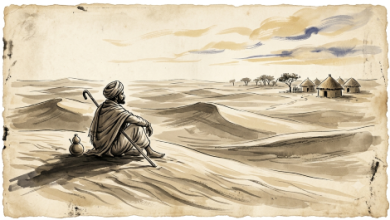
On the banks of the Indus stood an ancestral house whose windows seemed to open toward four countries. Its foundations rested in Sindh, but its memories travelled across India, Iran, Afghanistan and Syria. It was a house built not merely of stone, but of migration, ambition, love, exile and blood.
Its most famous son was Zulfikar Ali Bhutto.
His mother, Khursheed Begum, had been born in India. His wife, Nusrat, came from an Iranian Kurdish family. Their granddaughter Fatima was born in Kabul, Afghanistan, while their grandson, Zulfikar Ali Bhutto Jr., first opened his eyes in Damascus, Syria. Yet all their roads—however distant—seemed to lead back to Sindh and the restless waters of the Indus.
Zulfikar grew up believing that history could be commanded. He spoke with fire, challenged powerful men and persuaded ordinary people that political power belonged to them. Workers, farmers and students called him their leader. But the generals watched him with suspicion. When the military seized power, Zulfikar was imprisoned, tried in a deeply controversial case and sent to the gallows.
Before his execution, he imagined the Indus carrying his final words from Rawalpindi to Larkana:
“You may silence one man, but you cannot hang the memory of a people.”
After his death, tragedy entered the family like an inheritance.
His younger son, Shahnawaz, died mysteriously in the south of France. His elder son, Murtaza, wandered through years of exile before returning to Pakistan, only to be killed in a police encounter outside his Karachi home. Their sister, Benazir, carried the family’s political standard through prison, exile and intimidation. Twice elected prime minister, she became a symbol of democratic resistance and the first woman to lead a Muslim-majority country. Yet she too was assassinated—shot and bombed in Rawalpindi while Pakistan was again under military rule.
One by one, the portraits in the ancestral house acquired black borders.
Only the grandchildren remained to question the meaning of this inheritance. Fatima Bhutto chose literature rather than electoral power. Through novels, essays and memoir, she examined exile, violence, belonging and the unbearable cost of political mythology. She did not merely repeat the family legend; she interrogated it. Her words became lamps placed beside forgotten graves.
Her brother Zulfikar Ali Bhutto Jr., born in Syria, sought his own language of identity and artistic expression. The dynasty that had once spoken almost entirely through rallies and parliaments now also spoke through books, poetry, performance and memory.
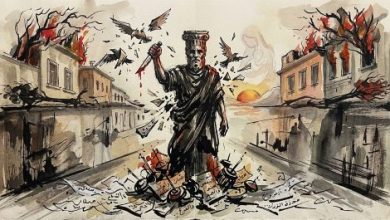
To millions of Bhutto admirers, the family’s history resembled a Sindhi Greek tragedy: a brilliant patriarch destroyed by the state; children struggling beneath the weight of his name; brothers dying in foreign exile and on Karachi’s streets; a daughter rising to the country’s highest office before meeting a violent end; and grandchildren left to interpret the ruins.
But the Indus offered no final judgment. It continued flowing past Larkana, older than every government and more patient than every general.
At night, villagers said the ancestral house still whispered. From one window came the voice of India, from another the Kurdish mountains of Iran, from another the streets of Kabul, and from the last the ancient air of Damascus. At the center stood Sindh—mourning, remembering and asking whether the Bhuttos had shaped history, or whether history had consumed them.
And somewhere among those voices, Fatima continued to write—not to resurrect the dead, but to ensure that their tragedy could never be buried in silence.
___________________