Further delays risk economic losses and deeper erosion of trust in Pakistan’s federal institutions
Sindh Grinds to a Halt as Lawyers, Farmers Block Key Highway Over Water and Land Rights
By Ishaq Tunio | USA
Sindh has been cut off from the rest of Pakistan for the ninth consecutive day due to a massive, peaceful sit-in at the Babarloi bypass near Sukkur and Dera More in Kashmore (called off on Friday) and several other locations. This situation has caused road traffic to standstill, leaving over 12,000 commercial vehicles—including trucks, trailers, oil tankers, and passenger buses—stranded and triggering disruptions across Pakistan’s critical trade and logistics corridors.
Led by the Karachi Bar Council and supported by the Sindh Bar Council, district bar associations, doctors, teachers, people with disability and visually impaired persons association, barbers, artists and farmers’ unions, student groups, women’s organizations, and civil society activists, the protest addresses what they call “Punjab’s water theft” and “federal land grabs” under the Special Investment Facilitation Council’s (SIFC) corporate farming initiative.
At the heart of the protest are two significant grievances: the construction of six canals in Punjab, reportedly in violation of the 1991 Water Accord, and the federal government’s push, through the military-backed SIFC, to lease Sindh’s agricultural lands to foreign investors—primarily from Gulf countries—for corporate farming.
“This is not just a protest—it’s a fight for survival,” said Advocate Kazim Mahesar, Vice President of the Karachi Bar Association. “Our fields are drying up, our land is being snatched, and the federal government is acting like a silent spectator.”
Despite soaring temperatures between 40 and 45°C, thousands of protesters remain camped at the blockade, demanding an immediate suspension of Punjab’s canal projects, the cancellation of corporate land deals, and constitutional guarantees to protect Sindh’s water and land rights.
Economic Shockwaves – The blockade is sending shockwaves through Pakistan’s economy. With over 15,000 trucks stuck in transit, Karachi Port—responsible for more than 60% of Pakistan’s trade—faces significant backlogs in exports and imports. Afghanistan-bound cargo: 2,800 containers are delayed, jeopardizing $275 million in perishables and textiles. CPEC shipments: Over 800 trucks carrying Chinese machinery and raw materials are stalled on their way to Xinjiang. Oil tankers: 2,500 are stuck, prompting rationing in Punjab and KP. Customs delays: Karachi Port reports more than 3,000 uncleared containers (TEUs), with daily demurrage exceeding $2 million. Domestic supply chains: 40% of wheat and vegetable shipments from Sindh to Punjab and KP have been disrupted. Export losses: More than $150 million in missed shipments of textiles and seafood to the EU and Gulf markets.
“This is an economic emergency,” said Mohammad Khan, a logistics operator from Sukkur. “Every day of delay costs millions. If this continues, factories will shut down.”
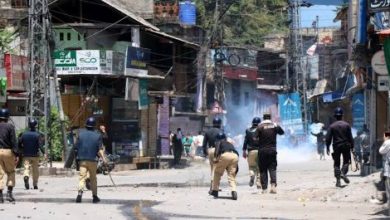
The protest escalated after a violent incident on Friday evening when armed guards of PPP leaders in unmarked vehicles arrived at the protest site, and men in plainclothes fired upon peaceful protesters at Sukkur Tool Plaza. Protesters allege that the attackers were affiliated with the ruling Pakistan People’s Party. One lawyer and several other protesters sustained injuries. So far, no official inquiry has been announced.
On Thursday, April 24th, 2025, Prime Minister of Pakistan Shahbaz Sharif and Chairman of the Pakistan People’s Party Bilawal Bhutto Zardari held a joint press conference. They assured the public that the Council of Common Interests (CCI), a federal constitutional body, had been convened to resolve the dispute regarding the construction of six canals by consensus.
On the other hand, the Lawyers’ Action Committee—comprising the Sindh Bar Council, 18 district bar councils, and civil society—has warned of a Phase 2 protest if the Prime Minister’s office does not issue the notification regarding the cancellation of 6 canals. Starting April 29, 2025, they may target Pakistan Railways’ Main Line-1 (ML-1). Halting freight and passenger trains between Karachi and Punjab would paralyze 45% of the country’s rail cargo, including coal shipments to power plants and CPEC cargo from Gwadar.
“We’ve exhausted all peaceful options,” said Advocate Aamir Nawaz Warraich, President of the Karachi Bar Association. “If Islamabad won’t listen, we’ll stop every route—road, rail, and air—until Sindh’s rights are recognized.”
The protest has scrutinized Pakistan’s federal structure. Lawyers argue that major resource decisions—such as inter-provincial water allocation and land use—must go through the Council of Common Interests (CCI), as mandated by Article 153 of the Constitution. However, the SIFC bypasses the CCI, fast-tracking land deals without provincial consent.
“Sindh is being treated as a resource colony,” said human rights activist Sachal Wadho, attending the protest with his elderly father. “If Sindh’s grievances aren’t addressed, the federation is at risk.”
Legal experts, including Advocate Mohammad Khan Shaikh and Barrister Sarfraz Metlo, indicate that the Supreme Court might intervene under Article 184(3) due to disruptions in public welfare and economic activity.
Meanwhile, the PPP-led Sindh government has passed a resolution in the provincial assembly demanding a halt to the construction of six canals related to the SIFC’s activities in the province. However, the federal cabinet remains divided, with Punjab MPs opposing negotiations, while the military establishment remains committed to the SIFC’s investment roadmap.
“This isn’t just Sindh’s problem—it’s Pakistan’s,” said Professor Aijaz Quraishi, an economist based in Karachi. “If the state fails to mediate fairly, the entire country will pay the price.” “Pakistan’s unity is at stake,” warned analyst Jami Chandio. “Either the federation addresses Sindh’s grievances, or the protests metastasize into a full-blown revolt.”
The Babarloi sit-in has evolved from a regional protest into a national crisis—a test of Pakistan’s commitment to constitutionalism, equity, and federalism. As the protest chant “Sindh’s resources for Sindh’s people” echoes across the bypass, the central question remains: Will the state listen?
There is still time to reverse course. The federal government must immediately convene the Council of Common Interests to address water-sharing disputes, launch a transparent review of SIFC’s land acquisition policies, engage directly with protest leaders to reach a mutually agreed-upon resolution, and provide a clear timeline and guarantees for protecting Sindh’s rights. Further delays risk economic losses and deeper erosion of trust in Pakistan’s federal institutions. The moment for decisive, constitutional action is now.
Read: Sindhu – Our Lifeline and Worship
_______________
 The writer is a journalist from Pakistan, currently residing in Chicago. Email: ishaqtunio@gmail.com