


Plutocracy, seductive and smooth, is the velvet whip that tames societies while maintaining the illusion of freedom
In an age of rising inequality, literary voices must speak clearly and courageously
By Abdullah Usman Morai | Sweden
The Gilded Cage We Call Democracy
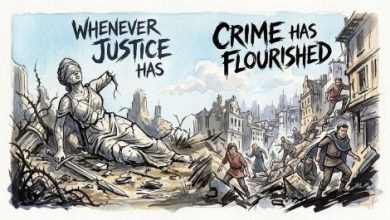
We live in an age where the illusion of choice comforts the masses while decisions of consequence are shaped in boardrooms, lobbies, and offshore accounts. While constitutions proclaim democracy, elections project representation, and flags wave in the name of the people, the unseen hand pulling the strings often wears a diamond-studded glove. This is the realm of plutocracy — a system where wealth is not merely power but the passport to power. Unlike dictatorships that roar their dominance, plutocracy whispers, cloaked in civility, masked as meritocracy, and legitimized through law.
In today’s world, the dividing line between democracy and plutocracy is increasingly blurred. Governments are elected, yes, but campaigns are funded by the ultra-rich. Policies are passed, yes, but only after lobbyists rewrite their drafts. The press is free, yes, but beholden to billionaires who own the headlines.
This article delves into the essence, mechanics, and consequences of plutocracy. Through history, philosophy, literature, and real-life case studies, we unmask the velvet whip of wealth that disciplines our democracies and defines the destinies of billions.
Defining Plutocracy: The Rule of the Rich
Plutocracy, from the Greek ploutos (wealth) and kratos (power or rule), refers to a system where the wealthy control the levers of governance, often sidelining public will in favor of private gain. Unlike overt autocracies, plutocracies wear the mask of representative government. The power doesn’t lie with the people, but with those who can afford to shape the narrative, sponsor legislation, and fund electoral victories.
While no country openly declares itself a plutocracy, many democracies exhibit plutocratic tendencies. The concentration of wealth among the elite inevitably leads to the concentration of influence, policy control, and cultural dominance. It’s not that the rich simply exist in society—they often own the very structures that define it.
Historical Echoes: From Rome to the Gilded Age
The Roman Republic, often cited as a precursor to modern democracy, was deeply plutocratic in nature. Only landowning elites could vote or hold office, and political ambition was married to wealth. As Rome expanded, so did the fortunes of its elite, while common soldiers and citizens were left in economic ruin.
Fast forward to the Gilded Age in late 19th-century America, and we see the rise of “robber barons” like John D. Rockefeller, Andrew Carnegie, and J.P. Morgan. Their wealth towered over the federal budget. They influenced railroads, banks, steel, and even the media. Political candidates were their proxies, and legislation served their interests. Mark Twain’s coining of the term “Gilded Age” reflects the thin veneer of prosperity masking deep social decay.
 Modern-Day Plutocracy: The Billionaire’s Republic
In the 21st century, plutocracy has evolved but not disappeared. It now wears digital suits and operates via stock portfolios and data monopolies. Consider the United States, where campaigns cost billions of dollars, funded largely by super PACs backed by billionaires. Sheldon Adelson, a casino magnate, spent over $100 million on Republican campaigns during the 2012 elections. In 2020, Michael Bloomberg spent over $1 billion of his own money on a failed presidential run.
In India, the nexus between wealth and politics is stark. Business tycoons fund political parties, receive favorable contracts, and shape economic policies. Critics argue that large corporations, through mechanisms like electoral bonds, effectively purchase influence, reducing democratic processes to auctions.
In Pakistan, the political landscape is increasingly influenced by industrial and feudal elites. From sugar mills to textile empires, economic barons often hold or control parliamentary seats. Election campaigns rely heavily on patronage networks funded by landed wealth, blurring the line between public service and private enterprise.
The Architecture of Influence
Plutocracy is not just about having wealth; it’s about using wealth to reshape institutions. The tools of this influence include:
- Lobbying: Corporations spend millions annually to influence legislation in their favor. Laws on taxation, labor, and environmental regulation are often sculpted by those they are meant to regulate.
- Media Ownership: Billionaires control vast swaths of the media landscape, shaping public opinion and gatekeeping narratives.
- Think Tanks and Universities: Wealthy donors fund research institutions and academic chairs, subtly influencing curricula and public discourse.
- Philanthrocapitalism: While presented as altruism, billionaire philanthropy often serves to enhance influence, evade taxes, and set public agendas without democratic accountability.
The Cost: Inequality and Alienation
The consequences of plutocracy are dire:
- Economic Inequality: The gap between the rich and the poor has widened dramatically. In 2023, the richest 1% owned nearly half of global wealth.
- Democratic Decay: When policy serves donors, not voters, faith in democracy erodes. Voter turnout declines, extremism rises, and political discourse polarizes.
- Social Alienation: People feel excluded, unheard, and invisible. This leads to mental health crises, distrust in institutions, and civic apathy.
- Cultural Sterility: When art, literature, and cinema depend on wealthy patrons or marketability, authentic voices are drowned by profitable clichés.
Literature as Resistance
Writers and thinkers have long challenged plutocratic systems. Charles Dickens depicted the brutal consequences of industrial capitalism in Hard Times. George Orwell’s Animal Farm and 1984 warn against systems where a few control the many. In Pakistan, writers like Intizar Hussain and Saadat Hasan Manto exposed the cruelty of elite systems. Globally, Arundhati Roy’s essays dissect the corporate-political nexus with razor-sharp insight.
Literature doesn’t just describe injustice—it disrupts it. It humanizes the marginalized, questions power, and envisions alternatives. For a literary magazine, this is a sacred calling.
Philosophical Reflections: Justice, Merit, and the Human Spirit
Plutocracy violates the core philosophical ideals of justice and merit. Plato, in The Republic, warned against oligarchy, where “love of money replaces love of wisdom.” John Rawls, in A Theory of Justice, argued for a system where inequalities are only justified if they benefit the least advantaged. In plutocracy, the opposite is true: wealth begets wealth, and disadvantage multiplies.
Yet, the human spirit resists. From the French Revolution to Occupy Wall Street, from student protests in Chile to farmers’ movements in India, people have risen against economic injustice. These movements may not always win, but they light the way.
What Can Be Done? Realigning Power
Addressing plutocracy requires a multi-pronged approach:
- Campaign Finance Reform: Cap private donations and promote public funding.
- Tax Justice: Enforce progressive taxation and close loopholes.
- Corporate Regulation: Limit monopolies and enforce labor/environmental standards.
- Media Independence: Support non-profit and community journalism.
- Civic Education: Teach critical thinking, not just compliance.
- Empowering the Marginalized: Through land reforms, education, and participatory budgeting.
These are not easy paths. But neither is living under a velvet whip.
Toward a Just Horizon
Plutocracy, seductive and smooth, is the velvet whip that tames societies while maintaining the illusion of freedom. It is not always cruel, but it is always controlling. It does not scream; it whispers. Yet, even the softest chains can chafe, and even the quietest prisons need keys.
In an age of rising inequality, literary voices must speak clearly and courageously. The pen must slice through the velvet, revealing the whip beneath. Through awareness, resistance, and reform, the ideal of a truly representative, just, and humane society remains within reach—not as a utopia, but as a possibility we must write, fight, and live toward.
Let us not confuse the glitter of gold with the light of justice. One blinds; the other reveals. One enslaves; the other liberates.
Read: Choose Your Friends Wisely
______________
 Abdullah Soomro, penname Abdullah Usman Morai, hailing from Moro town of Sindh, province of Pakistan, is based in Stockholm Sweden. Currently he is working as Groundwater Engineer in Stockholm Sweden. He did BE (Agriculture) from Sindh Agriculture University Tando Jam and MSc water systems technology from KTH Stockholm Sweden as well as MSc Management from Stockholm University. Beside this he also did masters in journalism and economics from Shah Abdul Latif University Khairpur Mirs, Sindh. He is author of a travelogue book named ‘Musafatoon’. His second book is in process. He writes articles from time to time.



The metaphor of plutocracy as a ‘velvet whip’ really struck me — it perfectly captures how control can feel gentle, even benevolent, while quietly steering society. It’s unsettling how easily wealth cloaks itself in the language of merit and freedom.
Thanks for the comment. 🙂