Water Scarcity Threatens Future Humanity
A World Running Dry: The Looming Global Water Crisis


Water is the foundation of life. Yet, for billions of people, access to clean and reliable water is becoming a daily struggle
- Unless we change course, the next major crisis facing humanity may not be war or economic collapse, but a world simply running out of water.
By Kashif
Imagine waking up one day to find your taps dry, crops withering, and industries grinding to a halt. This is not the plot of a dystopian novel—it’s the harsh reality already affecting millions around the world. A new report by the World Resources Institute (WRI) paints a troubling picture: a quarter of the global population experiences extremely high water stress every year. As demand soars and supplies dwindle, the world is edging closer to a full-blown water crisis.
The WRI’s Aqueduct Water Risk Atlas provides detailed insights into global water stress levels, highlighting regions at risk and potential solutions. The full report can be accessed at the website.
 Water Stress: A Silent Emergency
Water stress occurs when the demand for freshwater exceeds available resources. The WRI classifies regions based on their level of water stress:
- Extremely High (80%) – Countries where over 80% of available water is used annually, leaving little room for error.
- High (40-80%) – Areas with significant water scarcity risks.
- Medium-High (20-40%) – Moderate stress but potential for future shortages.
- Low-Medium (10-20%) – Relatively stable water supply.
- Low (<10%) – Abundant water availability.
Looking at the global map, red and orange zones dominate large parts of the Middle East, South Asia, North Africa, and even developed regions like the U.S. and Europe. While some areas have been battling water shortages for decades, others are now facing unexpected crises.
Middle East & North Africa (MENA): The Epicenter of Water Crisis
If there’s one region that exemplifies extreme water stress, it’s the Middle East and North Africa (MENA). This part of the world has always been arid, but a growing population and increasing industrial demand are pushing water resources to the brink.
Countries at the highest risk include Saudi Arabia, Iran, and Libya. These nations rely heavily on desalination, a process that turns seawater into drinkable water. However, it’s expensive and energy-intensive, making it a difficult long-term solution.
South Asia: A Crisis in the Making
South Asia is home to some of the world’s most densely populated countries, making water shortages a ticking time bomb. India, in particular, is facing severe groundwater depletion, threatening both agriculture and drinking water supplies. Sri Lanka, too, is projected to experience escalating water stress in the coming years.
Europe’s Unexpected Struggle
Most of Europe enjoys relatively stable water availability, but Belgium is an outlier. Despite being a developed nation with advanced infrastructure, Belgium faces extremely high water stress, largely due to industrial demand, urban expansion, and pollution.
South America: The Thirsty Continent
Chile is enduring one of the worst droughts in its history, with over a decade of below-average rainfall. The consequences are severe—farmers struggle to grow crops, urban centers ration water, and energy production is disrupted as hydropower levels drop.
North America: A Drying Landscape
In the U.S., states like California, Texas, and Arizona are under high or extremely high water stress. Repeated droughts, over-extraction of groundwater, and climate change have made water scarcity a persistent issue in these regions.
Australia: The Land of Droughts
Australia, a nation familiar with water shortages, is seeing its situation worsen. Rising temperatures and longer droughts have left vast parts of the country in extreme water stress, affecting both urban and rural communities.
Climate Change: The Greatest Threat to Water Security
The world is warming at an alarming rate, and with it comes longer droughts, unpredictable rainfall, and increased water demand. Scientists predict that if current trends continue, global temperatures could rise by 2.8°C to 4.6°C by 2100, leading to:
- More frequent and prolonged droughts.
- Shrinking freshwater sources, including glaciers and rivers.
- Increased competition for water, potentially leading to conflicts.
Water scarcity is no longer just an environmental issue—it’s a geopolitical and economic crisis in the making.
What Can Be Done? The good news? There are solutions.
Governments, industries, and individuals must act now to secure water for future generations. Some key strategies include:
Smarter Water Use – Agriculture accounts for 70% of global freshwater consumption. Technologies like drip irrigation and drought-resistant crops can reduce waste.
Investment in Infrastructure – Desalination, wastewater recycling, and efficient water storage solutions are critical.
Stronger Policies – Governments must enforce regulations to prevent over-extraction and promote fair water distribution.
Climate Action – Cutting carbon emissions can slow global warming and mitigate its impact on water resources.
Countries like Israel have set a remarkable example by turning a once water-scarce nation into a global leader in water conservation. Through a combination of desalination, wastewater reuse, and strict water laws, Israel has managed to secure its water future—proving that solutions do exist.
Pakistan: The Struggle for Survival
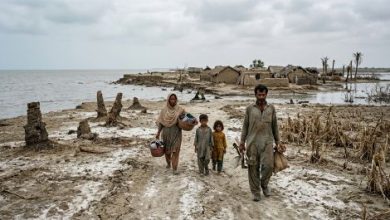
In Pakistan, the battle for water is intensifying. It’s a crisis that stretches beyond the fields and rivers, affecting millions of lives, livelihoods, and even the country’s future. With agriculture being the backbone of the economy, the deepening water shortage threatens not just crop production but the very essence of life in the country. The over-reliance on groundwater in Pakistan has reached dangerous levels. Farmers, particularly in the agricultural heartlands, have turned to tube wells to extract water from underground aquifers. While this provides an immediate solution, it comes with grave consequences. Groundwater levels have plummeted across the country, especially in regions where surface water is no longer sufficient to meet the demand.
In many areas, the natural recharge of aquifers has slowed down, as the groundwater is being extracted faster than it can be replenished. This has resulted in dangerously low water tables, leaving communities without access to reliable sources of water, especially in arid regions where rainfall is scarce. The situation is becoming increasingly unsustainable, and the problem only grows more pressing with each passing year.
The rivers that have historically provided Pakistan with its most vital water source are now shrinking at an alarming rate. The mighty Indus River, once a lifeline to millions, is drying up due to a combination of reduced rainfall, melting glaciers in the Himalayas, and the diversion of water upstream, especially by India. The reduced flow of these rivers directly affects agriculture, which relies heavily on irrigation. The consequences are dire: crops fail, food security is threatened, and livelihoods are shattered. The situation is further complicated by the depletion of wetlands and other natural water bodies, which once helped regulate the flow of water across the land.
In addition to the shrinking rivers, Pakistan’s major dams, like Mangla and Tarbela, are facing their own challenges. While these dams were once vital in storing water for irrigation and power generation, they are now losing much of their capacity due to sedimentation. Over decades, the accumulation of silt has rendered these reservoirs less effective in their primary roles. As the sediment builds up, the storage capacity of these dams diminishes, further limiting the amount of water available for the agricultural sector and other critical needs. The situation calls for urgent attention to restore and maintain the health of these vital water bodies.
As if the internal challenges weren’t enough, Pakistan is also embroiled in regional conflicts over water rights. The Indus Water Treaty, signed with India in 1960, is intended to manage the distribution of water from the Indus River System, but tensions continue to simmer as both countries deal with growing water scarcity. Similarly, Afghanistan’s use of the Kabul River has also become a source of concern for Pakistan. These geopolitical disputes exacerbate the already fragile water situation, raising fears that water could become yet another weapon in the ongoing political struggles in the region. With increasing population pressures and the threat of climate change, the stakes have never been higher.
While the situation is dire, there are steps that can be taken to alleviate the crisis and move towards a more sustainable future. The agricultural sector, which uses the majority of the country’s water, can benefit from more efficient irrigation techniques. Methods like drip irrigation and sprinklers can significantly reduce water wastage and ensure that crops get the water they need without depleting resources unnecessarily. Pakistan’s water crisis is one of the country’s most urgent challenges, and it is not something that can be solved overnight. However, with collective effort, significant progress can be made. The government, local communities, and neighboring countries all have vital roles to play. It is only by working together that we can secure a future where water is available for all, ensuring that this precious resource continues to sustain life in Pakistan for generations to come.
The Clock is ticking
Water is the foundation of life. Yet, for billions of people, access to clean and reliable water is becoming a daily struggle. The findings from WRI’s Aqueduct Water Risk Atlas serve as a wake-up call—unless we change course, the next major crisis facing humanity may not be war or economic collapse, but a world simply running out of water.
The time to act is now. Because without water, there is no future.
Read: As Himalayan Glaciers Melt, a Water Crisis Looms in South Asia
__________________
 Kashif Rehman, based in Khyber Pakhtunkhwa, Pakistan, brings over two decades of experience in development programs and humanitarian response. His expertise spans climate change adaptation, community mobilization, and gender mainstreaming. He can be contacted at Zahoor.kashif@gmail.com.