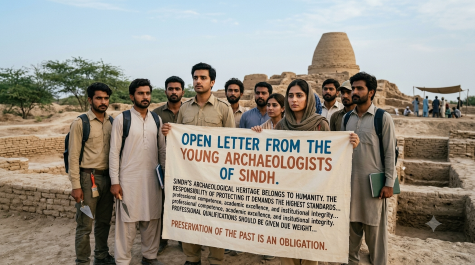
Who Will Protect Sindh’s Heritage? Institutional Decline in Cultural Management in Sindh
Open Letter from the Young Archaeologists of Sindh
Aizaz Pirzado and Mehar Shar
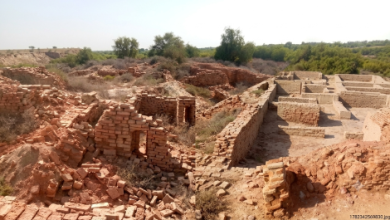
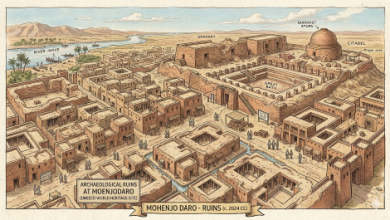
Sindh is not merely a geographical region; it is one of the world’s oldest cultural landscapes. From the cities of the Indus Civilization to the Buddhist, Hindu, Islamic, and colonial-period monuments scattered across the province, Sindh possesses an archaeological heritage that belongs not only to Pakistan but to humanity itself. The responsibility of protecting this heritage therefore demands the highest standards of professional competence, academic excellence, and institutional integrity.
Yet today, many young archaeologists view the future of archaeology in Sindh with deep concern. Across the province, universities continue to produce graduates, researchers, MPhil scholars, and PhD scholars in Archaeology, Heritage Management, Museum Studies, and related disciplines. These students dedicate years of their lives to acquiring specialized knowledge in archaeological excavation, conservation, cultural resource management, museum curating, heritage legislation, and scientific research. However, despite this growing pool of qualified professionals, opportunities for their participation within provincial heritage institutions remain severely limited.
The fundamental question is simple: Why are professionally trained archaeologists increasingly absent from the institutions responsible for archaeology?
Archaeology is not a field that can be managed solely through administrative experience. It is a specialized scientific discipline requiring technical knowledge, field training, research skills, and professional expertise. Museums are not merely public parks, monuments are not merely tourist attractions, and archaeological sites are not vacant lands waiting for administrative supervision. They are repositories of history requiring informed interpretation, conservation, documentation, and scholarly investigation.
When professional expertise is marginalized, institutions inevitably weaken. Archaeological sites remain undocumented, museums lose their educational and research functions, conservation standards decline, and academic engagement suffers. The consequences extend beyond individual careers; they threaten the preservation of cultural heritage itself.
Many young scholars fear that archaeology in Sindh is gradually becoming disconnected from the very professionals trained to protect it. Such a trend discourages students from pursuing the discipline, weakens university departments, reduces research output, and ultimately deprives society of the expertise necessary to safeguard its past.
The issue is not about individuals. It is about principles.
The issue is whether a province possessing some of the most important archaeological resources in South Asia should be governed by a professional system based on merit, qualifications, and transparency, or whether specialized expertise should continue to be treated as secondary.
Young archaeologists are not asking for privileges. They are asking for fairness. They seek transparent recruitment processes, equal opportunities for qualified professionals, recognition of specialized academic training, and institutional policies that place archaeological expertise at the center of heritage management.
We therefore respectfully call upon the Government of Sindh, the Culture, Tourism, Antiquities and Archives Department, the Sindh Public Service Commission, universities, policymakers, and the judiciary to initiate a serious review of the current state of archaeological governance in Sindh. Professional qualifications should be given due weight in appointments to technical and research-based positions. Heritage institutions should be strengthened through merit-based systems that encourage expertise, innovation, and accountability.
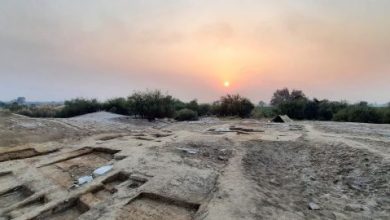
The archaeological heritage of Sindh is too important to be neglected. The ruins, monuments, artifacts, and historical landscapes entrusted to us today cannot speak for themselves. Their future depends upon the decisions we make now.
If qualified archaeologists are denied meaningful participation in the stewardship of heritage, it is not only a professional community that suffers. It is the history of Sindh itself.
The preservation of the past is an obligation to future generations. We must ensure that archaeology in Sindh survives not as a neglected bureaucracy, but as a vibrant academic, scientific, and cultural enterprise worthy of its extraordinary legacy.
Read: Colonial Footprints in Sindh’s Archaeology
_____________________
 Aizaz Peerzado is resident of Village Balhreji near Mohen Jo Daro, District Larkano Sindh. He has graduated in Archaeology and did M.Phil. in fast vanishing heritage sites in the province of Sindh