Memories of Muharram in Moro town of Sindh – Story of Faith, Brotherhood, and Shared Traditions
By Abdullah Usman Morai | Sweden
The beginning of the Islamic lunar year is marked by the arrival of Muharram, one of the most sacred months in Islam. It is a time of remembrance, reflection, and mourning for the sacrifice of Imam Hussain (AS) and the martyrs of Karbala. In the town of Moro, however, Muharram has always represented something even more profound; it has been a living symbol of religious harmony, community spirit, and mutual respect between Shias and Sunnis.
As children, the sighting of the Muharram moon would fill us with anticipation. The atmosphere of the town would change overnight. Black flags would decorate streets and buildings, and the melodies of everyday songs would give way to the emotional recitation of nohas echoing through every neighborhood.
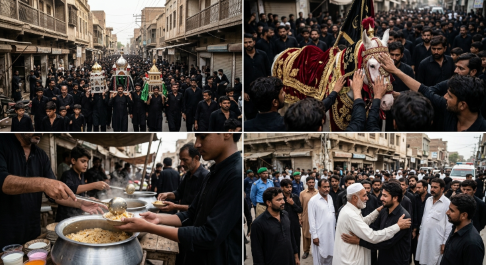
Among the most unforgettable memories was waiting every evening to witness the Shia mourning processions (Matami Juloos). Living near Shahi Bazaar, we eagerly watched for the procession to arrive at Shahi Bazaar Chowk, where participants would offer Maghrib prayers before listening to a speech by a Shia scholar. During the hot summer months, the procession often reached the square late in the evening, but the crowds would patiently wait with devotion and respect.
The procession followed a long and carefully organized route, beginning from the Imam Bargah in Surhia Muhalla, passing through different ways, roads, markets, and returning through another part of town. The streets were immaculately cleaned beforehand, and everywhere one looked, black clothing symbolized mourning and solidarity. The atmosphere was solemn yet deeply spiritual.
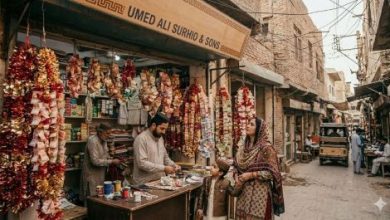
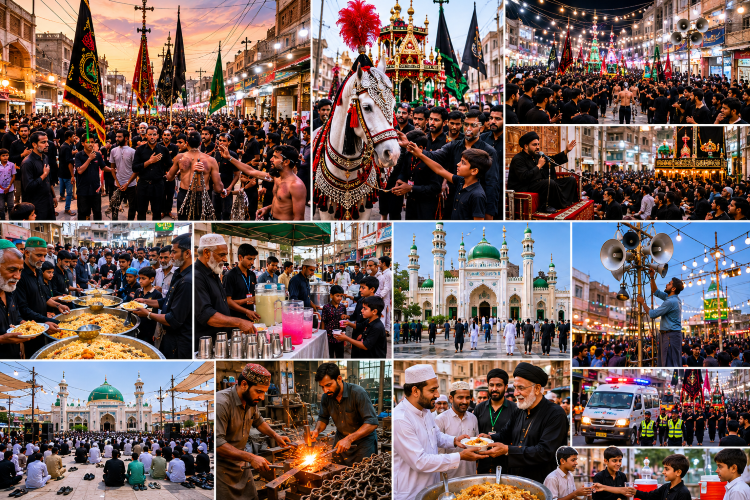 One of the most beautiful traditions of Muharram in Moro was the distribution of Nazar and Niaz. Families from every corner of the town contributed according to their means. The delicious rice pulao cooked with chickpeas remains one of the unforgettable flavors of childhood. Equally memorable were the countless sabeels (refreshment stalls) where volunteers distributed drinking water, rose-flavored milk, colorful sharbat (syrups), kheerni, and other refreshments to everyone without distinction.
My maternal uncle, known affectionately as Lahoti, owned a tea hotel and generously served tea free of charge to the mourners throughout the procession. His service reflected the true spirit of hospitality and humanity that transcended sectarian identities.
Perhaps the most remarkable aspect of Muharram in Moro was the relationship between the Shia and Sunni communities. Sunnis would send Niaz to their Shia neighbors, while Shias would reciprocate with equal warmth. There was no atmosphere of conflict or mistrust. In many households, one family member might belong to the Sunni tradition while another identified as Shia, yet love and family bonds always prevailed over sectarian differences.
As a young boy, I watched the processions from various locations, Dadu Chowk, Shaheed Chowk, Angas Chowk, the Main Road, and especially Shahi Bazaar Chowk. My eyes were always searching for the symbolic horse known as Duldul, associated with the memory of Karbala. Along the route, symbolic replicas representing the Imams’ shrines added to the emotional and spiritual significance of the occasion.
The Soomra Mosque in Shahi Bazaar stood as another example of unity. Its doors remained open to everyone, and many Shia participants offered their prayers there during Muharram without hesitation or discrimination. Such scenes demonstrate a level of coexistence that many societies aspire to achieve.
Across the town, sabeels provided drinking water and refreshments throughout the day. One particularly memorable sabeel was organized by Chacho Abdul Khalique, affectionately known as Chacha Karo, together with his brothers and sons at Shahi Bazaar Chowk. Their dedication to serving people regardless of sect embodied the generosity of Moro’s residents.
The entire procession route was illuminated with proper electrical arrangements, ensuring that loudspeakers and lights functioned throughout the ceremonies. At that time, Bhao Sabir Ali Shah was responsible for managing these arrangements with great commitment. Chacha Mahboob Ali Shah, who often stayed at our otaq, also played an active role in organizing and supervising different aspects of the procession.
It seemed that the Shia population in Moro gradually increased over the years, though the spirit of communal harmony remained equally strong. Blacksmiths worked tirelessly before Muharram, repairing and preparing chains used during the rituals of the 9th and 10th of Muharram. Moro was also known for its skilled noha reciters, whose emotional voices deeply moved the participants and spectators alike.
An ambulance accompanied the procession throughout its journey, along with police personnel to ensure safety and order. Yet the greatest protection came not from official security measures but from the goodwill, respect, and affection shared among the people themselves.
Shias and Sunnis maintained close friendships beyond Muharram as well. They visited shrines together, attended each other’s family gatherings, and shared both celebrations and sorrows. Muharram strengthened these bonds rather than dividing the community.
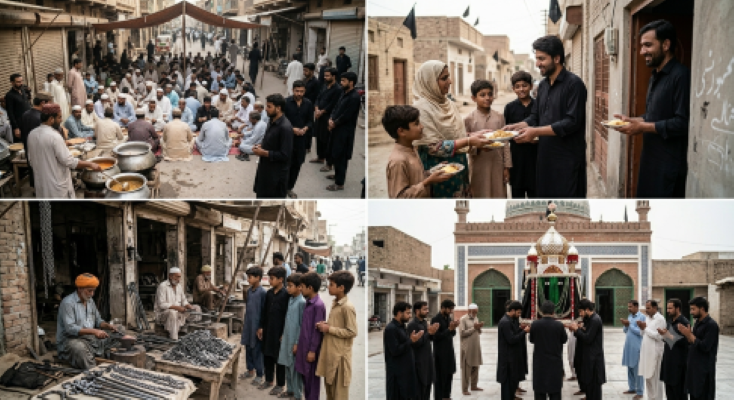 On the Sunni side, the major religious gathering traditionally took place on the 10th of Muharram at Taj Masjid Moro. The day featured religious speeches, remembrance, and the generous distribution of Niaz, especially meat pulao and refreshing sharbat drinks to thousands of visitors.
One of the most admirable traditions was the coordination between the two communities. When the Shia mourning procession reached the Main Road and prepared to enter Shahi Bazaar, the Sunni gathering at Taj Masjid would respectfully conclude its activities to allow the procession to pass peacefully. This mutual respect reflected an extraordinary level of understanding and social maturity.
Looking back today, these memories are far more than childhood recollections. They represent a culture where diversity was embraced, differences were respected, and humanity stood above sectarian identity. Muharram in Moro was not merely a period of mourning; it was an annual demonstration of compassion, service, coexistence, and collective responsibility.
Moro has long stood as a model of inter-sectarian harmony, proving that communities can preserve their distinct traditions while living together with dignity and mutual respect. In an era when divisions often dominate headlines, the memories of Muharram in Moro remind us that unity, kindness, and shared humanity remain the strongest foundations of any society.
May this beautiful tradition of brotherhood continue for generations to come, preserving the spirit that made Moro not only a town of remembrance but also a shining example of peace, tolerance, and communal harmony!
Read: Where History Whispers and Rivers Flow
______________________
 Abdullah Soomro, penname Abdullah Usman Morai, hailing from Moro town of Sindh, province of Pakistan, is based in Stockholm Sweden. Currently he is working as Groundwater Engineer in Stockholm Sweden. He did BE (Agriculture) from Sindh Agriculture University Tando Jam and MSc water systems technology from KTH Stockholm Sweden as well as MSc Management from Stockholm University. Beside this he also did masters in journalism and economics from Shah Abdul Latif University Khairpur Mirs, Sindh. He is author of a travelogue book named ‘Musafatoon’. His second book is in process. He writes articles from time to time. A frequent traveler, he also does podcast on YouTube with channel name: VASJE Podcast.