Desert Kilns Destroy Rare Arid Topsoil
Human and Environmental Cost of Brick Kilns in Sindh’s Desert

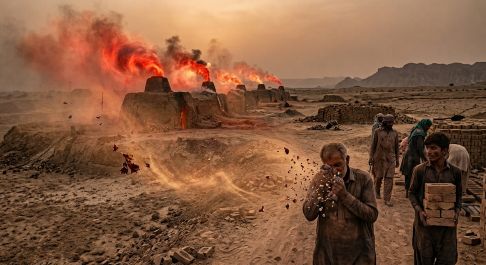
Health risks among brick kiln workers are widespread and deeply concerning.
Respiratory illnesses such as chronic cough, bronchitis, and asthma are common due to constant exposure to thick smoke and fine dust. Eye infections and even blindness from dust, glare, and untreated conditions are reported frequently
By Mir Mohammad Junejo
Brick kilns are one of the largest informal industries worldwide. Each year, the world produces an estimated 4.5 trillion bricks, with Asia accounting for nearly 90 percent of this output. China alone makes about two‑thirds, while India produces roughly one in eight. Employment is vast but largely unregulated, with around 15 million workers engaged in brick production globally.
Kilns emit about 1.1 giga-tons of carbon dioxide annually, roughly 4 percent of global emissions. Beyond carbon, they contribute to heavy particulate pollution, deforestation for fuel, and soil degradation from clay extraction, making them a major source of both climate change and local ecological damage.
Pakistan ranks third in global brick production, with nearly 20,000 kilns producing around 70 billion bricks annually. The workforce is estimated between 3.5 and 5 million people, including about one million children. Labor is often organized through bonded debt systems (peshgi), trapping families across generations. Kilns consume about 2.5–3.5 million tons of coal annually, accounting for nearly 7 percent of Pakistan’s industrial greenhouse gas emissions.
Available studies and government/secondary sources provide varying estimates, ranging from approximately 2,060 mapped kilns to around 10,000 kilns across the Sindh province, depending on the year, methodology and definition of an operating kiln. Earlier estimates suggested that only about 1,300 kilns were registered, indicating that a substantial majority were operating without formal registration. Therefore, for reporting purposes, it is more appropriate to describe the Sindh-wide figure as an estimated range rather than a definitive official total. The high level of informal operation also creates challenges related to environmental regulation, air pollution, occupational health, labor rights and child-labor risks.
Among the major brick-kiln districts, available mapping identified approximately 300 kilns in Badin, 250 in Umerkot, 150 in Tharparkar, 250 in Mirpurkhas, 350 in Hyderabad and 250 in Sanghar, while Thatta is estimated to have roughly 100–180 kilns based on available secondary information. Umerkot and Tharparkar are particularly notable for unregistered kiln activity; the Sindh Human Rights Commission, reported 85 unregistered kilns in Tharparkar.
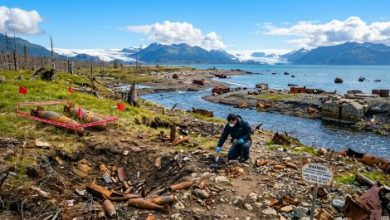
At Wango, Naukot, and Nabisar in Thar, brick kilns are increasingly affecting fertile and cultivable land within the desert–barrage belt. The area supports both agriculture and livestock, with many households depending on the surrounding desert and barrage ecosystems for grazing, fodder, and other natural resources. Kilns that rely heavily on timber fuel contribute to the cutting of indigenous trees such as kandi, kunbhat, neem, and babur, which are essential for soil stabilization, shade, fodder, and livestock survival. Continued removal of these trees accelerates deforestation, soil erosion, land degradation, and desertification, placing additional pressure on already vulnerable communities and livestock.
The use of fertile agricultural topsoil for brick moulding is another serious concern. Removing nutrient-rich topsoil from irrigated and cultivable farmland reduces soil productivity and can leave agricultural land degraded and barren. Brick kilns should therefore be strictly prohibited from fertile, irrigated, and cultivable areas and should instead be located on designated degraded or non-agricultural land.
Health risks among brick kiln workers are widespread and deeply concerning. Respiratory illnesses such as chronic cough, bronchitis, and asthma are common due to constant exposure to thick smoke and fine dust. Eye infections and even blindness from dust, glare, and untreated conditions are reported frequently, while musculoskeletal pain results from long hours spent bending over moulds. Malnutrition adds to the burden, leaving workers physically weakened. Women’s labor, though essential, remains invisible in wage records, and the absence of proper sanitation exposes them to further risks. Children are especially vulnerable, with high mortality rates in kiln communities. Despite Pakistan’s Bonded Labor Abolition Act of 1992, enforcement remains weak, allowing these hazardous conditions to persist and leaving millions of workers trapped in cycles of debt and exploitation.
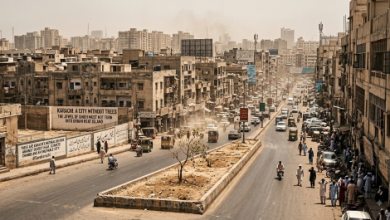
Most kilns use outdated Fixed Chimney Bull’s Trench designs, producing thick smoke with sulphur dioxide, carbon monoxide, and fine particulates.
The way forward for addressing the human and environmental costs of brick kilns in Sindh requires a balanced approach that combines enforcement, innovation, and social protection. Traditional Bull’s Trench kilns are outdated and highly polluting, while zigzag kilns have already proven in Punjab and Bangladesh that they can cut coal use and emissions significantly. Transitioning to cleaner technology should be made mandatory, with subsidized loans offered to small kiln owners to ease the shift.
Read: Brick Kiln Emissions Pollute the Air
________________
 Mir Mohammad Junejo, Monitoring & Evaluation Coordinator, Research and Development Foundation RDF