Our cities need homes, but they also need trees. Our roads need safety, but they can also become green corridors.
By Nuzair Ahmed Jamro
As housing schemes expand and existing trees are removed for construction, it is time for District Administrations to adopt a practical and long-term policy of tree protection and roadside plantation.
Our cities and towns are growing rapidly. New houses, housing schemes, roads, schools, markets and other facilities are being built to meet the needs of a growing population. People need homes, and development is a natural part of progress. However, there is another side of this development that we can no longer ignore: the loss of trees.
When new housing schemes are developed, existing trees are often cut down to make space for houses, streets, boundary walls, parking areas and other construction. Once the construction is complete, very little open land may remain for planting an equal number of new trees. In this way, the expansion of our cities can gradually reduce their green cover.
However, the answer is not to stop development. People need houses and communities need infrastructure. The real need is to make development more responsible. If trees have to be removed for necessary construction, the lost green cover should be restored through proper and planned plantation. Where space inside growing cities is limited, suitable roads, highways, road reserves and other public areas can provide an important opportunity.
Apropos, this is where the idea of Green Road Corridors becomes important. Where road safety and available space permit, suitable trees and vegetation can be planted along both sides of roads. Over time, these individual plantation areas can become continuous green corridors connecting cities, towns, villages and agricultural areas.
Trees are not simply a source of beauty. They provide important environmental benefits. They absorb carbon dioxide, release oxygen, provide shade, reduce heat, and help filter air pollution, protect soil, support birds and insects and improve the overall environment in which people live.
Not last not least, The Food and Agriculture Organization (FAO) has reported that properly planned urban and peri-urban trees can help reduce heat, remove pollutants, improve soil conditions, reduce erosion and support biodiversity. FAO has also reported that strategically placed trees can reduce urban air temperatures by approximately 2°C to 8°C, depending on local conditions. Properly placed trees around buildings can also reduce cooling requirements.
Roadside vegetation can provide another useful benefit. According to the U.S. Environmental Protection Agency, tall and dense roadside vegetation can, under suitable conditions, reduce some downwind pollutants by approximately 30 percent. This gives us a strong reason to consider roadside plantation as part of environmental infrastructure rather than treating it merely as beautification.
There is also a widely cited estimate from American Forests that one mature tree can provide enough oxygen for about four people for one day. This should not be treated as a fixed scientific rule because oxygen production varies according to the tree’s species, age, size, health and growing conditions. Nevertheless, it helps us understand the value of mature trees. When thousands of mature trees are removed, we lose much more than their oxygen contribution. We also lose their ability to absorb carbon dioxide, provide shade, reduce heat and support the surrounding environment.
This is why saving existing mature trees should always be the first priority. A mature tree that is protected today is already providing environmental benefits. A newly planted sapling may require many years before it reaches a similar size and level of benefit.
Consider a simple example. If a district loses 10,000 trees because of housing schemes, road construction and other development, the administration should not simply record the loss and move on. It should determine how many of those trees could have been saved, how many need to be replaced, where the replacement trees will be planted, who will maintain them and how many will survive after one, three and five years.
If a policy requires two replacement trees for every tree removed, the loss of 10,000 trees would create an initial target of 20,000 replacement trees. But even this figure is meaningful only if the trees survive. Planting 20,000 saplings and allowing most of them to die cannot be considered a successful plantation program. The real target should be 20,000 healthy, established trees, not simply 20,000 planting holes.
One of the biggest challenges in growing cities is the shortage of open land. This is particularly true in areas where housing schemes are expanding quickly. However, our districts have extensive road networks connecting cities, towns, villages, agricultural areas and public institutions. Where sufficient space exists outside the areas needed for road safety, these corridors can be developed into green belts.
Instead of searching for one large piece of vacant land for plantation, thousands of smaller suitable spaces along roads can gradually become part of the district’s green infrastructure. With proper planning, roads can become more attractive, shaded and environmentally friendly while maintaining the necessary safety standards.
Trees can also play a useful role around agricultural land. Trees should not always be considered competitors to farming. Around the world, farmers use systems known as agroforestry, in which suitable trees and crops are grown together.
FAO has documented examples from Zambia and Malawi involving Faidherbia albida trees and maize. In one reported comparison in Zambia, maize yields averaged about 4.7 tons per hectare under the tree canopy compared with 1.9 tons per hectare outside the canopy. FAO has also reported improvements in soil organic matter, nitrogen and water-holding capacity under suitable tree systems.
These figures do not mean that every tree planted beside every crop in Pakistan will produce the same results. Local soil, climate, water availability, tree species and farming practices are very important. The example simply demonstrates that, with the right species and proper management, trees and agriculture can work together.
For Pakistan, this approach deserves serious consideration. We are facing increasing pressure from population growth, urban expansion, heat, air pollution and the loss of natural vegetation. Trees should therefore not be viewed as something that belongs only in forests. They can be part of our cities, roads, agricultural landscapes, housing schemes, public institutions and other suitable areas.
A Practical Reform for District Administration
The District Administration should move beyond occasional plantation campaigns and establish a permanent policy for tree protection and Green Road Corridors. The Deputy Commissioner and relevant departments should begin with a district-wide tree audit. The administration should identify major existing tree belts, record significant tree losses caused by housing schemes and other development, identify roads suitable for plantation, map available road reserves and locate public and government spaces where trees can safely be planted.
Further, the administration should also maintain a clear record of how many trees is being removed, how many are being saved, how many are being planted and, most importantly, how many survive.
Tree compensation should become an important part of major development planning, subject to applicable laws and environmental regulations. When a housing scheme or other major project requires the removal of trees, the developer should be required to submit a Tree Compensation and Plantation Plan. The plan should explain how many trees will be removed, how many can be saved, how many replacement trees will be planted, where they will be planted and who will be responsible for their maintenance.
This would create a simple but important principle for future development: more development should mean more surviving trees, not fewer.
Similarly, Housing schemes should not be judged only by the number of houses they create. Their environmental responsibility should also be considered. If a development project removes trees, it should contribute to restoring the lost green cover in accordance with the law.
At the same time, roadside plantation must be planned carefully. Trees should never be planted in a way that creates a danger for motorists. Large trees placed too close to high-speed traffic can become dangerous fixed obstacles in the event of a vehicle accident. Therefore, road engineers and traffic authorities must determine safe planting distances and ensure that trees do not block visibility, road signs, drainage, emergency access or pedestrian movement.
Where large trees are not suitable, shrubs, grass and low-growing vegetation can be used. The objective should be to create a green road without compromising road safety.
The administration should also make the survival of trees the real measure of success. If 100,000 saplings are planted but most die, the program should not be declared successful simply because 100,000 were planted. The administration should monitor the trees after one year, three years and five years and replace those that die. Large housing developers can also become part of the solution. Where legally permissible, developers can be required or encouraged to help establish and maintain Green Road Corridors near their projects. Their contribution could include trees, tree guards, watering, maintenance and replacement of dead plants. This would create a direct link between urban development and environmental responsibility.
A small District Green Corridor Monitoring Cell could coordinate this work. Its task would be simple: map suitable areas, plant the right trees, protect them, inspect them, replace dead trees and publish the results. An annual public report could show the number of trees removed, trees saved, trees planted, trees surviving and kilometers of road covered by plantation.
Such transparency would change plantation from a one-day activity into a long-term government program.
The Right Tree Must Be Planted in the Right Place
It is also important to understand that every tree is not suitable for every location. The fastest-growing species is not necessarily the best choice. Tree selection should consider local climate, soil, water availability, root behavior, mature size, agricultural compatibility, biodiversity, maintenance requirements and road safety.
Native and locally suitable species should generally be preferred where scientifically appropriate. A poorly selected tree can create problems for roads, buildings, crops, drainage systems and water supplies. Good plantation is therefore not simply about planting more trees; it is about planting the right trees in the right places and then keeping them alive.
This program should also be planned for the long term. A five-year plan could focus on protecting existing trees and establishing new plantation corridors. A ten-year plan could connect major cities, towns and villages through green routes. A twenty-year vision could create a mature network of roadside, urban and agricultural green belts across the district and division.
The officials who plant these trees today may not be in office twenty years from now. But the trees can still be standing. That is why tree plantation is different from many other government projects. It is an investment in people who may not even be born today.
Trees Are an Investment, Not an Expense
Trees also have economic value. FAO has reported that urban and peri-urban trees can provide benefits over their lifetime that may be worth approximately two to three times the cost of establishment and care, although the actual return varies according to location and management.
Trees can reduce heat, provide shade and help reduce energy requirements. They can also contribute to cleaner surroundings, soil protection, biodiversity and better public spaces. For this reason, plantation should not be viewed simply as an expense from the government budget.
It is an investment in public health, environmental protection, agriculture and the future of our cities.
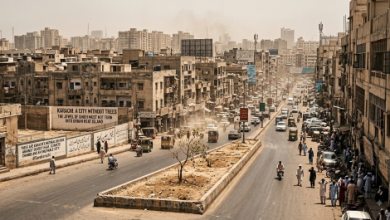
Imagine a road entering a city twenty years from now. Instead of bare land, dust and scattered waste, there are healthy trees and vegetation along suitable sections of the road. On one side are houses and businesses; on the other side are agricultural fields protected by a carefully planned green buffer. The trees provide shade, help filter dust, support birds and make the road more attractive. This is what a Green Road Corridor can become if it is planned properly and maintained over time.
Final Appeal to the District Administration
The expansion of housing schemes is a reality. Our population is increasing, and people need homes. New roads, schools, businesses and other facilities are also necessary for the development of our communities.
But development should not mean the permanent loss of our trees.
The District Administration now has an opportunity to introduce a practical and long-term reform. Existing mature trees should be protected wherever possible. Tree losses caused by development should be properly recorded. Where trees must be removed, compensatory plantation should be required according to applicable laws. Safe roadside areas should be identified for plantation, and suitable green corridors should be developed across cities, towns and rural routes.
Housing developers should be made part of the solution. Newly planted trees should be monitored for at least three to five years, and dead trees should be replaced. The administration should publish annual results so that the public can see not just how many trees were planted, but how many are actually alive.
The guiding principle should be simple:
MORE HOUSES MUST NOT MEAN FEWER TREES. MORE DEVELOPMENT SHOULD MEAN MORE SURVIVING TREES.
Conclusion
Our cities will continue to grow. People will continue to need houses, roads and other facilities. We cannot and should not stop development. But we can choose to develop in a more responsible way.
If trees must be removed for necessary construction, the lost green cover should be restored through planned and properly maintained plantation. If there is little space inside crowded cities, suitable road corridors, public spaces, government land and other appropriate areas should be used.
The purpose should not be to plant trees for a single day or to achieve a number on paper. The purpose should be to create healthy, living trees that remain for decades. A tree planted today may provide shade, cleaner air, carbon storage and environmental benefits to people who are not yet born. The trees we plant and protect now can become a gift to the next generation.
Let us protect the trees we already have. Let us plant where suitable space is available. Let development contribute to restoring the green cover it removes. Let us protect agricultural land with carefully planned vegetation. Let us make roadside plantation safe and sustainable.
Most importantly, let us measure success not by the number of saplings planted, but by the number of healthy trees still standing years later.
Our cities need homes, but they also need trees. Our roads need safety, but they can also become green corridors. Our agricultural land needs protection and productivity, and carefully planned trees can be part of that solution. We can build our cities without destroying their environmental future.
Read: Green Pakistan through Citizen Incentives
____________________
 Hailing from Shikarpur, Sindh, Nuzair Ahmed Jamro is a civil servant and MS research fellow in Public Administration. He writes on governance, public policy, and digital transformation. Email: najamro@gmail.com.