Yuki Imai of the Hokkaido Shimbun marks 40 days in detention. His reporting was inspired by his grandfather’s memories of fleeing Sakhalin
Asia Journalists Association calls for solidarity in defending journalists’ freedom to report across borders
By Lee Sang-ki
SEOUL: A narrow stretch of sea separates Japan’s northern island of Hokkaido from Russia’s Sakhalin. For generations, people on both sides have traded, traveled, and maintained close ties. Today, however, the waters between them have become a dividing line marked by political tensions and mutual distrust.
A Japanese journalist who devoted his career to telling the stories of people across that divide has now spent 40 days in Russian detention.
He is Yuki Imai, 34, a correspondent for the Hokkaido Shimbun based in Yuzhno-Sakhalinsk.
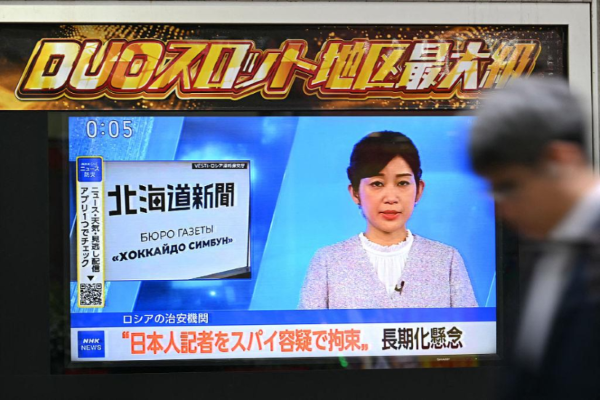
On October 13, Russia’s Federal Security Service (FSB) announced that Imai had been detained on suspicion of espionage. Russian authorities allege that he collected defense-related information for Japanese intelligence services.
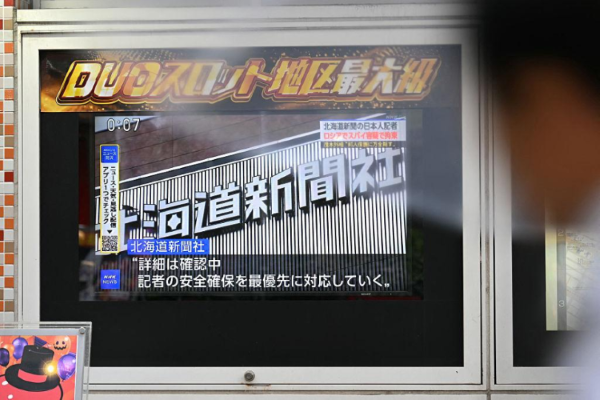
The Hokkaido Shimbun has firmly denied the allegation, stating that Imai was conducting legitimate journalistic activities under a valid journalist visa and had never collected information on behalf of the Japanese government.
Imai was transferred to Moscow, where he remains in detention. The Japanese government has called for his release, but the prospects remain uncertain.
This case raises questions that go far beyond a diplomatic dispute between Japan and Russia. It challenges us to consider how far governments may restrict legitimate journalism in the name of national security.
A Journalist Who Loved Russia and Reported on His Grandfather’s Homeland
Imai studied Russian at Osaka University and spent time studying abroad in St. Petersburg. With a deep interest in Russian literature and cinema, he joined the Hokkaido Shimbun in 2016.
After working in Nemuro, Kushiro, and Tokyo, he was assigned to Sakhalin in the autumn of 2024.
His grandfather came from Kholmsk, a town in Sakhalin formerly known as Maoka during Japanese rule. Following the Soviet military advance at the end of World War II, his grandfather fled to Hokkaido.
Imai long regretted never having asked his grandfather enough about those experiences. His family knew relatively little about what had happened. That regret became one of the driving forces behind his reporting on Sakhalin and the disputed islands known in Japan as the Northern Territories.
He traveled widely to meet former island residents and their descendants, recording their memories of homes they had been forced to leave behind. He wrote more than 160 articles related to these communities.
In 2019, Imai joined a visa-free exchange program that allowed former Japanese residents to visit Kunashir Island. He also welcomed Russian visitors to Japan, even inviting some into his own home.
In one of his articles, he wrote:
“Although countries may have different positions and claims, people share the same desire to maintain friendly relations as neighbors.”
These words reflected his belief that political disputes and territorial disagreements should not sever the bonds between ordinary people.
Following Russia’s invasion of Ukraine, relations between Tokyo and Moscow deteriorated sharply. Russia designated Japan an “unfriendly country” and terminated agreements governing visa-free exchanges and visits to the disputed islands.
Nevertheless, Imai continued reporting on those who hoped to preserve personal and cultural ties across the border.
In 2025, he wrote a tribute to a former Russian mayor who had helped strengthen the sister-city relationship between Sapporo and Novosibirsk.
“The seeds he planted are still alive,” Imai wrote.
In another article, he observed: “When thinking about relations between Japan and Russia, there are things that can only be seen by being there.”
What Can Only Be Seen on the Ground
The Hokkaido Shimbun established its Sakhalin bureau in 1992 to report on economic and cultural exchanges, territorial disputes, and the lives of local communities.
Japan claims sovereignty over four islands currently administered by Russia. Because visits under Russian visas could be interpreted as acknowledging Russian jurisdiction, the newspaper has not sent its Japanese correspondents based in Sakhalin to these islands under Russian entry procedures.
According to the newspaper, Imai did not visit the disputed islands after taking up his assignment in Sakhalin. When reporting from the islands was necessary, Russian local staff conducted the work in accordance with Russian procedures and domestic law.
The newspaper has cited these practices in rejecting the espionage allegations.
Until the evidence presented by Russian authorities can be independently examined through appropriate legal proceedings, the accusation should not be treated as an established fact.
Ken Endo, a professor of international politics at the University of Tokyo, has suggested that Russia’s decision may have involved diplomatic calculations aimed at pressuring Japan.
He pointed to the changing relationship between the United States and Russia, Japan’s tensions with China, and continuing sanctions against Moscow as possible factors.
However, Russia’s actual motives have not been independently established.
The Japanese government has continued diplomatic efforts to secure Imai’s release. Professor Endo has emphasized the need for high-level diplomacy that upholds principles while seeking a practical solution. He has also stressed the importance of solidarity within civil society.
Imai has a wife and a young daughter in Japan. His daughter, born in the spring of 2025, is now at an age when children begin taking their first steps.
What appears in international politics as a diplomatic dispute is, for one family, the painful absence of a husband and father.
A Freedom That Journalists Across Asia Must Defend Together
Since founding the Asia Journalists Association (AJA) in 2004, I have believed that journalists throughout Asia must seek mutual understanding and solidarity across national borders, political systems, and ideological differences.
South Korea, Japan, China, Russia, and North Korea carry complicated historical memories and security concerns. Their views on territorial questions often differ sharply.
Yet there is one principle we should all defend: journalists must not face unjustified threats or punishment for carrying out legitimate reporting.
If journalists abandon difficult or dangerous places, who will tell the stories of the people who live there?
Government statements and diplomatic documents alone cannot reveal the full reality of a society. There are things that can only be understood by being present, listening to people, and observing their lives.
As Imai himself wrote, some things can only be seen on the ground.
Russian authorities must substantiate their allegations with concrete evidence and ensure due process. Ordinary journalistic activities must not be treated as espionage.
The Japanese government, for its part, should continue diplomatic efforts to protect its citizen and secure his early release.
Journalists across Asia must not regard this case as someone else’s problem.
What happened to a Japanese reporter in Sakhalin today could happen to a Korean journalist, or any other Asian journalist, somewhere else tomorrow.
Imai studied the Russian language, loved Russian culture, and devoted his work to documenting the lives of people in Sakhalin, the homeland his grandfather had been forced to leave.
Today, that journalist remains behind bars in Russia.
I sincerely hope that he will soon return to his family and colleagues, and that one day he will once again walk the streets of Sakhalin, reporting on the everyday lives of its people.
Press freedom is not a privilege reserved for journalists in one’s own country.
It is a fundamental right that must be protected for every journalist who crosses borders in pursuit of the truth.
Read: Social Media, Freedom and the State
________________
 Lee Sang-ki, Secretary General, Asia Journalists Association, and CEO, The AsiaN