Are Our Bank Accounts Safe? Should We Keep Cash at Home, and Why Are Markets Falling?
Fahmida Rashid
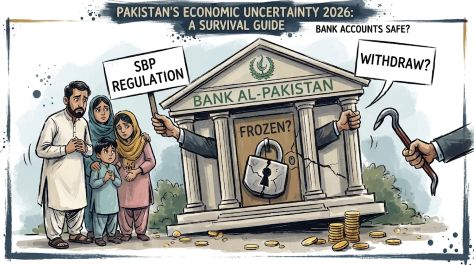
In recent months, growing economic uncertainty has raised serious concerns among ordinary people in Pakistan. Questions about frozen bank accounts, cash withdrawals, falling stock markets, declining investments, and the safety of personal savings are becoming increasingly common.
People are wondering whether they should withdraw their money from banks, keep cash at home, invest in gold, or prepare for a possible financial crisis. But what is actually happening, why are markets experiencing pressure, and what can we do to protect our savings?
Are Our Bank Accounts at Risk of Being Frozen?
One of the biggest concerns circulating on social media is the possibility of bank accounts being frozen. However, there is an important difference between individual account restrictions and a nationwide banking freeze.
Bank accounts can be restricted due to suspicious transactions, incomplete documentation, legal investigations, tax-related issues, or regulatory requirements. However, there is no verified basis to assume that all Pakistani bank accounts are about to be frozen.
People should keep their banking records, identification documents, tax information, and proof of income updated.
Why Are Stock Markets and Other Investments Declining?
Financial markets are influenced by several interconnected factors. Some of the major reasons behind market volatility include:
- International political tensions and geopolitical conflicts.
- Rising global oil prices and energy costs.
- Inflation and pressure on household purchasing power.
- Interest rate changes and economic uncertainty.
- Political instability and investor confidence.
- Currency fluctuations and concerns about foreign exchange reserves.
When investors become uncertain about the future, they often sell their investments and move towards assets they consider safer. This increases selling pressure and can cause markets to decline.
Should We Withdraw Money and Keep Cash at Home?
Keeping some emergency cash is a sensible financial precaution. However, withdrawing all your savings from banks and storing everything at home can create additional risks.
Cash kept at home can be exposed to theft, fire, accidental loss, and inflation. Its purchasing power may also decrease over time.
A balanced approach is better: maintain enough accessible cash for essential emergency expenses while keeping the remainder of your savings in appropriately diversified financial options.
How Can We Protect Our Savings?
Here are some practical steps to consider:
- Maintain an emergency fund covering three to six months of essential expenses.
- Avoid keeping all your money in one bank or investment.
- Consider diversified options such as savings accounts, government securities, and gold, depending on your financial circumstances.
- Keep important financial documents and transaction records updated.
- Avoid panic selling or making investment decisions based on social media rumours.
- Understand the risks, returns, and withdrawal conditions before investing.
- Keep some readily accessible funds for unexpected situations.
Conclusion: Preparation Is Better Than Panic
Economic uncertainty does not automatically mean that a banking collapse or financial disaster is approaching. However, it does remind us how important financial awareness and preparation are.
Instead of reacting to rumours, we should follow verified economic updates, manage our expenses carefully, diversify our savings, and maintain an emergency fund.
Remember: Financial security is not about withdrawing all your money or predicting the next crisis. It is about making informed decisions, managing risks, and being prepared for unexpected situations.
Read: Plastic Waste: A Global Concern
______________
Fahmida Rashid is a student of M.Phil at Media Studies Department, Sindh Madressatul Islam University (SMIU) Karachi, Sindh