Cop 31: Another injustice against Climate Justice
Global promises, Failure to act and Future of our Planet

Climate justice is not charity; it is a right. Nature’s protection is not a political choice; it is a fundamental condition for the survival of life.
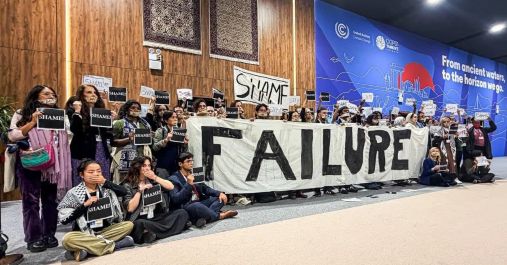
The protests by civil society carry a clear message to the international community: climate justice can no longer be postponed. Governments must accept their responsibilities rather than evade them.
By Zain Daudpoto
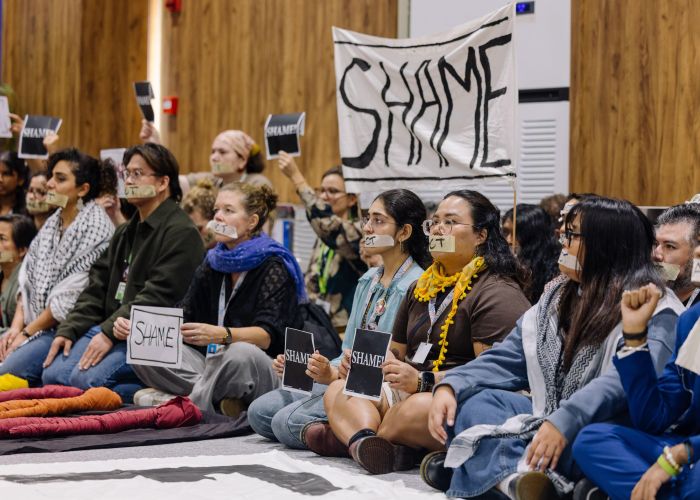
The protests staged by civil society organizations and environmental activists during the closing stages of COP31 have once again exposed the contradictions in global climate policies and the lack of seriousness among world leaders. Every year, global leaders deliver grand speeches about the severity of the climate crisis, rising temperatures, deforestation, sea-level rise, and the degradation of ecosystems. Yet, when it comes to making concrete decisions and fulfilling their obligations, climate justice is pushed aside in favour of political compromises, economic interests, and the priorities of powerful nations.
The strong criticism by civil society of the conference’s draft text is not merely an objection to the wording of an agreement; it is a protest against a global system that protects the forces responsible for climate destruction, while shifting the burden of its consequences onto poor countries, coastal communities, farmers, fisherfolk, and people whose livelihoods depend on natural resources.
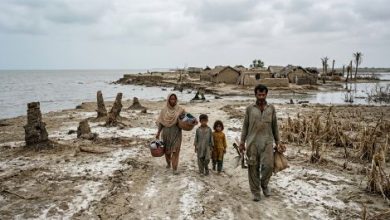
For communities on the frontlines of the climate crisis, delaying climate action is not a diplomatic strategy—it is a matter of life and death. Floods, droughts, extreme heat, water scarcity, land degradation, sea-level rise, and biodiversity loss are already affecting the lives, livelihoods, and future of millions of people. In such circumstances, reducing international climate agreements to mere words and promises is yet another injustice against those already suffering.
Escaping the commitment to phase out Fossil fuels
One of the key demands of civil society is the inclusion of a clear, strong, and unequivocal commitment in the global agreement to phase out fossil fuels—coal, oil, and gas. Although the world has acknowledged the severity of the climate crisis, continuing to sustain a fossil-fuel-dependent economic system and seeking new avenues for its expansion directly contradicts global climate responsibilities.
Genuine climate action requires substantial and rapid reductions in greenhouse gas emissions. Without such fundamental change, strategies to address the climate crisis will remain temporary, superficial, and largely symbolic measures.
The 1.5 °c target and the future of Humanity
Keeping global temperature rise within the 1.5°C limit is not merely a scientific benchmark; it is a vital commitment linked to the survival of humanity, ecosystems, and future generations. If governments fail to take serious, practical, and collective measures to uphold this target, the consequences of climate change will become increasingly severe.
The greatest burden will fall upon countries and communities that have contributed the least to global emissions but are suffering disproportionately from climate-related disasters and environmental destruction.
False solutions and the Evasion of Environmental responsibility
Concerns are also being raised over the promotion of approaches such as carbon capture and storage as climate solutions. While technological efforts to reduce or capture emissions may have their place, using such approaches to justify the continued burning of fossil fuels is dangerous.
The fundamental requirement for protecting our planet is a genuine and sustained reduction in greenhouse gas emissions—not reliance on measures that risk pushing the real problem into the background while allowing polluting activities to continue.
Climate finance: A right not a charity
Financial support for developing countries and those most vulnerable to climate change is an essential part of global responsibility. Countries facing floods, droughts, rising seas, water shortages, and agricultural losses must be provided with adequate, transparent, and accessible financial resources for climate adaptation.
Climate finance must not be trapped in loans, political conditionality, or unjust procedures. Instead, it must reach affected countries in accordance with their genuine needs. Countries and communities that have contributed the least to climate change are suffering some of its greatest losses. This imbalance is a direct challenge to the principles of global justice.
Just transition and the Rights of affected communities
The protection of the economic and social rights of workers, poor communities, local populations, and people dependent on natural resources is essential during the transition to climate-friendly policies and systems.
A Just Transition does not simply mean changing the energy system; it means ensuring that this transformation safeguards employment, economic security, social justice, and human dignity. No transition towards a sustainable future should come at the cost of marginalizing vulnerable communities or depriving people of their livelihoods.
The importance of Climate Justice for Sindh and Pakistan
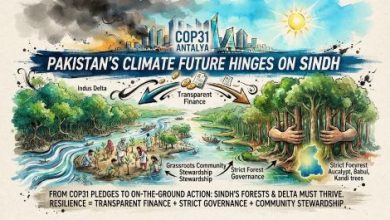
Sindh, a region whose survival depends heavily on the Indus River, agriculture, the delta, coastal areas, forests, and aquatic ecosystems, cannot remain immune to the consequences of climate change. Declining river flows, sea intrusion, soil salinity, destruction of coastal and riverine forests, extreme temperatures, and water pollution pose serious threats to Sindh’s ecological and economic future.
It is essential that international climate agreements give due recognition to the challenges faced by Pakistan and vulnerable regions such as Sindh, provide adequate financial resources for adaptation, and prioritize the restoration of natural ecosystems. Climate justice is not merely about reducing global emissions; it is equally about protecting and restoring the natural systems that are fundamental to the survival of humanity and our planet.
From Global promises to practical responsibility
The success or failure of this conference must ultimately be judged by whether governments are willing to take concrete action on phasing out fossil fuels, protecting the 1.5°C target, delivering climate finance, strengthening adaptation, ensuring a Just Transition, and restoring ecosystems—or whether the world is once again left with diplomatic statements and incomplete promises.
The protests by civil society carry a clear message to the international community: climate justice can no longer be postponed. Governments must accept their responsibilities rather than evade them.
The Earth does not belong to any single country, government, or generation. It is the shared home of humanity and all other living beings. Failure to protect it is an injustice against future generations.
Climate justice is not charity; it is a right. Nature’s protection is not a political choice; it is a fundamental condition for the survival of life. If COP31 remains confined to promises and diplomatic compromises instead of delivering meaningful action, history will remember it as another missed opportunity to address the climate crisis and another failure of global leadership.
Read: Pakistan’s Climate Future Hinges on Sindh
________
Zain Daudpoto is based in Hyderabad