Global Warming Has Become a Global Disaster. The World is Battling Heat, Floods, Fires, Drought and Melting Ice
By Ramesh Raja
The climate crisis is no longer a warning about what might happen in the distant future. It is happening now, across continents and almost simultaneously. In 2026, the world has witnessed devastating floods, unprecedented heat, massive wildfires, drought, glacier and ice loss, extreme storms, crop damage, water stress and large-scale displacement.
The latest warning is coming from the oceans themselves. On 22 August 2026, global average sea-surface temperature reached about 21.1°C, a new daily record, surpassing the previous record set in March 2024. The extraordinary timing is particularly alarming because ocean temperatures normally reach their annual maximum several months earlier. Copernicus says the development reflects the combined influence of long-term human-caused warming and the developing El Niño.
The World Meteorological Organization has already confirmed that 2015–2025 were the 11 hottest years on record, with 2025 approximately 1.43°C above the 1850–1900 average.
What follows is a snapshot of some of the most striking 2026 climate and extreme-weather disasters, particularly those reported during the current summer.
Pakistan: Monsoon Floods, Flash Floods and Urban Flooding
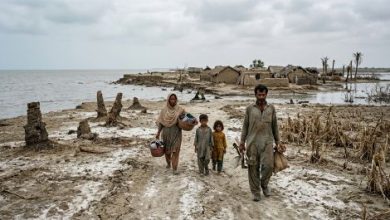
Pakistan is once again experiencing a destructive monsoon season. Since 26 June 2026, heavy rainfall has caused deaths, injuries, flash floods, urban flooding and landslides across the country. By early August, the reported death toll had already reached 136, with further rainfall expected.
The danger has extended from mountainous areas of Khyber Pakhtunkhwa and Gilgit-Baltistan to Punjab and Sindh. Pakistan’s disaster authorities have repeatedly warned of flash floods, urban flooding and landslides.
Islamabad–Rawalpindi
The Twin Cities of Islamabad and Rawalpindi have become a particularly powerful symbol of the crisis. Intense monsoon rainfall has repeatedly inundated roads and low-lying areas, while the Leh Nullah has posed a serious flood threat to Rawalpindi.
The significance goes beyond one rainfall event. Islamabad and Rawalpindi are major urban centers with extensive built-up surfaces, drainage limitations and rapidly growing populations. When exceptional rainfall arrives, enormous volumes of water can accumulate within a short period.
Industrial Countries, Including the United States and Europe, Are Responsible for Climate Disasters: Pakistan contributes only a small share of historical global greenhouse-gas emissions but remains among the countries most vulnerable to climate extremes. Its repeated floods illustrate the profound inequality between those who historically produced much of the atmospheric carbon and those increasingly suffering its consequences.
Nepal: Catastrophic Flash Floods in the Himalayas
Nepal has become the latest victim of an extraordinarily destructive Himalayan flash flood. On 26 August 2026, a sudden torrent swept through areas near the Nepal–Tibet border, devastating communities and infrastructure and leaving at least 100 people dead, 400 foreigners with hundreds of local reportedly missing as rescue operations continued. 19 bridges and 40 kilometers of roads have been washed away. Thirteen hydropower projects in the region have also been damaged. More than 200 trucks have been swept away. The force of the water was so immense that dramatic footage showed it sweeping through the border area like a wall of mud and water.
The disaster is particularly alarming because it occurred in the Himalayan region, where rapidly changing temperatures, melting glaciers and glacial lakes are creating growing risks of glacial lake outburst floods (GLOFs). The Nepal–Tibet region has experienced similar catastrophic flooding before, including a 2025 event in which a major flood destroyed the Friendship Bridge, a vital trade and transport link between Nepal and China. A regional climate-monitoring assessment subsequently attributed that earlier disaster to the outburst of a glacial lake in Tibet.
India: Assam’s Catastrophic Floods
India’s 2026 monsoon has produced one of the year’s most devastating flood disasters.
Assam experienced its worst flooding in six decades, with more than 100 deaths and over 700,000 people displaced during the July disaster. More than 2,600 villages were reported flooded.
By 18 August, Assam’s reported flood death toll had reached 105, with nearly 32,000 people still affected across five districts.
The Brahmaputra and its tributaries inundated communities, destroyed crops, killed livestock and forced families into relief camps. In some places, residents described floodwaters rising from knee level to neck level in approximately 30 minutes.
Heavy rainfall has also caused floods and landslides in Kerala and Odisha. Earlier monsoon incidents across northern and northeastern India killed dozens more.
Industrial Countries, Including the United States and Europe, Are Responsible for Climate Disasters: Climate change is not the only cause of India’s floods. Deforestation, sand mining, wetland destruction and unplanned urbanization have made communities more vulnerable. But a warmer atmosphere can hold more moisture and intensify extreme rainfall, increasing the danger faced by already vulnerable populations.
Brazil: Violent Storms and Flooding
Southern Brazil has again been struck by severe weather.
In Rio Grande do Sul, violent storms on 6 August produced winds approaching 120 km/h, hail and a confirmed tornado. 114 municipalities reported damage, while 2,306 people were displaced across 28 municipalities. One person died and five were injured.
The state has already experienced some of Brazil’s most catastrophic climate-related flooding in recent years, demonstrating how vulnerable its communities and agricultural economy can be to extreme rainfall.
Meanwhile, meteorological assessments indicate continuing heavy-rainfall risk across southeastern Brazil during late August and into early September.
Industrial Countries, Including the United States and Europe, Are Responsible for Climate Disasters: Brazil is itself a major current emitter and has enormous responsibility for protecting the Amazon. But the broader climate system is global. Historical industrial emissions have warmed the atmosphere and oceans, changing the background conditions under which today’s extreme weather develops.
Argentina: Extreme Storms and Flood Risk
Argentina has also experienced severe weather in 2026.
A powerful storm affected Buenos Aires in August, leaving more than 50,000 electricity customers without power.
Argentina has additionally faced unusual winter conditions. The important Cristo Redentor crossing between Argentina and Chile was closed for an exceptionally long period because of heavy snowfall and strong winds, disrupting one of the principal routes across the Andes.
South America’s climate extremes are increasingly complicated: some regions experience destructive rainfall while others simultaneously face drought and agricultural stress.
Industrial Countries, Including the United States and Europe, Are Responsible for Climate Disasters: Climate change does not mean every storm or snowfall is caused by global warming. Rather, warming changes atmospheric and oceanic conditions that can alter the intensity, frequency and geographical distribution of extreme events.
United States: The Hawk Fire near Reno, Nevada
One of the most dramatic recent disasters has occurred near Reno, Nevada.
The Hawk Fire, which erupted on 22 August, rapidly spread through dry vegetation and had burned more than 15,000 acres by 25 August. At least 32 homes were destroyed, seven people suffered minor burns, and approximately 90,000 residents were initially affected by evacuation orders or warnings. About 23,000 remained under evacuation orders while another 40,000 were advised to remain prepared. Around 900 firefighters were fighting the blaze.
There is an important scientific qualification: officials believe the Hawk Fire was human-caused, so it should not be described as a wildfire directly caused by climate change. But the fire spread through dry brush, high temperatures and low humidity, conditions that can increase wildfire danger.
Industrial Countries, Including the United States and Europe, Are Responsible for Climate Disasters: The United States is the largest historical contributor to cumulative CO₂ emissions, making its historical role in global warming particularly significant. Today’s individual wildfire may have a local ignition source, but the broader warming and drying trend increases the potential severity of wildfire seasons.
France and Spain: Heat, Drought and Extraordinary Wildfires
Europe has experienced an extraordinary combination of heat + drought + wildfire.
By 5 August 2026, approximately 505,683 hectares had burned across the EU, compared with 379,392 hectares by the same date in 2025. Large fires were concentrated particularly in Spain and France.
Spain alone saw approximately 140,000 hectares burned between 13 and 28 July, largely in three major fire complexes. World Weather Attribution concluded that climate change had increased the likelihood of the combination of extreme heat, drought and fire-weather conditions driving the disaster.
France also experienced an extraordinary human toll from heat. Between 3 and 22 July, the country’s health ministry reported 1,243 excess deaths during the heatwaves.
Industrial Countries, Including the United States and Europe, Are Responsible for Climate Disasters: Europe is historically one of the world’s major industrial regions and therefore carries substantial historical responsibility for greenhouse-gas accumulation. The current European fires also demonstrate that wealthy industrial economies are not immune from the consequences of the warming they helped create.
The World’s Oceans: A Record That Should Alarm Everyone
Perhaps the most extraordinary recent measurement is not from a city or country but from the global ocean.
On 22 August 2026, the global average sea-surface temperature reached approximately 21.1°C, exceeding the previous daily record from March 2024.
More than 90% of the excess heat generated by greenhouse-gas emissions is absorbed by the oceans. Warmer oceans contribute to sea-level rise, marine heatwaves, coral damage, ecosystem disruption and changes in storm behaviour.
This is why the ocean record is so significant: it is not merely another temperature statistic. It is evidence that the planet’s largest heat reservoir is absorbing extraordinary amounts of energy.
Industrial Countries, Including the United States and Europe, Are Responsible for Climate Disasters: Fossil-fuel combustion during more than a century of industrialization has placed enormous quantities of CO₂ and other greenhouse gases into the atmosphere. The resulting warming is now being absorbed throughout the climate system, particularly by the oceans.
Greenland and the World’s Glaciers: Ice Is Disappearing
The climate crisis is also visible in the cryosphere.
Recent satellite observations have highlighted major floating-ice loss in Greenland, including significant changes in glacier tongues. Greenland’s ice sheet is one of the world’s most important contributors to long-term sea-level rise.
Glacier retreat is not simply an environmental issue. Mountain glaciers function as natural water reservoirs. Their continued loss threatens the long-term water security of communities dependent on seasonal meltwater.
The danger therefore operates on two timescales:
Too much water now through rapid melting and extreme rainfall, followed by too little water later as glaciers shrink beyond their ability to provide reliable meltwater.
Industrial Countries, Including the United States and Europe, Are Responsible for Climate Disasters: The people living beside Himalayan, Andean and other glaciers did not create the overwhelming majority of historical greenhouse-gas emissions. Yet they face some of the most profound consequences of a warming cryosphere.
Agriculture and Food Security: The Hidden Disaster
The destruction caused by climate change cannot be measured only in deaths and damaged buildings.
Floods submerge farmland. Heat destroys crops. Drought reduces yields. Wildfires destroy grazing land. Water shortages make irrigation increasingly difficult.
The 2026 Assam floods, for example, submerged extensive agricultural areas and destroyed livestock and household livelihoods.
In Europe, drought and record heat have simultaneously affected rivers, agriculture, forests and water supplies. The European Commission’s Joint Research Centre has warned that drought conditions and extremely low river levels are becoming a major concern.
This creates a dangerous chain:
Climate warming → extreme weather → crop losses → food-price pressure → livelihood loss → migration and displacement → humanitarian crisis.
Industrial Countries, Including the United States and Europe, Are Responsible for Climate Disasters: The poorest populations generally have the least capacity to absorb food-price increases, crop failures and livelihood losses, despite contributing far less to historical emissions.
Displacement: The Human Face of Climate Disaster
Behind every statistic is a displaced family.
The 2026 Assam floods alone displaced more than 700,000 people.
In Pakistan, repeated monsoon floods and flash floods have displaced and disrupted communities across several provinces. In Brazil, thousands were displaced by August storms. In Reno, tens of thousands faced evacuation because of the rapidly spreading Hawk Fire.
Climate displacement is therefore no longer confined to small island nations or distant future projections. It is occurring in South Asia, North America, Europe and South America at the same time.
The Great Climate Inequality
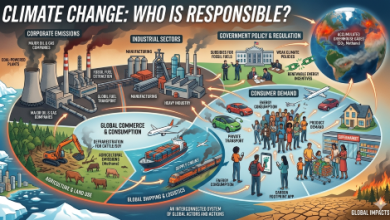
Behind the growing number of climate disasters across the world lies an uncomfortable but unavoidable question: Who created most of the problem, and who is paying the greatest price? The answer cannot simply be that one country or one region is responsible for every flood, heatwave, drought, wildfire or storm. Current emissions matter, and rapidly industrializing economies such as China and India now account for substantial annual greenhouse-gas emissions. Yet historical responsibility matters enormously. For more than a century, the United States and European industrial economies built enormous wealth through fossil-fuel-intensive industrialization, releasing vast quantities of greenhouse gases that have accumulated in the atmosphere and continue to warm the planet today. Meanwhile, many developing countries that contributed comparatively little to cumulative global emissions are suffering some of the most devastating consequences of climate change, including catastrophic floods, extreme heat, prolonged droughts, water shortages, crop failures, rising seas and displacement of vulnerable communities. This is the profound climate inequality at the heart of the global warming crisis: those who benefited most from carbon-intensive development are not necessarily those suffering most from its consequences. This is the central argument behind the principle that “Industrial Countries, Including the United States and Europe, are responsible for Climate Disasters.” It does not mean that developing countries have no responsibility for reducing their present and future emissions. Rather, it means that climate responsibility should be proportionate to historical contribution, present capacity, economic strength and the ability to finance the global transition to cleaner energy. This principle is reflected in the internationally recognized concept of “common but differentiated responsibilities,” which recognizes that all countries share responsibility for protecting the planet, but they do not bear the same historical responsibility or possess the same capacity to respond. The climate crisis, therefore, is not only an environmental emergency; it is also a profound question of justice, equity and responsibility between nations and generations.
The World Cannot Continue as Before
The events of 2026 must no longer be viewed as isolated headlines appearing one after another in different parts of the world; together, they form one enormous and deeply disturbing picture of a planet under increasing climate stress. Pakistan and India are battling devastating floods, Brazil and Argentina are experiencing extreme storms and rainfall, the United States is fighting destructive wildfires, France and Spain are confronting unprecedented combinations of heat, drought and fire, Greenland is losing ice, the world’s oceans are reaching extraordinary temperatures, farmers are losing crops, families are being forced from their homes, and water security is becoming increasingly uncertain. The most alarming reality is that many of these extreme events are occurring within the same year and, in some cases, within the same weeks, demonstrating how rapidly climate risks are converging across continents. Global warming has therefore moved far beyond the narrow language of environmental protection; it has become a fundamental threat to human security, food security, water security, economic survival and social stability. The world cannot address this crisis by asking vulnerable countries simply to adapt while the largest historical emitters continue with business as usual. Climate responsibility must become practical: the polluter must pay, the largest historical emitters must lead, vulnerable nations must receive meaningful climate finance, dependence on fossil fuels must be rapidly reduced, forests, glaciers, wetlands and oceans must be protected, and every country must prepare its people for a climate that has already changed. The disasters unfolding in 2026 are not merely warnings about what may happen tomorrow; they are evidence of what is happening today, and a warning of what the world will face if humanity fails to act now.
Read: Will Pakistan Ever Board Green Power?
_____________
 The author of this article, Engr. Ramesh Raja, is a Civil Engineer, visionary planner, PMP certified and literary enthusiast with a passion for art and recreation. He can be reached at engineer.raja@gmail.com