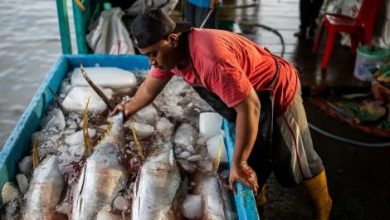
In Sindh, entrepreneurship can be harnessed in agriculture, livestock, fisheries, handicrafts, dairy, camel products, agro-processing, harnessing renewable energy, and tourism.
Ali Nawaz Rahimoo
Pakistan is at a crossroads. The challenge for Pakistan is no longer just about creating jobs. It is about creating an economy where people can create jobs for others. With huge numbers of Pakistan’s youth, low levels of formal employment and intense economic pressure, entrepreneurship needs to become a national priority
Small businesses, start-ups, family enterprises, farmers, artisans, digital workers and informal traders are a critical part of Pakistan’s economy. State Bank Pakistan (SBP) estimates that small and medium enterprises (SMEs) comprise “over 90 percent of total businesses in the country and are significant contributors to employment, wealth creation, and innovation in Pakistan”. But entrepreneurs who lead these businesses face a myriad of challenges, including lack of access to credit, inadequate skills, regulatory hurdles, weak infrastructure, and poor access to markets.
The challenge for Pakistan is no longer just about creating jobs. It is about creating an economy where people can create jobs for others. With huge numbers of Pakistan’s youth, low levels of formal employment and intense economic pressure, entrepreneurship needs to become a national priority. Pakistan needs to nurture enterprising youth and help them evolve into dynamic business leaders who can generate employment, wealth, and innovation.
For generations, parents have invested in a formal education for their children with the expectation of securing a stable government or corporate job. The education system has been geared toward preparing students for salaried employment. This has to change. Educational institutions need to encourage students to think not only about getting a job but also about job creation. There is a need for entrepreneurship literacy, starting with identifying problems and finding practical solutions.
Schools and universities can promote experiential learning through incubators and encourage students to explore how they can start businesses based on their skills and interests. Students can be supported in developing small-scale enterprises such as processing and preserving local products, livestock farming and breeding, making handicrafts, e-commerce, solar energy, mobile phone repair workshops, farm mechanization, tourism, digital content creation, and other related fields. Students need to understand that they can start small and grow bigger. Pakistan needs to create an environment in which the youth can become job creators as well as problem-solvers.
Educational institutions, domestic industries, and parents have to play their part in reshaping mindsets about entrepreneurship. Visionary entrepreneurs such as Warren Buffett, Bill Gates, Steve Jobs, Richard Branson, Narayana Murthy, Jack Ma, Elon Musk, Jeff Bezos, and Sara Blakely have disrupted global markets through their innovative ideas and transformed societies through massive job creation. Thus, Pakistan needs to facilitate an environment in which many young entrepreneurs can emerge and thrive.
Many countries have succeeded in promoting strong entrepreneurial ecosystems that have bred numerous businesses and job opportunities. Billionaires such as Warren Buffett, Bill Gates, Steve Jobs, and Richard Branson are products of successful entrepreneurial milieus operating in the US. Pakistan has to nurture its entrepreneurial soil in order to create more entrepreneurs. Pakistan needs not only to admire successful foreign entrepreneurs but also to celebrate its own successful domestic entrepreneurs.
Irregularity presents both a challenge and an opportunity. Small businesses dominate the informal sector in Pakistan due to factors such as the high cost of registration, taxation, and licensing. State Bank Pakistan (SBP) has acknowledged the high number of very small firms in Pakistan.
The government needs to make formalization easy rather than difficult for entrepreneurs. Young entrepreneurs need to be able to open a business in their locality, obtain a tax ID, open a business bank account, and access other financial services digitally.
The recent reforms in Pakistan’s SME policy, including the revised SME financing guidelines and the enterprise categorization, which have been reviewed and updated by the State Bank of Pakistan (SBP), are a good first step toward promoting a vibrant entrepreneurial ecosystem in Pakistan. For instance, in July 2026, SBP revised its SME definitions and classifications, including start-ups with less than five years of experience.
Entrepreneurship can take off not only in urban centers such as Karachi, Lahore, and Islamabad but also in the rural areas.
For instance, in the province of Sindh, entrepreneurship can be harnessed in agriculture, livestock, fisheries, handicrafts, dairy, camel products, agro-processing, harnessing renewable energy, and tourism. Similarly, the people of Tharparkar have a wealth of traditional knowledge and skills in livestock production, handicrafts, and desert farming that can be commercialized, provided there are the right linkages for technology, processing, packaging, branding, and transport.
Instead of selling farm produce and livestock at local markets at the margins, rural entrepreneurs can think of value addition and targeting larger markets, both locally and internationally. Rural Pakistan needs to be connected to urban markets through roads and digital networks so that farmers, for instance, can sell their produce directly to processors and earn higher profits. Similarly, milk can be processed into various dairy products, and dates can be turned into packaged date products. Livestock products and handicrafts can provide entry points into specialty meat and dairy shops and boutique stores, respectively, in Pakistan and beyond. Rural entrepreneurship has the potential to alleviate rural poverty, with spillover effects on urban areas.
Women are Pakistan’s largest untapped economic resource. Women already run small-scale enterprises, make handicrafts, cook meals, and provide services, but they are mostly informal workers without access to financial services, such as accounts and credit. Pakistan needs to invest in enhancing women’s digital literacy, financial inclusion, market access, and capacity development. With the right support, women can scale their businesses substantially. Young entrepreneurs need to be mentored and nurtured, especially in the hinterlands.
The government has to create an entrepreneurial enabling environment rather than trying to be an entrepreneur itself. This includes facilitating easier regulatory approvals, promoting reliable electricity and internet supplies, strengthening property rights, reducing inspection costs, promoting digital payments and connectivity, improving road infrastructure, and reforming taxation to make it more business-friendly. Educational institutions, domestic industries, and parents have to play their part in changing social norms about entrepreneurship. Universities need to have incubators and business labs, and successful entrepreneurs need to mentor young would-be business leaders. Domestic industries need to create apprenticeship opportunities for young people.
Pakistan needs a comprehensive entrepreneurship promotion strategy that promotes linkages between education, finance, technology, markets, and regulations to foster dynamic entrepreneurial activity. The objective has to be for people to think of becoming job-generators rather than always being job-seekers. If Pakistan is to unlock the entrepreneurial potential of its vast youth population, it needs to create an environment in which a young person in a remote village has the same entrepreneurial opportunities as a young person in a major city. Pakistan’s future prosperity will increasingly be defined not by the size of the public sector and the number of jobs it creates but by how many Pakistanis can become job creators.
Read: Putting the Fire Safety First
________________
 Ali Nawaz Rahimoo, based in Umerkot, Sindh is a social development professional. He can be contacted on anrahimoo@gmail.com