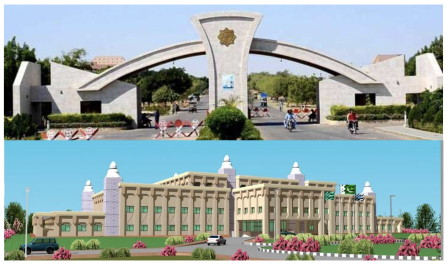
Mehran University of Engineering & Technology Tops Sindh’s Public Engineering Universities
MUET’s international rankings bring pride to Mehranians across Sindh and Balochistan, reaffirming the legacy of an institution that has shaped generations of engineers, professionals and nation-builders.
By Ramesh Raja
There are institutions that merely award degrees, and then there are institutions that shape generations, nurture intellectual traditions and leave an enduring imprint on the professional and social life of a nation. Mehran University of Engineering and Technology (MUET), Jamshoro, belongs to the latter category. Its remarkable journey from a modest engineering college with just two academic departments in 1963 to an internationally recognised university today is not merely an institutional success story; it is a reflection of the aspirations, resilience and educational progress of Sindh.
The latest international recognition of Mehran University in the Times Higher Education (THE) rankings for 2027 is therefore a moment of immense pride for its graduates, teachers, students and the wider academic community. MUET has secured a position in the 301–350 global band in the THE Interdisciplinary Science Rankings 2027, placing first among public-sector engineering universities in Sindh and fourth nationally. In the ‘The World University Rankings 2027’, it has entered the 1401–1600 global band, again securing first position among public-sector engineering universities in Sindh and sixth nationally within that category.
This achievement deserves particular appreciation because Sindh’s public-sector engineering education has been built through the collective contributions of several distinguished institutions. NED University of Engineering and Technology, Karachi, Dawood University of Engineering and Technology, Karachi, and Quaid-e-Awam University of Engineering, Science and Technology (QUEST), Nawabshah, have all played significant roles in developing the province’s engineering and technological capacity. We have no reservations about their contributions, and their achievements deserve equal respect. However, MUET’s latest international performance establishes a special distinction for Mehran University and its thousands of graduates.
For all Mehranians from Sindh and Balochistan, this is more than a ranking. It is an affirmation of their academic identity, professional worth and institutional heritage.
There is another dimension to this achievement that deserves attention. Mehran University graduates, particularly those seeking employment in Karachi’s private sector, have sometimes encountered an unfortunate prejudice in recruitment. Their academic qualifications and professional capabilities are occasionally judged through the name of their university rather than through their individual merit, competence and experience. Such attitudes are neither fair nor consistent with the principles of a professional society. More concerning is the perception among some Sindhi students and graduates that barriers continue to exist in accessing educational and professional opportunities in their own provincial capital.
An institution’s academic standing must be assessed through its actual performance, research, faculty, graduates and international recognition, not through geographical prejudice or narrow institutional affiliations. The latest THE rankings provide a timely reminder that academic excellence cannot be confined to a particular city or institution. Merit belongs to individuals, and respect belongs to every institution that contributes to knowledge and human development.
My own academic journey reflects this institutional harmony. I earned my Bachelor’s degree in Civil Engineering from Mehran University and my Master’s degree in Transportation Engineering from NED University of Engineering and Technology. Both institutions have contributed significantly to my professional development. The question has never been which university a graduate belongs to, but what knowledge, competence, integrity and commitment that graduate brings to society.
The beginnings of an institution that transformed engineering education in Sindh
The history of Mehran University goes back to 1963, when the Government of Sindh established Sindh University Engineering College at Jamshoro, approximately 15 kilometers from Hyderabad, on the right bank of the River Indus. It was established as a constituent college of the University of Sindh, initially comprising only two academic departments. Its primary objective was to extend professional engineering education to the people of interior Sindh, where opportunities for higher technical education were limited.
Following the Education Policy of 1972, the institution underwent a significant administrative and academic transformation. In July 1976, it became an additional campus of the University of Sindh under the leadership of a Pro-Vice-Chancellor. Subsequently, on 1 March 1977, it attained independent university status under the name Mehran University of Engineering and Technology.
Professor Dr. Shamesuddin Muhammad Qureshi, widely known as Dr. S. M. Qureshi, became its founding Vice-Chancellor. A distinguished civil and structural engineer holding a doctorate from the University of Sheffield, United Kingdom, he played an important role in laying the institutional foundations of the university. His subsequent service in senior national positions, including Federal Secretary for Education and Science and Technology, further reflected the stature of the leadership associated with Mehran’s formative years.
An interesting chapter in this history concerns Nawabshah. Although the original engineering college was established at Jamshoro, the early institutional reorganization placed the upgraded university at Nawabshah. During 1979–80, the permanent seat of the university was retained at Jamshoro, while the Nawabshah institution continued as Mehran University College of Engineering and Technology. Eventually, on 7 August 1996, it achieved independent university status as Quaid-e-Awam University of Engineering, Science and Technology (QUEST).
Thus, the institutional development of Mehran also contributed to the emergence of another major public-sector engineering university in Sindh.
The university subsequently expanded its educational outreach towards northern Sindh. Mehran University College of Engineering and Technology, Khairpur Mirs, was established in 2009 and upgraded in 2013 as the Shaheed Zulfiqar Ali Bhutto (SZAB) Campus. Today, MUET operates through its main campus at Jamshoro and its constituent SZAB Campus at Khairpur Mirs.
 From two departments to a multidisciplinary academic institution
The transformation of Mehran University over six decades has been remarkable. From its original two departments, it has developed into a multidisciplinary institution comprising four faculties, five institutes and 18 academic departments.
Its academic portfolio encompasses Civil Engineering, Mechanical Engineering, Electrical Engineering, Electronic Engineering, Chemical Engineering, Petroleum and Natural Gas Engineering, Mining Engineering, Metallurgy and Materials Engineering, Computer Systems Engineering, Software Engineering, Mechatronics, Biomedical Engineering, Industrial Engineering, Textile Engineering, Architecture, and City and Regional Planning, among other disciplines.
This evolution reflects the changing nature of engineering itself. While the institution initially concentrated on conventional engineering disciplines, its academic landscape gradually expanded towards computing, electronics, telecommunications, environmental engineering, biomedical sciences, materials technology, energy systems and interdisciplinary research.
Its postgraduate education, initiated in December 1978, has developed into master’s and doctoral programmes across engineering, technology, sciences and management.
The scale of its academic contribution is equally significant. The university reports more than 35,000 alumni and over 200 PhD-qualified faculty members. Its published student enrolment figures vary between approximately 6,000 and 8,000 across different institutional profiles, and the Registrar’s latest enrolment statement would provide the appropriate consolidated figure.
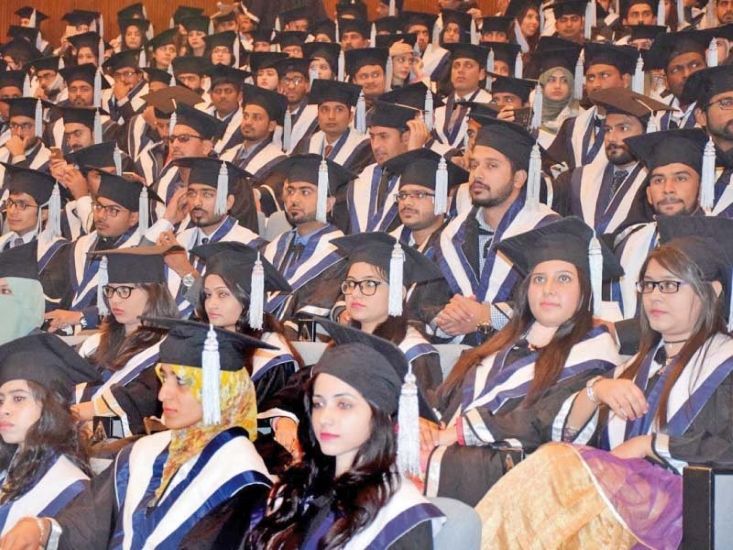
The growth of doctoral education is particularly encouraging. At its 27th Convocation in January 2024, MUET awarded degrees to 897 graduates, including 16 PhD scholars. At its 29th Convocation, held on 24 January 2026, another 1,007 graduates received their degrees. These included 34 PhDs, 75 master’s graduates and 898 bachelor’s graduates.
The increase from 16 PhD graduates in 2024 to 34 in 2026 demonstrates the growing contribution of the university to advanced academic and research education.
Its research infrastructure includes the U.S.-Pakistan Center for Advanced Studies in Water (USPCAS-W), the Institute of Environmental Engineering and Management, the Institute of Information and Communication Technologies, and the Petroleum and Natural Gas Engineering Institute. Research activities in advanced materials, sustainable agriculture, green energy and environmental technologies further strengthen its academic profile.
The university also reports 14 registered patents and recognition as the first public-sector engineering university in Pakistan to achieve ISO 9000 quality certification. Its membership in the Association of Commonwealth Universities provides another institutional connection with the international academic community.
These achievements demonstrate that Mehran’s progress is no longer limited to producing conventional engineering graduates. It is increasingly engaged in research, technological development and the creation of knowledge relevant to contemporary challenges.
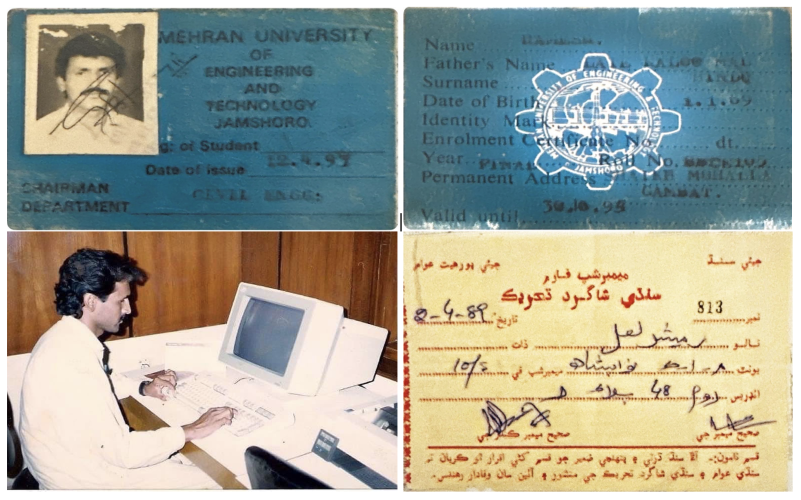 My 1,813 days that shaped a professional life
For me, Mehran University is not simply an institution whose achievements I admire from a distance. It is an inseparable part of my personal and professional identity.
I joined its then Nawabshah Campus on 3 January 1989 as a student of Bachelor of Engineering in Civil Engineering and completed my studies on 21 December 1993. Those four years, eleven months and eighteen days amounted to precisely 1,813 days of my life.
Our 1988 batch studied 42 subjects under a newly introduced annual examination system, and I completed my engineering degree with 87 per cent marks.
During those years, I witnessed the university under three Vice-Chancellors: Professor Dr. Abdul Ahad Abro, Professor Dr. Abdul Qudous Alvi and Engineer Muzaffar Ali Shah. Each represented a period in the institution’s academic and administrative development.
The university was then a demanding academic environment. Our professors were highly respected, dedicated and hardworking. Their commitment to engineering education provided us with the technical foundations that later became the basis of our professional lives.
But university life was never confined to lecture halls, laboratories, drawing boards and examinations. It was equally a world of friendships, intellectual exploration, books, debates, hostel companionship and youthful ambitions.
Room No. 48-D remains deeply embedded in my memory. My room companions, Sarmad Soomro and Khan Muhammad Kalhoro, shared the everyday experiences of hostel life. Beyond our room, Saleem Shaikh, Aslam Chandio, Arshad Jamali, Parvez Soomro and many others became part of our extended circle of friendship. We shared meals, conversations, long walks and the ordinary pleasures that become extraordinary memories with the passage of time.
My association with Sindhi Shagrid Tahreek (SST), under the intellectual and political leadership of the distinguished progressive leader Rasool Bux Palijo, added another important dimension to those years.
SST was not merely a student organization. It cultivated a culture of reading, writing, book fairs, lectures, libraries, regular classroom attendance, collective study groups, debates and constructive engagement with university administration. Mohan Valecha, Sharif Noonari, Waheed Metlo, Kanaya Madhwani, Jameel Soomro and many other comrades contributed to that progressive intellectual atmosphere.
One particularly significant episode was our agitation against the newly introduced annual examination system. We advocated the restoration of the six-month semester system, believing it offered a more balanced and continuous academic structure. Although our 1988 batch had to complete all 42 subjects under the annual system, our collective struggle contributed to the restoration of the semester system for subsequent batches.
We endured the consequences of that transition, but the generations that followed benefited from our efforts.
Nawabshah itself became an extension of our university life. Chakra Chowk, its used-book cart, the food vendors of Azeem Colony, the railway station, the cinema and the familiar surroundings of PMC Hostel were among our regular destinations. The used-book cart was particularly fascinating, offering literary discoveries beyond the prescribed engineering textbooks. Those modest food stalls became places where friendships flourished over simple meals and animated discussions.
Our pockets were modest, but our ambitions were immense. We discussed engineering, literature, politics and society, often imagining futures that appeared limitless.
When I completed my Civil Engineering degree, I carried much more than a qualification from Nawabshah. I carried friendships, intellectual confidence, professional discipline and a conviction that education must ultimately serve society.
My subsequent professional journey in civil engineering, transportation engineering, highway planning, construction and project management has repeatedly reminded me of the foundations laid at Mehran. The knowledge acquired there became the starting point of a career devoted to national infrastructure and public service.
Those 1,813 days may have passed, but their influence has remained with me throughout my life.
The wider landscape of public engineering education in Sindh
Mehran’s achievement must also be understood in the broader context of engineering education in Sindh.
The province’s principal public-sector engineering universities represent different historical periods and institutional traditions.
NED University of Engineering and Technology traces its origins to 1921 and achieved university status in 1977. Dawood University of Engineering and Technology originated in 1962 and became a public university in 2007. Mehran University originated in 1963 and achieved independent university status in 1977. QUEST, Nawabshah, emerged from Mehran’s institutional structure and became an independent university in 1996.
Together, these universities have developed thousands of engineers, architects, technologists and researchers who have contributed to Pakistan’s infrastructure, industrial development, public administration and private sector.
Their achievements should be viewed as complementary rather than competitive. Nevertheless, international rankings provide an important comparative measure, and MUET’s first position among Sindh’s public-sector engineering universities is a distinction that deserves recognition.
It is particularly encouraging for students from interior Sindh and Balochistan, many of whom have historically relied on public-sector universities for access to professional education. Mehran has provided generations of young people with an opportunity to enter engineering professions that might otherwise have remained beyond their reach.
Its contribution is therefore not simply academic. It is also social, economic and developmental.
My suggestions: From academic recognition to technological leadership
While celebrating this achievement, Mehran University must also look beyond its present standing. International recognition should be treated not as the destination but as a foundation for a more ambitious future.
In future, engineering education and industrial development will be increasingly shaped by artificial intelligence, autonomous systems, robotics, semiconductor technologies, quantum computing, advanced materials, renewable energy, biotechnology and climate-resilient infrastructure.
For Pakistan, and particularly for Sindh, these developments are not distant technological possibilities. They are directly connected with the challenges of water security, food production, energy independence, urbanization, transportation, industrialization and climate adaptation.
MUET should therefore establish a forward-looking research agenda around ten strategic technological priorities.
First, artificial intelligence and autonomous systems should become central to its engineering curriculum and research programs. Second, water technology and desalination deserve exceptional attention because water security will remain one of Sindh’s most consequential challenges. Third, renewable energy and advanced energy storage can support industrial growth and reduce dependence on conventional energy sources.
Fourth, climate-resilient infrastructure should become a major research priority, particularly in relation to floods, extreme heat, coastal erosion, drainage and disaster-resistant construction. Fifth, semiconductor and microelectronics research could help Pakistan develop indigenous technological and industrial capacity.
Sixth, robotics and autonomous manufacturing should support the transformation of industrial production. Seventh, advanced materials and nanotechnology can improve infrastructure, construction, manufacturing and energy systems. Eighth, digital twins and smart-city technologies can modernize transportation, urban planning and public infrastructure.
Ninth, biotechnology and bioengineering offer opportunities in agriculture, healthcare and industrial biotechnology. Finally, future transportation and logistics research should address Pakistan’s highways, ports, railways, freight corridors and emerging mobility systems.
For an institution with Mehran’s historical strengths in civil engineering, water resources, environmental technology, energy, computing and materials research, these areas represent a natural progression.
The university should aspire to become a leading South Asian center for indigenous technological innovation, producing research that responds to Pakistan’s needs while contributing to international scientific advancement.
An achievement that belongs to generations
A university’s true stature cannot be measured merely by the number of its departments, students, graduates or buildings. Its real significance lies in the quality of its teachers, the knowledge created by its researchers, the professional contributions of its graduates and the improvements it brings to human life.
Mehran’s greatest achievement is that generations of students have entered its classrooms carrying dreams and left with knowledge, confidence and the capacity to contribute to society.
Today, when I see MUET achieving international recognition, I remember the institution that welcomed us in 1989, the professors who taught us, and the friendships that enriched our lives, the intellectual environment that shaped our thinking and the struggles that made our student years meaningful.
I remember Room No. 48-D, Sarmad Soomro and Khan Muhammad Kalhoro, our extended circle of companions, our SST comrades, Rasool Bux Palijo’s intellectual influence, Chakra Chowk, the used-book cart, Azeem Colony and those endless rounds of Nawabshah. I remember the 42 subjects, the annual examinations and our campaign for the restoration of the semester system. And above all, I remember an institution that gave us much more than an engineering degree.
Today, Mehran University has earned first position among public-sector engineering universities in Sindh and international recognition in the global academic landscape. This is a moment of collective pride for every Mehranian, whether living in Sindh, Balochistan, Karachi or anywhere else in the world. It belongs to the generations of teachers who built its academic foundations, the students who carried its name, the researchers who expanded its intellectual horizons and the graduates who represented it through their professional contributions.
From two departments in 1963 to international recognition in 2027, Mehran’s journey is a remarkable story of institutional growth, educational opportunity and the aspirations of a province.
The challenge now is to convert this recognition into greater research excellence, technological innovation, international collaboration and meaningful service to humanity.
I spent 1,813 days at Mehran University, but Mehran has remained with me throughout my life. Its classrooms shaped my profession, its teachers strengthened my foundations, its intellectual environment enriched my outlook and its friendships became an inseparable part of my memories.
I celebrate this achievement not merely as a former student but as someone whose professional identity and outlook were shaped within its walls.
Mehran University is not simply where I studied. It is where a significant part of who I am was shaped. May its journey towards future be even more remarkable, transforming it into a center of knowledge, research, innovation and human development, and carrying the name of Sindh with distinction across the world.
Read: Karachi: Falling Buildings, Failing Governance
__________
 Hailing from Gambat town of Sindh, Engr. Ramesh Raja, is a Civil Engineer, visionary planner, PMP certified and literary enthusiast with a passion for art and recreation. He can be reached at engineer.raja@gmail.com