Babies Who Never Saw the World
A Poem from Sindh on Tragic Fire Incident at PIMS Islamabad


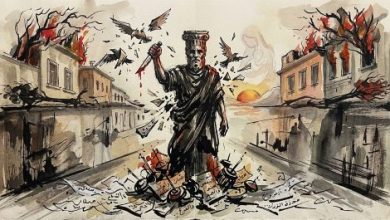
In a nursery in Islamabad,
it was not merely a fire that broke out
dreams were turned to ashes…
Nisar Banbhan
 Hailing from Village Mir Muhammad Banbhan, Taluka Mirwah, District Khapurpur and based in Karachi, the capital of Sindh, Nisar Banbhan is a seasoned professional with nearly 25 years of multifaceted experience, encompassing 3 years in journalism and over two decades of service in a public sector organization. His extensive expertise spans content creation, scriptwriting, screenwriting, lyrics, poetry, and storytelling across multiple languages, including Sindhi, Urdu, and English. Nisar has honed his skills in writing articles, columns, and short stories, contributing to various national and regional media outlets. Additionally, he brings a deep understanding of program development, educational advocacy, and strategic planning, having led initiatives that promote quality education and foster community empowerment. His passion for literature and education merges seamlessly, enabling him to craft impactful narratives that resonate with diverse audiences while driving meaningful change in society.
The Babies Who Never Even Got to See the World
In a nursery in Islamabad,
it was not merely a fire that broke out
dreams were turned to ashes,
prayers were silenced,
and the arms of mothers
were left empty forever.
Fourteen tiny lives, they say,
were swallowed by the flames
fourteen little souls
who had not yet seen
their mothers’ faces,
held their fathers’ fingers,
or whispered their first word
into the waiting world.
They were like
the first light of dawn,
fragile as drops of dew,
tender as unopened flowers,
each one a whole lifetime
wrapped inside a mother’s prayer.
For nine long months,
a mother had carried
another heartbeat beneath her own,
nurturing an entire universe
beneath her heart.
A father had already begun
building a sky of dreams
around a child
he had barely met.
Homes were waiting
for their first laughter,
courtyards for their first footsteps,
and hearts for a new beginning.
But they fell silent
before life had even
begun to speak.
Perhaps the fire began
with a faulty machine,
a single spark,
an electrical failure,
or a moment of carelessness.
But the death of fourteen newborns
cannot simply be called
an accident.
Fire may be an accident.
Smoke may be an accident.
A spark may be an accident.
But negligence
is the locked door
standing between life and death.
Negligence is the hand
that did not reach the alarm in time.
It is the emergency exit
that remained closed
when every second
was worth a life.
It is the moment
when a tiny child
needed a pair of arms
and no arms arrived.
We are told
that emergency exits were locked,
doors could not be opened,
and firefighters
had to break through a wall
to reach the nursery.
Then what were those exits for
if they could not become a way out
when life was running out of time?
What were the alarms for
if they could not cry out
before those innocent breaths
fell silent?
What were the safety systems for
if they could not stand
between the flames
and a newborn’s fragile life?
And where was the training
that should have taught
every hand in that ward
how to save a child?
But above all,
one question remains
Why were the babies the ones who died?
They could not run.
They could not open a door.
They could not call for help.
They were as helpless
as a bird beneath a storm,
as delicate as a flower
before the first touch of winter.
They had come into this world
only to learn how to live.
Today, somewhere outside a ward,
a father stands alone
empty hands,
tear-filled eyes,
and a question
burning deeper than fire:
Where is my child?
Somewhere,
a mother is crying
to hold her shattered world
one more time.
She carries no explanation
in her hands,
no consolation in her heart
only an empty lap,
a silent room,
and a question
no official file
will ever be able to answer.
O City of Power!
How many committees will be formed?
How many statements will be issued?
How many words of sorrow
will be written on official pages?
But committees
cannot return fourteen breaths.
Investigations are necessary
but before investigation,
there must be responsibility.
And after responsibility
there must be accountability.
These children
belonged to no politics,
no institution,
no ideology.
They were simply human.
A mother’s prayer.
A father’s hope.
A family’s first laughter.
A spring waiting to arrive
in a quiet courtyard.
They were fourteen little stars
waiting to rise
in the sky of their homes.
This tragedy
is not merely the tragedy
of one hospital,
one ward,
or one morning.
It is a question
written upon the conscience
of an entire system.
A hospital is not merely
walls, beds, machines and corridors.
It is a place
where people place their lives
into the hands of others
as a sacred trust.
And newborn life
is as fragile
as a drop of dew
resting on the edge of a leaf
one moment of negligence,
and the whole world
can disappear.
O fourteen little souls!
You never saw the world,
yet your silence
has made the world look at itself.
Your ashes have written
a question upon the forehead
of our history
a question
time itself may never erase.
Your mothers
will keep calling your names.
Your fathers
will keep searching for you.
Your homes
will keep waiting
for a laughter
that will never return.
Perhaps, before Allah,
you will raise your tiny hands
and ask:
“O Allah,
the world did not even give us
one chance to live.”
And perhaps
the mercy of God
will gather you gently
into His embrace
and whisper:
“Come, my innocent ones.
The world could not protect you.
I have called you
back to Me.”
But for those of us
who remain
tears are not enough.
Neither condolences,
nor official statements,
nor promises that disappear
when the headlines fade.
This grief
must become a promise.
A promise that in every nursery,
every hospital ward,
every place where a life
is entrusted to human care
emergency exits will remain open,
doors will open when seconds matter,
alarms will remain alive,
fire equipment will remain functional,
electrical and medical systems
will be inspected regularly,
staff will be trained for emergencies,
and evacuation drills
will be practiced in reality,
not merely recorded on paper.
Because safety
is not a clause in a file.
Safety is the first duty
we owe to life.
Every institution
is not merely the custodian
of a building.
It is the guardian
of the lives entrusted to it.
That is why this tragedy demands
a transparent and impartial investigation.
Every failure must be examined.
Every act of negligence
must be brought into the light.
Responsibility must be established.
And accountability must follow
not as revenge,
but as a warning
to protect the lives yet to come.
A mother should not be left
with an empty lap
and nothing but the advice
to “have patience.”
She deserves the truth.
She deserves justice.
And she deserves to know
that her child’s death
will not disappear
into the silence of paperwork.
O Allah
give these fourteen little souls
a place beneath
the vastness of Your mercy.
Give their mothers patience
when patience feels impossible.
Give their fathers strength
when words have failed.
And give us a conscience
that refuses to hide negligence
behind the convenient word
“accident.”
We pledge
that these children
will not be remembered
only through tears and condolences.
Their memory must become
a demand for safer hospitals,
a demand for open doors,
working alarms,
clear emergency routes,
trained hands,
and a system
that reaches the smallest breath
before it becomes silence.
Because grief
is not merely the water
that falls from our eyes.
Grief is a demand for truth.
And justice
is not merely the punishment
of those responsible.
Justice is also
making certain
that tomorrow,
some other mother’s arms
are never emptied
because we failed
to protect a life
placed in our care.
Fourteen little lives are gone.
But their silence
still speaks
Do not forget us.
Do not turn our deaths
into another statistic.
Do not let our silence
become ordinary.
Protect every life
entrusted to your care.
Because sometimes
the greatest measure
of a society
is not how loudly
it mourns its dead
but how fiercely
it protects
those who are still alive.
________________
Read: Sindh First, Sindh Forever