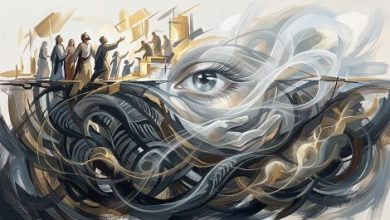
From personal life to politics, from nature to ethics, balance emerges as the core principle of survival and progress.
Abdullah Usman Morai | Sweden
Life, in its essence, is a search for balance. From the rise and fall of the sun to the rhythms of our breath, balance defines the very fabric of existence. When balance is maintained, systems thrive; when it is lost, collapse follows. This principle applies not only to individuals but also to families, societies, governments, and even the planet itself. Balance matters most because it is the invisible thread that keeps everything together.
In today’s world, imbalance is everywhere: between work and life, rich and poor, nature and development, power and responsibility. The costs of imbalance are visible in rising stress levels, widening inequality, political instability, environmental disasters, and fractured relationships. The question, therefore, is not whether balance is important, but how societies and individuals can rediscover it.
- Balance in Personal Life: Between Work and Well-being
Modern lifestyles often glorify overwork, equating success with exhaustion. But the human body and mind are not machines. A study by the World Health Organization (2021) linked long working hours to over 745,000 deaths annually from heart disease and stroke. Stress, insomnia, and family neglect are the invisible prices people pay when balance is ignored.
Case Study: Japan’s Karoshi Phenomenon
Japan coined the term karoshi, meaning “death from overwork.” In recent decades, thousands of people have died because of excessive working hours. While Japan has since taken steps to reduce this culture, it serves as a reminder that an imbalance in work-life relations is literally deadly.
In Pakistan, though the context is different, many urban professionals face a similar dilemma: endless working hours, traffic congestion, and limited family time. The absence of leisure, rest, and personal space slowly erodes not just health but also relationships.
Lesson: Balance between work and rest is not a luxury but a survival necessity.
- Emotional Balance: Between Hope and Despair
Human emotions swing like a pendulum. Too much optimism can lead to reckless choices, while too much despair can paralyze progress. Emotional balance allows resilience, the ability to recover after setbacks while still keeping hope alive. Emotional balance builds inner strength, turning tragedy into resilience.
- Social Balance: Between Rich and Poor, Tradition and Modernity
No society can survive if inequality reaches the breaking point. When the gap between rich and poor grows too wide, balance is lost, and unrest follows.
Case Study: The French Revolution (1789)
Extreme economic inequality in pre-revolutionary France led to public anger and the collapse of the monarchy. When a few live in abundance while the majority suffer hunger, imbalance breeds revolution.
In Pakistan, the imbalance between rural and urban areas is glaring. Urban Sindh, like Karachi, thrives as a business hub, while other rural villages and towns in Sindh struggle with poor healthcare, lack of schools, and unemployment. This imbalance not only fuels migration but also creates resentment.
Similarly, societies face another kind of imbalance, between tradition and modernity. Too much clinging to tradition can stifle progress, while blind imitation of modernity erodes cultural identity. The balance lies in respecting heritage while embracing innovation.
Lesson: Social harmony requires economic fairness and cultural balance.
- Gender Balance: Equality as a Cornerstone
Gender imbalance deprives half of humanity of opportunities. Women represent talent, creativity, and leadership, but when denied education or employment, societies suffer.
Case Study: In Sindh, women contribute significantly to agriculture, yet their labor is often unpaid and unrecognized. Striking a balance means valuing women’s contributions equally and ensuring they have the same opportunities as men.
Lesson: Gender balance is not just about fairness; it is about unlocking a nation’s full potential.
- Political Balance: Power and Responsibility
Politics, at its best, is about balancing interests. When governments tilt too far towards authoritarianism, freedom suffers. When they lean too far towards populism, chaos follows. The stability of a nation depends on balance.
Case Study: Scandinavian Countries
Denmark, Norway, and Sweden are often cited as examples where political systems balance democracy with social welfare, freedom with responsibility. Their high living standards reflect not extreme capitalism or socialism, but balance.
Contrast this with Pakistan’s political history, where too much power concentrated in one institution leads to mistrust and fragility.
Lesson: Political stability is the art of balance between power, accountability, and representation.
- Economic Balance: Growth and Equity
Economic systems that only reward the wealthy create an unsustainable imbalance. Trickle-down economics often fails in societies where corruption and privilege dominate.
Real Example: The 2008 Global Financial Crisis
The crisis was caused by reckless financial practices, where profit was prioritized over balance and responsibility. Millions lost jobs and homes because the system ignored sustainable equilibrium.
In Pakistan, unchecked elite privileges, tax exemptions, subsidies, and corruption create an imbalance. While the rich accumulate wealth, the poor struggle with inflation and unemployment. Without policies balancing growth with equity, instability deepens.
Lesson: True economic development balances profit with justice.
- Environmental Balance: Humanity and Nature
Perhaps the most urgent imbalance of our time is ecological. Climate change, deforestation, and pollution show what happens when humans take more from nature than they return.
Case Study: Global Example: Amazon Rainforest
The Amazon, often called the “lungs of the Earth,” is shrinking due to deforestation. Without balance, this ecosystem’s collapse would disrupt the climate globally.
Lesson: Environmental balance is not optional; it is essential for survival.
- Philosophical and Ethical Balance: The Golden Mean
Across cultures and philosophies, balance is celebrated as a virtue. Aristotle called it the golden mean, the middle path between extremes. Taoism’s yin-yang symbolizes harmony between opposites. Sufism emphasizes moderation (i’tidal) as a way to purity.
When societies fall into extremes of political polarization and consumerist greed, imbalance corrodes values. Ethical balance means choosing neither fanaticism nor apathy, but a just middle path.
Example: Dialogue vs. Violence
In Sindh’s villages, community elders often resolve disputes through dialogue, seeking balance rather than escalation. When balance is ignored, small conflicts can spiral into deadly feuds.
Lesson: Ethics itself is a balance between rights and duties, freedom and restraint.
- Balance in Relationships: Between Self and Others
Relationships, whether personal or professional, collapse when balance is lost. Too much dominance suffocates; too much submission erases identity.
Example: Family Systems in South Asia
Joint families, when balanced, provide support and security. But when an imbalance occurs, favoritism, unequal responsibilities, and a lack of respect, conflicts arise.
Balance in relationships means mutual respect, compromise, and communication. A marriage, for example, survives not on love alone but on the balance of giving and taking.
Lesson: Relationships thrive when balance is nurtured.
 Conclusion: Rediscovering the Art of Balance
From personal life to politics, from nature to ethics, balance emerges as the core principle of survival and progress. Imbalance leads to stress, inequality, injustice, and even disaster. Real-life examples, Japan’s karoshi, Sindh’s floods, Mandela’s resilience, Malala’s fight for education, all reveal one truth: when balance is lost, human dignity and survival are threatened.
To say balance matters most is not a slogan; it is a universal law. Just as a tightrope walker survives only by maintaining balance, humanity too must tread carefully between extremes. For individuals, this means balancing ambition with rest, emotions with reason, giving with receiving. For societies, it means bridging gaps between the rich and poor, men and women, the majority and the minority. For nations, it means governing with a balance between power and responsibility. And for humanity at large, it means respecting the balance of nature.
In the end, balance is not about perfection; it is about harmony. It is about learning when to move forward and when to pause, when to speak and when to listen, when to take and when to give. In every corner of life, balance is the quiet force that sustains everything. Truly, balance matters most.
Read: How to Revive the Reading Habit?
__________________
 Abdullah Soomro, penname Abdullah Usman Morai, hailing from Moro town of Sindh, province of Pakistan, is based in Stockholm Sweden. Currently he is working as Groundwater Engineer in Stockholm Sweden. He did BE (Agriculture) from Sindh Agriculture University Tando Jam and MSc water systems technology from KTH Stockholm Sweden as well as MSc Management from Stockholm University. Beside this he also did masters in journalism and economics from Shah Abdul Latif University Khairpur Mirs, Sindh. He is author of a travelogue book named ‘Musafatoon’. His second book is in process. He writes articles from time to time. A frequent traveler, he also does podcast on YouTube with channel name: VASJE Podcast.