The social contract between the state and the people has not only broken down, it simply does not exist because the state itself has withered away.
- The depressing fact is that there is no rule of law in Pakistan. The judiciary has provided legal cover for all illegal acts.
- The Pakistani elite comprise a criminal syndicate of feudal lords, the bureaucracy, military and media
- Flag raising ceremonies and military parades, however impressive, do not make a state. They are mere attempts to hide the ugly reality of total breakdown
- The entire system is rotten and has to be demolished completely. This will not happen unless the powers-that-be are defanged
By Nazarul Islam | USA
My American colleagues in Chicago, keep throwing at me, a very painful question. Can the state of Pakistan survive in the coming decades? The question of whether Pakistan can survive for another fifty or a hundred years is a complex one with no single, definitive answer, and the nation’s future has remained a subject of ongoing debate among experts and analysts. While some have pointed to significant challenges threatening the nation’s long-term stability, others only see a resilient nation, with the potential for future progress.
What are Pakistan’s Long-Term challenges?
In my humble view, the Key challenges and vulnerabilities of the Islamic country has been identified by various sources, which include:
- Economic Instability: Pakistan has faced recurrent economic crises, high public debt, and a reliance on foreign aid and International Monetary Fund (IMF) bailouts to avoid default. Persistent issues such as a low tax-to-GDP ratio, a difficult business environment, and a financially unsustainable energy sector remain largely unaddressed
- Political Instability: The country has a history of political turmoil, weak democratic institutions, and significant military influence in political and economic affairs. This instability often hinders the implementation of long-term structural reforms needed for sustainable growth.
- Security Concerns: Pakistan faces internal security threats from various militant groups, including the Tehreek-i-Taliban Pakistan (TTP) and Baloch separatists. These insurgencies, along with regional tensions, create a volatile security situation that can deter foreign investment and disrupt stability.
- Human Capital and Social Development: Significant portions of the population face poverty, high rates of illiteracy, and limited access to quality education and healthcare. Addressing these human development issues is considered crucial for long-term prosperity.
- Climate Change: Pakistan is highly vulnerable to the impacts of climate change, including extreme temperatures, droughts, rising sea levels, and catastrophic floods, which can cause massive economic losses and displacement, adding further strain to the nation’s resource.
- Governance and Corruption: Widespread corruption, a lack of the rule of law, and a social contract between the state and people that has been described as “broken” leave little room for optimism in some analyses.
Is there hope for the nation’s continued existence?
Despite these significant hurdles, several factors suggest Pakistan’s continued existence as a nation-state:
- Resilience and Survival Instinct: Pakistan has navigated numerous crises since its independence and has often managed to “stay afloat” through a combination of internal resilience and external support from friendly nations and international institutions.
- Demographics and Potential: The country has a large and young population, which, if provided with proper education and opportunities (human capital development), could become a significant economic asset (demographic dividend).
- Economic Reform Efforts: The government has outlined plans, such as “Pakistan Vision 2025” and “Uraan Pakistan,” aimed at achieving sustainable growth, becoming a trillion-dollar economy by 2035, and improving socio-economic indicators.
Recent signs of macroeconomic stabilization, a decline in default risk, and increased investor confidence indicate some progress.
- Geopolitical Importance: Pakistan’s strategic location and nuclear power status mean major global powers have an interest in its stability, often providing financial and political support during critical junctures.
In conclusion, while Pakistan has continued to face a multitude of deep-seated and interconnected challenges, particularly in the economic and political spheres, many believe it possesses the resilience and potential to survive and even thrive in the long term, provided it can successfully implement critical structural reforms and achieve political stability.
It is extremely depressing to witness the unfolding events in Pakistan. This has raised serious concerns about the country’s very survival. The Pakistani elite comprise a criminal syndicate of feudal lords, the bureaucracy, military and media. A large number include people who are essentially criminals, gangsters, rapists and murderers whose only motivation in life is to plunder state resources.
Despite its enormous wealth of natural resources, constituting its huge potential, Pakistan is being run into the ground because the parasitical ruling elite are busy stealing all state resources and whatever else they can lay their grubby hands on. Theft and plunder have been institutionalized into the system. Pakistan functions not so much as a state but as a huge exhibit of ongoing real estate racket.
Land mafias usurp lands belonging to others but the victims have little or no recourse in law to retrieve what rightly belongs to them. This is because the judiciary is just as corrupt. People’s genuine grievances remain in limbo for decades because the judges are too corrupt and easily bribed by the powerful to dispense justice.
On important issues, judges take their orders from the military high command despite the latter claiming that they are “not interfering in politics” and are “neutral”. Such bald face lies would be hard to find elsewhere.
The depressing fact is that there is no rule of law in Pakistan. And, the constitution, for what it’s worth, is treated with disdain. Successive army chiefs have violated the constitution by overthrowing civilian governments and grabbed power.
The judiciary has provided legal cover for such illegal acts. When the constitution is violated with such impunity and there is no accountability for gross misdemeanor, it leaves little room for optimism for the survival of the state. The social contract between the state and the people has not only broken down, it simply does not exist because the state itself has withered away.
Flag raising ceremonies and military parades, however impressive, do not make a state. They are mere attempts to hide the ugly reality of total breakdown. The people have not only lost faith in state institutions but also respect for them. The country’s economic condition has deteriorated so rapidly since last April when Imran Khan’s government was overthrown through a soft coup that it is on the verge of default.
Traditional sources of foreign funding, mainly handouts from the IMF and friendly Arab countries have dried up. Pakistani exports and remittances from overseas Pakistanis have also declined, the latter because people have no faith in the criminals imposed as rulers by the military. Imran Khan’s quest to force elections in the country, though admirable, is misplaced. Elections will not help bring about change even if he wins the desired two-third majority in parliament.
The entire system is rotten and has to be demolished completely. This will not happen unless the powers-that-be are defanged. That is a tall order and will require huge sacrifices in life and blood. There is no evidence to suggest that Imran Khan is prepared to take that route at present. Perhaps, he is not sure of his supporters’ commitment.
Even within his own party and allied parties, there are people secretly in league with the army top brass and taking directions from them. Under these circumstances, can fresh elections solve the country’s problems? When there is a cancerous tumor in the brain, it has to be excised with utmost caution to give the body a fighting chance to survive.
If the tumor stays inside, it will spread and infect other organs of the body. This is what seems to be happening in Pakistan. In order to bring about change in society, it is important to analyze the prevailing situation and determine what is wrong with it. Following that, a clear direction must be provided as to where the society needs to go.
The ultimate goal and how to achieve it must also be clearly articulated. Then comes the stage of mobilization of the masses. Looking at the situation in Pakistan, there appears to be much confusion in the minds of those promising to bring about change. It does not help to promise change yet insist on working with the very people and institutions that are impediments to change.
Physical revolution must be preceded by a revolution in thought. Without the intellectual revolution, all struggle ends up as futile pursuit. The chaos that engulfs Pakistan is the result of such muddled thinking.
Is there a way forward for the Pakistani nation? To the religious diehards, the Prophetic Seerah offers very important lessons. While all Pakistanis, and indeed Muslims everywhere, claim to love the Prophet (pbuh) and will even give their lives to defend his honor, they have not internalized the lessons of his life’s struggle.
Our Holy Prophet totally rejected the ‘Jahili’ system in Makkah and refused to have anything to do with it. When he was offered a power-sharing arrangement, before he could respond, it was rejected from on high by Allah. He does not want His committed servants to mix Haqq with Batil.
The struggle for justice will face many challenges but these will have to be faced and surmounted in order to reach the destiny ordained by Allah. The reality is, Pakistan is facing an abysmal crisis of human capital. As per the World Bankreport on the Human Capital, Index 2020 Update: Human Capital in the Time of COVID-19, Pakistan’s human capital accumulation ranking is the lowest in South Asia making it just slightly above Afghanistan and Sub-Saharan African countries.
The unfortunate COVID-19 compounded by the recent economic crisis and biblical floods have undermined the progress made over the past two decades, and the impacts of these successive crises are yet to be assessed. Before the COVID-19 pandemic, economic crisis and floods, three in four children in Pakistan were in learning poverty due to schooling–related deprivations.
Learning poverty in Pakistan may increase further beyond the 79 per cent estimated during COVID-19 by the World Bank. This means Pakistan, with a highly unproductive population, will have continuing poor economic growth in the coming years that will further exacerbate the existing challenges of extreme poverty, conflict, and climate change–related vulnerabilities.
The United Nations Development Program (UNDP) and the Oxford Poverty and Human Development Initiative (OPHI) report on the Global 2022 Multidimensional Poverty Index (MPI) corroborates the gravity of the situation of the human capital crisis in Pakistan. The report reflects that 38.3 percent of the population in Pakistan live in multidimensional poverty— 21.5 per cent in severe and 12.9 per cent in vulnerable bands of multidimensional poverty.
The report notes that deprivations in education (41.3 per cent) and health (27.6 per cent) are the main contributors to multidimensional poverty in Pakistan.
What are the Underlying causes?
There are many fundamental causes of the human capital crisis in Pakistan, but this article will discuss the main causes: Poor public investment in human capital accumulation Pakistan’s public spending on education and health is very low.
In accordance with the World Bank data for 2019, Pakistan’s total public expenditure on two main components of human capital development was 5.88 per cent— 2.5 per cent for education and 3.38 per cent for the health of the Gross Domestic Product (GDP) of the country.
The evidence from the past few years shows that there is a decline in public investment in human capital. According to the Economic Survey of Pakistan 2021-22, public spending on education and health was 1.77 per cent and 1.2 per cent respectively – their aggregate makes less than 3 per cent of the GDP.
Did the country’s leaders lead from their continued poverty?
Pakistan learning poverty crisis is chronic and devastating for the development and prosperity of the country. It has the world’s second-highest number of out-of-school children, with an estimated 22.8 million children aged 5-16 not attending school, making it 11 per cent of the total population. More than 80 per cent of all children in Pakistan cannot read or understand a simple text by the age of 10.
The gender gap is big—only 51.9 per cent of females compared to 73.4 per cent of males are literate by national literacy standards.
What are the consequences of an unskilled youth bulge in the country?
Pakistan currently has the youngest population in its history (65 per cent of the total population is below the age of 30 while 29 per cent is between the ages of 15 and 29 years) but a majority of them lack relevant and advanced skills to fulfil the demands of global labor markets. According to International Labor Organization (ILO), there is a mismatch between the demand and supply of skills, and less than 6 per cent of youth have acquired technical vocational skills.
Besides, women are denied access to knowledge and skills due to which they remain without work or end up in low-paid employment. This shows that when more than 80 per cent of all children are in learning poverty, expecting proficiency in digital skills to compete in the tech-savvy world is still a distant dream for most children in Pakistan.
If the number of unskilled working-age individuals keeps increasing then this youth bulge, instead of a dividend, may become a demographic bomb that will be disastrous not only for Pakistan but also for the region and beyond.
Can we rely on the leadership to adopt a reliable way to move forward? Given the shrinking size of exports in other sectors, Pakistan, with its huge number of young people, can only export skilled and productive human resources to developed economies if it goes for high-value and long-term investments, ensuring high public as well as private spending on human capital development.
The World Bank report on Poverty and Shared Prosperity 2022: Correcting Course suggests that low and lower-middle-income economies will have to adopt robust policy reforms, and prioritize public spending for long-term growth and high-return investments in education, health, research and development to eradicate extreme poverty and achieve sustainable development.
Pakistan has to take strong actions to make development inclusive, with particular consideration of investment in education, skills and health of girls, youth and marginalized areas to bridge the gaps. Without an educated and skilled female workforce, it cannot achieve development and economic growth. Investment in human capital accumulation is a matter of survival for Pakistan.
If the leadership cannot ensure increased investments, sustained political support, coordination among different sectors and evidenced-based reforms for human capital development – like today’s developed economies such as Singapore and others did decades ago – then Pakistan will struggle for survival through short-term support in the form of aid and loans.
The trajectory of prosperity through productive human capital development demonstrated by others is a good lesson for Pakistan to withstand shocks and risks in future.
I would like to end my article with a quote from the nation’s founder—the great Quaide Azam: “We have undoubtedly achieved Pakistan, and that too without bloody war, practically peacefully, by moral and intellectual force, and with the power of the pen, which is no less mighty than that of the sword and so our righteous cause has triumphed. Are we now going to besmear and tarnish this greatest achievement for which there is no parallel in the history of the world? Pakistan is now a fait accompli and it can never be undone, besides, it was the only just, honorable, and practical solution of the most complex constitutional problem of this great subcontinent. Let us now plan to build and reconstruct and regenerate our great nation…”
Read: Mental Health Crisis Deepens in Pakistan
__________________
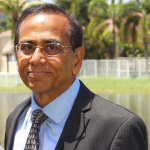 The Bengal-born writer Nazarul Islam is a senior educationist based in USA. He writes for Sindh Courier and the newspapers of Bangladesh, India and America. He is author of a recently published book ‘Chasing Hope’ – a compilation of his articles.