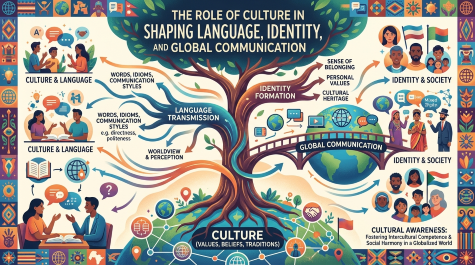
The Role of Culture in Shaping Language, Identity, and Global Communication
Suyunova Zuhra Oybekovna | Uzbekistan
Culture plays a fundamental role in shaping human identity, social behavior, and communication practices. In an increasingly globalized world, cultural awareness has become an essential element of effective interaction across societies. This article explores the concept of culture and its influence on language, identity formation, and global communication. It examines how cultural values, beliefs, and traditions shape individuals’ perceptions and communicative behavior. Additionally, the study highlights the importance of cultural understanding in fostering intercultural competence and social harmony in contemporary society.
Culture is one of the most complex and multifaceted phenomena in human society. It encompasses values, beliefs, traditions, customs, language, and social norms that are shared by a particular group of people. Culture influences how individuals think, behave, communicate, and perceive the world around them. In the modern era, characterized by rapid globalization and technological advancement, cultural interaction has intensified, making cultural awareness more significant than ever before.
Understanding culture is essential not only for preserving national identity but also for promoting mutual respect and cooperation among diverse communities. As societies become increasingly interconnected, the role of culture in shaping communication and social relationships has attracted growing attention from researchers and educators.
The Concept of Culture and Its Dimensions
Culture can be defined as a collective system of meanings that guides human behavior. It includes both tangible elements, such as art, literature, and rituals, and intangible aspects, such as values, attitudes, and worldviews. Culture is not static; it evolves over time as societies respond to internal and external influences.
Scholars often describe culture through various dimensions, including individualism versus collectivism, power distance, uncertainty avoidance, and social hierarchy. These dimensions influence how people interact with authority, resolve conflicts, and communicate ideas. As a result, cultural differences can significantly affect social interaction and understanding.
Culture and Language as Interconnected Systems
Language and culture are inseparable, as language serves as a primary vehicle for transmitting cultural knowledge. Through language, cultural values, traditions, and social norms are passed from one generation to another. The way people use language reflects their cultural background and shapes their worldview.
Cultural context influences communication styles, such as directness, politeness strategies, and non-verbal behavior. Misunderstandings often arise when individuals from different cultural backgrounds interpret messages through their own cultural frameworks. Therefore, awareness of cultural differences is essential for effective communication in multicultural settings.
Cultural Identity and Social Interaction
Cultural identity refers to an individual’s sense of belonging to a particular cultural group. It is shaped by factors such as language, religion, history, and social experience. Cultural identity plays a crucial role in shaping personal values, attitudes, and behavior.
In a globalized world, individuals are often exposed to multiple cultures, which may lead to the development of hybrid identities. While cultural diversity enriches society, it may also create challenges related to identity preservation and cultural adaptation. Understanding cultural identity is essential for promoting tolerance, inclusion, and social cohesion.
Culture in the Context of Globalization
Globalization has intensified cultural exchange by facilitating the flow of information, ideas, and traditions across borders. While this process promotes cultural diversity and innovation, it also raises concerns about cultural homogenization and the loss of local traditions.
Mass media and digital technologies play a significant role in shaping cultural perceptions. They influence lifestyles, values, and communication patterns worldwide. As a result, societies must find a balance between embracing global cultural trends and preserving their unique cultural heritage.
The Importance of Cultural Awareness in Modern Society
Cultural awareness is the ability to recognize, understand, and respect cultural differences. It is a vital skill in education, business, diplomacy, and social interaction. Individuals with high cultural awareness are better equipped to communicate effectively, avoid misunderstandings, and build positive relationships.
In educational contexts, promoting cultural awareness helps learners develop critical thinking and global competence. It encourages openness, empathy, and respect for diversity, which are essential qualities in modern society.
Conclusion
In conclusion, culture plays a central role in shaping language, identity, and communication in human society. It influences how individuals perceive the world and interact with others. In an era of globalization, cultural awareness and intercultural competence have become indispensable for fostering mutual understanding and social harmony. By recognizing the value of cultural diversity and preserving cultural heritage, societies can promote sustainable development and peaceful coexistence in a rapidly changing world.
Read: Cinema: Dynamic Language of Human Existence
____________________
 Suyunova Zuhra Oybekovna born in Toyloq district of the Samarkand region, Uzbekistan is an undergraduate student at Samarkand State Institute of Foreign Languages.