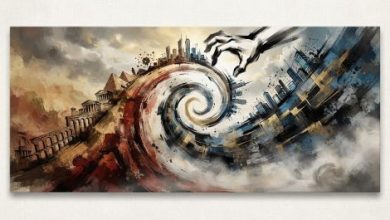
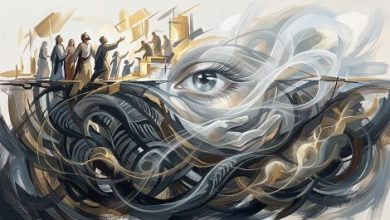
From primitive handmade instruments to the majestic symphonies of Beethoven and others, music has always served to delight the human soul
- From the beginning of time, humans have created music both for enjoyment and other purposes—war, worship, and entertainment
Souad Khalil | Libya
Music is a universal language. It is a phenomenon present in all human societies since ancient times. Music represents the essence of humanity; no culture is without melodies and rhythms. It is an expression of human emotions and a form of communication that transcends words—perhaps even a form of healing alongside medical treatment.
The human need to perceive the beauty hidden behind the essence of things—something that requires training in imagination and the mechanisms of free thinking—can sometimes be condensed in a piece of music. A single musical composition may turn the listener into a philosopher, raising abstract questions and challenging their own perceptions through images that appear as a first astonishment in their imagination.
Thus, music and the appreciation of it form a foundational stage in creating a mind that disrupts the conventional. Music has historically been used for religious purposes, and even today, remnants of ancient customs persist: church bells summoning worshippers, religious chants, the organ or horn calling soldiers to barracks, and drumbeats serving as communication tools among Africans. Drums were once used to transmit messages, and horns were employed to locate prey among tribes dependent on hunting.
Music has historically been used for religious purposes
From the beginning of time, humans have created music both for enjoyment and other purposes—war, worship, and entertainment. String instruments were developed and flourished in the ancient East, in India, China, and Japan.
 Music also plays a significant role in religious chants and magical beliefs. Moreover, it has served an educational function, particularly in societies where illiteracy was widespread—whether in primitive communities of the past or in medieval Europe. Traveling minstrels sang while playing their lyres, moving from village to village, singing about everything: the tribe, the homeland, victories, agriculture, and daily life.
The musical instruments invented and crafted by humans throughout history are countless. Many share similar characteristics, leading to overlapping names—sometimes a single name refers to multiple instruments, or one instrument may have various names.
This simplified overview shows how ancient humans sought to imitate nature to adapt to it, using primitive means of expression available to them. We must not forget the Greek myths and their gods. Researchers recount that Apollo—the god of the sun, medicine, and fine arts in Greek mythology—was said to have invented the lyre using a silver hunting bow, stretching strings across it to produce melodious tones when plucked. Another myth tells of a giant tortoise shell, with dried sinews still attached, that vibrated in the wind, creating harmonious sounds—thus was born the lyre, now a poetic symbol of music. Another tale attributes the invention of the oud (lute) to the seventh descendant of Adam, inspired by the sight of his son’s corpse hanging from a tree branch.
Thus, music dates back to the very origins of human existence. In Islamic-Arab civilization, a new method of classification was developed. Al-Farabi proposed a dual system in his famous Great Book of Music. He stated that an instrument or body vibrates either by human hand or by air pressure. He categorized instruments according to how sounds are produced—those played with a bow, struck with a plectrum, or plucked with fingers. Some create sound by dragging one string across another. His classification was based entirely on how sound emerges from the instrument.
Similarly, Ibn Zayla, in his book Al-Kafi fi al-Musiqa (“The Sufficient in Music”), classified musical instruments based on their modes of vibration and performance technique. He divided them into three types: string instruments, wind instruments, and percussion instruments. He then listed the instruments and described the characteristics of each.
Music reflects a complex mode of thinking that inherently produces a refined emotional awareness—one that perceives things differently, free from prior interpretations. This becomes evident in Beethoven’s Fifth Symphony, where he managed to weave together fragments of a narrative that stir profound emotional reactions within the soul. He painted complete mental images, elevating music to a deeply philosophical experience. Beethoven’s work can make one feel as though reading a novel by Goethe or savoring a poem by Mallarmé.
Humans are always in need of tasting the beauty hidden behind the essence of things—something that requires the training of both imagination and free thought. A musical piece can, at times, make the listener feel like a philosopher, asking abstract questions and challenging personal perceptions with vivid mental imagery.
Music helps cultivate genuine awareness, allowing individuals to engage fully in the human experience with all its nuances. As mentioned earlier, music serves as a mirror of a society’s level of human development. It is a language that dissolves conceptual barriers across cultures.
There are many schools and styles of music—classical, folk, and popular. Over time, new schools emerged, and tastes began to differ from one person to another. Everyone develops their own musical preferences. Classical music, for example, appeals to a specific type of listener. Teenagers might prefer rock, while, according to Bruno Deschênes, members of the Black community might gravitate toward rap.
Thus, musical taste is shaped not only by the social environment into which one is born, but more specifically by the development of individual identity, values, and cultural beliefs.
In defining musical arts, we find that they are composed of two main branches: creative and performative. The creative branch is driven by an individual artist who composes the musical piece—it includes the arts of composition, melodic structuring, and musical arrangement. On the other hand, the performative arts involve the practical execution—individually or collectively—of what the composer and arranger have created. This includes playing instruments and singing.
All these musical arts require innate talent and a natural predisposition, in addition to refining this talent through formal education and academic training provided by institutes, schools, and colleges dedicated to music. However, when individuals lack both talent and musical education, the result is often substandard work that fails to meet artistic criteria, appearing unstable and lacking the essential elements of elevated creative expression.
Music is an aesthetic and creative experience that individuals need—whether for listening, entertainment, or in producing other art forms. It complements the beauty of various artistic disciplines such as theater, radio, or television, where it is used to express emotional tones in alignment with dramatic context. A successful melody enhances the emotional impact of an artistic work. In this sense, the composer acts like a translator—conveying meaning and emotion through sound, synchronizing the viewer’s feelings with the scene.
 When music is used as a therapeutic tool, its value becomes even more evident. In her book Music Therapy, Dr. Nelly El-Attar cites studies showing that music plays a long-term role in enhancing self-image, body awareness, communication skills, and the ability to direct one’s energy purposefully. It helps reduce maladaptive behaviors, increases peer interaction, enhances motor skills, stimulates auditory perception, and improves emotional regulation and social engagement.
According to orthopedic specialists in Washington, music alleviates joint pain. Patients who listened to music reported lower pain levels, with their response linked to the soothing quality of the musical piece.
Researchers have studied the effects of music in alleviating chronic joint pain. In one experiment involving sixty-six individuals over the age of sixty-five, participants were divided into two groups. The first group listened to Mozart’s music for twenty minutes each morning over the course of fourteen days, while the second group sat in complete silence for the same duration.
The results were telling: those who listened to music reported significantly lower levels of pain compared to the control group. Their pain intensity and discomfort decreased noticeably after exposure to soothing melodies.
Dr. El-Attar also notes in her book that ancient civilizations had long recognized the therapeutic power of music. Papyrus scrolls reveal the Egyptians’ deep interest in music. The Greeks also used music in medical treatment. In modern times, Americans have adopted music therapy in various clinical settings.
The Arabs, too, did not overlook the healing potential of music in treating psychological and neurological disorders. A notable example is Al-Razi (Rhazes)—originally a talented musician and oud player—who later dedicated himself to the study of medicine and chemistry, excelling in both. His musical background, however, continued to influence his medical thinking.
Historical accounts suggest that Al-Razi began exploring the curative effects of music after repeated observations. He would often visit a friend, a pharmacist at a hospital in the city of Rayy. There, while playing music casually within the hospital, he noticed something remarkable: patients suffering from severe pain would rise from their beds, gather around him, and listen with joy—momentarily forgetting their suffering.
This prompted Al-Razi to conduct experiments, studying the impact of music on healing. Eventually, he began relying on music as a legitimate method of treatment, integrating it into his medical practice.
Al-Farabi also played a significant role in music therapy. He mastered the science and art of music to an extraordinary degree, composing melodies that could evoke intense emotional responses. It is said that he invented or perfected the qanun, an instrument possibly inspired by Persian origins. He once played melodies that made his audience laugh, then cry, and finally fall asleep.
This is a simplified overview of the importance of music in life. As a creative and aesthetic expression, it has been part of humanity since the dawn of time. From primitive handmade instruments to the majestic symphonies of Beethoven and others, music has always served to delight the human soul. And just as it began as a source of joy, it continues to fulfill that role—with excellence and grace.
Read: Healing the Minds through Music
______________
 Souad Khalil, hailing from Libya, is a writer, poet, and translator. She has been writing on culture, literature and other general topics.
All images provided by the author