My Ordinary Life: Seventy Years and Five Continents –Part-I
The story of a fourth-generation Bhaiband of Hyderabad Sindh, called Sindhworkies who did business around the world.

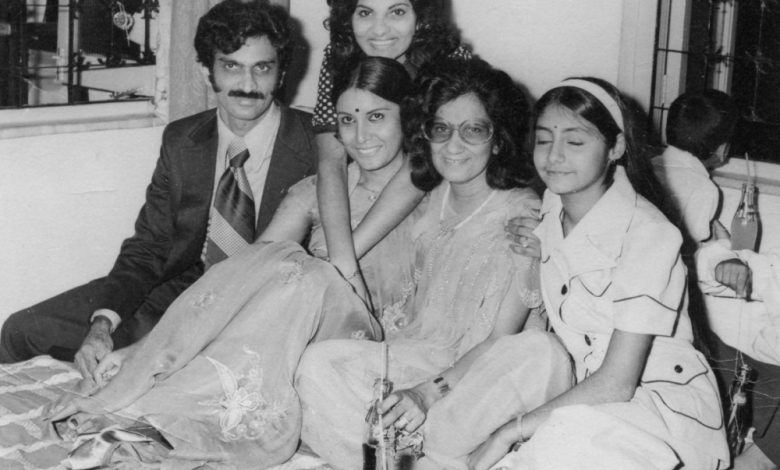
My father, my grandfather and my great-grandfather spent their entire working lives in the Dutch East Indies, as Indonesia was called until 1945.
As per the tradition of our community, they visited their families in Sindh for two or three months every two or three years.
By Tulsi Mohinani
Sindh: The land of my ancestors
I am a fourth-generation Bhaiband. In our community, the men work in trading companies, living overseas. In the old days, the families lived at home in Hyderabad, Sindh. At the end of every period of two or three years, called the musafri or ‘trip’, the men would return home for a break. My father, my grandfather and my great-grandfather spent their entire working lives in the Dutch East Indies, as Indonesia was called until 1945. As per the tradition of our community, they visited their families in Sindh for two or three months every two or three years. My father, Boolchand, was one of the earliest Bhaibands to take his wife, Muli, to live with him, which he did in 1930. He could only do this because he was working with his father and not one of the large Bhaiband firms where he would not have been permitted to.
My elder sister Mohini and elder brother Jiwat were born in Kotaraja, located near the northern tip of Sumatra, where the family had a small store. The third child, Haresh, was born when they were on holiday with the family in Hyderabad. Kotaraja is a port which in those days depended largely on regular sea traffic stopping there to replenish coal. But new technology meant that ships could travel longer distances without refueling, and fewer ships were stopping at Kotaraja. Business in Kotaraja was declining, and my father decided to move. In 1939, my father took over a store in Langsa, a prosperous plantation area further south along the coast, and the family moved to live with him in an apartment above the store.

Four more daughters were born to my parents in Langsa. These were the years of the Second World War. Sea routes were closed to civilians, communication dwindled and my parents were isolated from their loved ones at home in Sindh. It was a time of uncertainty and fear which my mother never forgot. Soon the Japanese landed with an eye on the oil fields. Europeans in the area were rounded up and put in concentration camps. My mother was an asthma patient and when my father’s name was seen in her Dutch doctor’s diary, my father was incarcerated too. His stepbrother Lachmandas in Medan came to Langsa and was able to convince the Japanese authorities that we were a family of traders from India and had nothing to do with their war, and my father was released.
As soon as the war ended, my parents arranged to travel home. They had made a big decision: to return to the traditional Bhaiband life. My father would continue with his business in Langsa and come to Hyderabad every few years to see his family. My mother came from a wealthy family; her father had made his fortune in Durban. She believed that she would live comfortably in Hyderabad. Life, however, had its own plans.
After some months enjoying life at home, my father went back to Langsa. My elder siblings started school, where they had to learn to speak, read and write their mother tongue Sindhi. I was born on July 8, 1946 and remember nothing of Hyderabad, the place where I spent the first year of my life. I remember nothing of the urgency and fear in which my mother carried me and, herding her children together, arrived at the Hyderabad railway station with her mother and other female relatives with their children. Ours was only one of many such families at the Hyderabad railway station, anxious and eager to leave the city as soon as possible to escape the riots following the Partition of India in August 1947. The Bhaiband men were working in other countries. The women were now leaving their homes in Sindh for the last time in the midst of lawlessness and fear, with their children and the elderly.
My father was away and my mother fled along with other women of the family, travelling in overcrowded trains like this one.
Our train crossed the new border and arrived in Ajmer. We were allotted one room in a camp overflowing with refugees like us. Everyone was looking for a safe place to settle. People talked to each other, asking others where they had come from and where they were going, and seeking suggestions about where they could live and what kind of opportunities were possible to earn money.
My father was in the process of moving from Langsa to Tanjung Pinang, where he had taken a partnership with a Singapore family to run their store. Once he was settled there, he was able to make arrangements for us to join him. Our family was lucky in the sense that we were never really refugees from Pakistan. Most Sindhis had to find a new place and start afresh but for us Bhaibands there was already a base. Our family had a welcoming home in Indonesia and we went to live there.
Indonesia: My childhood home
Tanjung Pinang is a small island off Singapore with a population of about 12,000 people. We lived just a few hundred metres from the sea, and I spent a lot of time running around and swimming in the sea with my friends. In those days, my siblings and I spoke Indonesian to each other, and I think to our parents too. Actually, I don’t remember speaking to my father at all. He was a traditional father, who didn’t talk much to his children. So there was no sitting down and doing the homework and things like that. My mother also did not have the time to sit and talk with us. I was her eighth child and three more were born after me. With so many to take care of, she was busy all the time. We ate Sindhi food but my mother exchanged recipes with our neighbours and had become an expert at Indonesian cooking too. And we children loved the Indonesian street food.
In Tanjung Pinang, which was actually just a little village, my father ran a store for the Binwani family who were based in Singapore. He had one employee, KG Samtani, who lived in our home and was always treated like our elder brother. It was a shop that sold clothing, toys and other things. There were eleven of us children, but my father never let us have anything from the shop. We all knew, from the youngest age, that our father was an honest, principled man, very conscious of the fact that he was working for somebody. We lived above the shop and it was quite a big place, with a big patio at the back, but there were not many rooms, and there was not much privacy.

When I was 11 and my youngest sister Ishu was one, I was sent away from home and my carefree Huckleberry Finn life came to an abrupt end. My parents sent me and three of my elder sisters, Lacha, Chandra and Pushpa, to Medan, a town on the coast of Sumatra, where my grandmother lived with her three sons and their families. Medan had English-medium schools, and our parents wanted us to have our education in English. My uncles ran a shop called Toko Boolchand at Number 40, Surabaya Road. My grandfather had opened it before the Second World War started, and it had my father’s name.
My grandmother, my father’s stepmother, was a very disciplined person. She strongly believed that an idle mind is the devil’s workshop and she kept my sisters busy with stitching, embroidery, cleaning, washing and cooking. I was not kept busy, but I was not encouraged to go out of the house either. We came home from school, had lunch and would sit down to read or study.
In those days, there was a strong anti-foreigner feeling in Indonesia and the government had decreed that only foreigners could learn English. We were admitted to the Khalsa English School, which had two sections, an Indonesian one for Indonesian nationals, and an English section for foreigners who were mostly Indians and Chinese. There were quite a few Sikhs in Medan. They owned dairy farms and ran dairy businesses, and they supplied us milk. There was a Gurudwara right next to the school.
Though we were a well-established family in Medan and my uncles were well connected socially, we lived a simple life. With so many kids, things could not have been easy. Nowadays we live in abundance. But in those days, people would go to the market every day and just buy the day’s needs. With Ammi’s background of careful spending, she hated waste.
My grandmother was also strict about speaking our own language so though among us children we spoke Indonesian, this is where I picked up my Sindhi. We spoke with our uncles as well in Sindhi but with the aunts we spoke English, because they had all studied in English schools.
About one year after we arrived in Medan, my sisters Lacha and Chandra were sent back to our family in Tanjung Pinang. And then, about two years later, my mother came and visited, bringing little Ishu with her. She stayed for just a few days and went back, and that was the only time I saw her for many years. Unfortunately, for lack of money, we were never sent back to Tanjung Pinang. My mother had come to Medan to see us because our parents had decided to leave Indonesia and she would not see Pushpa and me again until we had completed our education. After some years they had decided that it was time for another fresh start. My parents chose the Indian city of Pune in which to have the new family home. (Continues)
____________________
Courtesy: Sahapedia
(Published on: 23 February 2017)